





1. 서 론
기후변화에 따른 해수면 상승과 극한 기상현상의 증가는 전세계적으로 연안침식을 가속화시키고 있으며, 이는 연안 기반시설의 훼손과 생태계 변화 등 다양한 문제를 유발하고 있다(IPCC, 2007). 특히 연안 지역은 자연적·인위적 요인이 복합적으로 작용하는 동적 공간으로, 해안선 변동에 대한 장기적인 모니터링과 과학적 관리 체계 구축이 지속적으로 요구되고 있다.
한반도 동해안은 연속적인 해안 지형과 파랑·연안류 조건에 의해 표사 이동이 발생하는 공간으로, 장기적인 해안선 변동 특성을 파악하기 위해서는 남한과 북한 해안을 포함한 광역적 분석이 필요하다. 특히 남북한 동해안은 일부 구간에서 하나의 연속된 표사계(littoral cell)로 연결되어 있을 가능성이 있으며, 특정 지역에서의 침식 또는 퇴적 변화는 인접 해안의 표사 균형에도 영향을 미칠 수 있다. 따라서 동해안 전체의 연안침식 및 퇴적 특성을 이해하기 위해서는 행정적 경계에 국한되지 않는 공간적 분석이 요구된다.
그러나 북한 동해안은 현장 접근이 제한되어 있으며, 체계적인 장기 해안선 관측 자료 또한 공개적으로 확보하기 사계의 장기 변동 특성을 정량적으로 분석하고, 침식·퇴적 경향을 공간적으로 비교하는데 중요한 제약 요인으로 작용한다. 특히 북한 동해안은 원산, 함흥, 청진 등 주요 연안 지역을 포함하고 있어 한반도 동해안 표사계의 공간적 연속성을 이해하는데 중요한 구간이나, 현장 접근의 제약과 공개 관측자료의 부족으로 장기적인 해안선 변동 특성을 정량적으로 분석하는데 한계가 있다.
이와 같은 한계를 보완하기 위한 대안으로 위성영상 기반원격탐사 기법이 활용되고 있다. 다년간 축적된 위성영상을 활용할 경우 접근이 어려운 해안에 대해서도 해안선 변동을 시계열적으로 분석하고, 침식·퇴적 경향을 정량적으로 파악할수 있다(Nassar et al., 2018; Santos et al., 2021; Yum etal., 2023). 또한 Vos et al.(2019)은 CoastSat을 활용하여 공개 위성영상을 기반으로 해안선을 자동 추출하고 장기 해안선 변동성을 분석할 수 있음을 제시하였다.
한편, 연안침식 및 퇴적 현상은 단일 지점이 아닌 표사 이동체계 단위에서 이해할 필요가 있다. Bowen and Inman(1966)환 체계를 이루는 독립적인 연안 구획으로 정의되며, 연안 동을 표사계 단위에서 분석하는 접근은 연안침식의 공간적 구조를 체계적으로 이해하는 데 중요한 의미를 가진다.
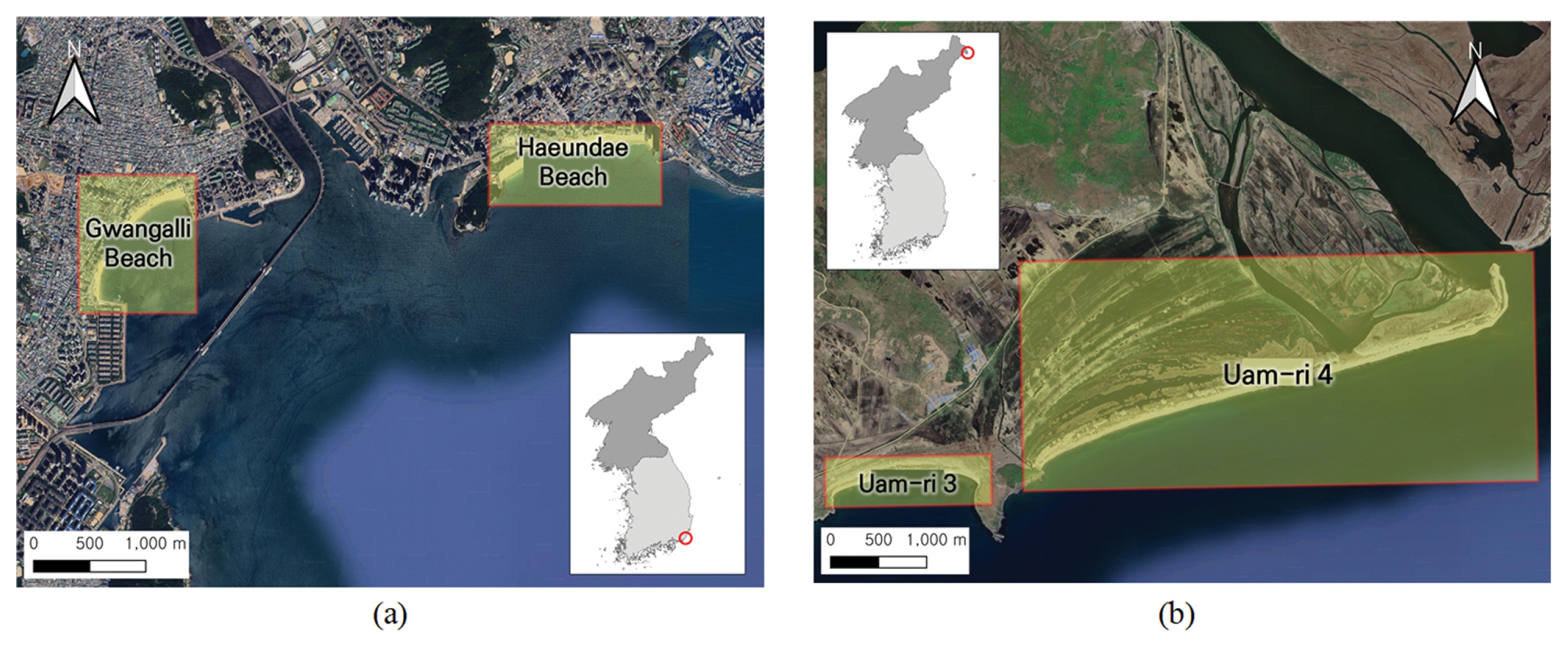
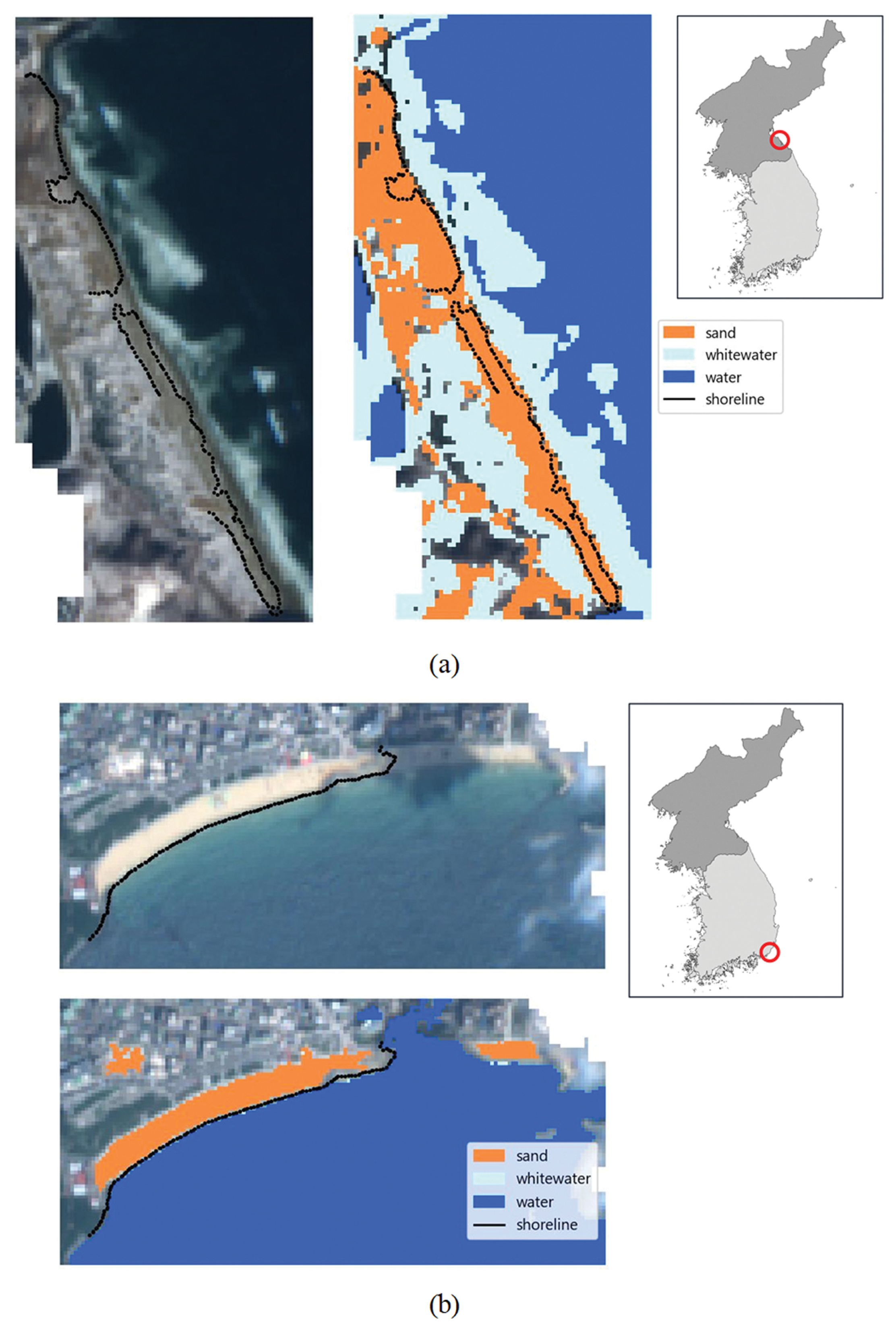
이에 본 연구에서는 위성영상 기반 분석 기법을 활용하여 접근이 제한된 북한 동해안을 포함한 한반도 동해안 전반의 해안선 변동 특성을 정량적으로 분석하고자 한다. 또한 해빈폭 변동과 해안 형상 특성을 기반으로 무차원 지표를 구성하고,차원축소 및 군집분석 기법을 적용하여 표사계 단위의 공간 Fig. 1. Example of beach boundary delineation: (a) Oryukdo (South Korea) and (b) Tumen River (North Korea).적 구조를 규명하고자 한다. 이를 통해 북한 연안의 침식 특성을 정량적으로 제시하고, 향후 남북 연안관리 협력 및 통합적 해안관리 전략 수립을 위한 기초자료를 제공하는 것을본 연구의 주요 목적으로 한다.
2. 연구방법
2.1 위성영상 자료 구축
위성영상 자료 구축을 위해 한반도 동해안의 해안 분석 구간을 설정하였다. 분석 대상 구간은 표사계 단위로 구분하였으며 단위 표사계 경계는 Bowen and Inman(1966)의 정의에 따라 설정하였다. 해당 연구에서는 곶과 하천 하구와 같은 지형적 경계를 기준으로 연안 퇴적물 이동 체계를 구분하였다. 본 연구에서도 동일한 원칙을 적용하여 곶, 하천, 항만 구조물 등을 경계로 해변 영역을 구분하였다. 영역 설정은 GIS를 활용하여 수행하였으며 각 해변은 독립된 분석 단위로 정의하였다. Fig. 1(a)와 같이 국립해양조사원이 설정한 동해와남해 경계인 오륙도부터 Fig. 1(b)의 북한-러시아 국경인 두만강까지 총 1,095개의 해변 영역을 설정하였다.
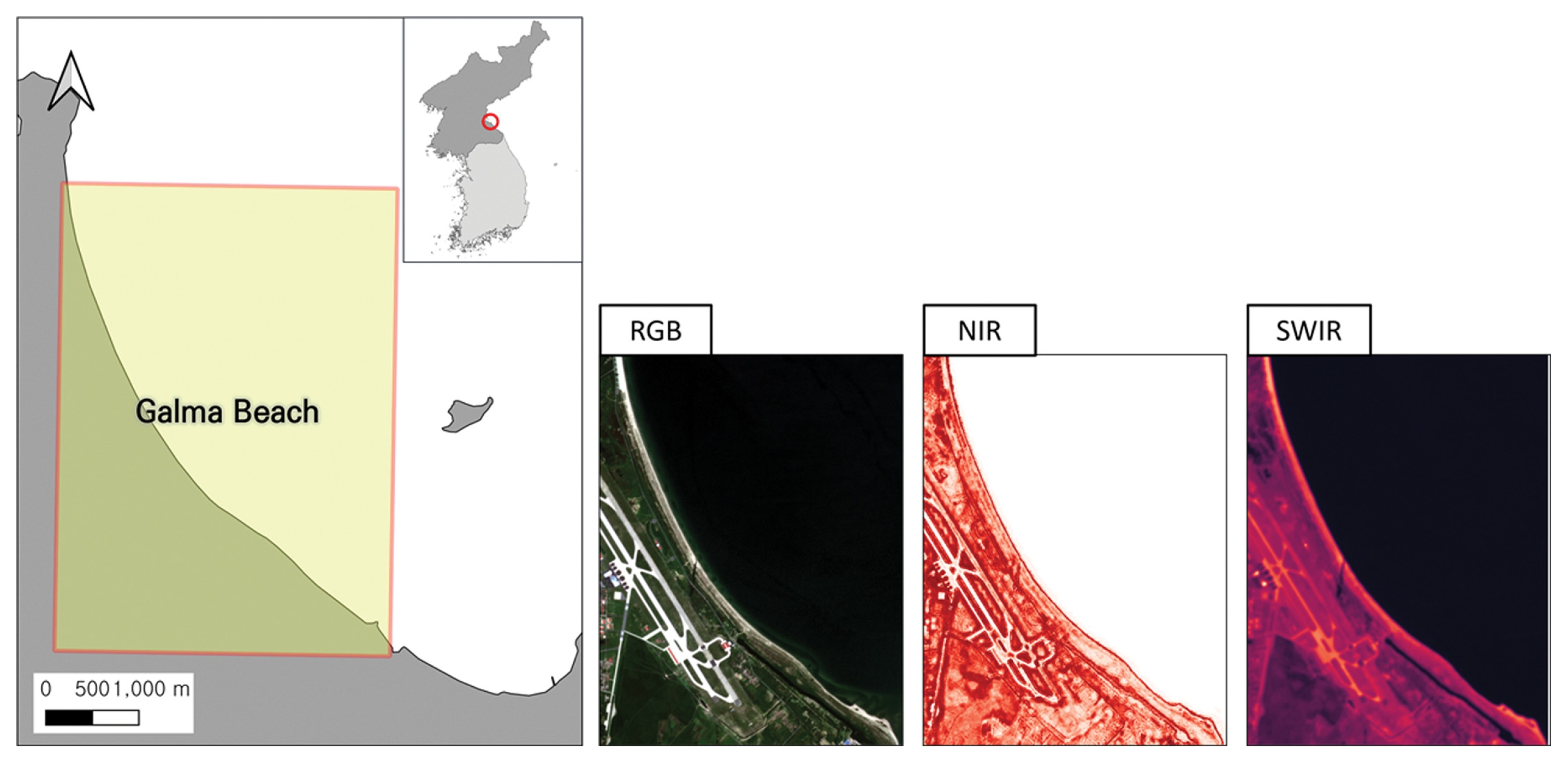
위성영상은 2015년부터 2025년까지의 Sentinel-2 Level-2A 영상을 대상으로 수집하였다. Sentinel-2는 유럽우주국(ESA)이 운영하는 광학 다중분광 위성으로 연안 해안선 추출에 적합한 공간·분광 해상도를 제공한다. Sentinel-2는 Sentinel-2A(2015년 발사)와 Sentinel-2B(2017년 발사)의 쌍위성 체계로 운영되며 약 5일의 재방문 주기를 제공한다. 이는 계절 변동과 단기 이벤트가 반복되는 연안 지역의 장기 시계열 분석에 유리하다. Sentinel-2는 MultiSpectral Instrument(MSI)를 탑재하고 있으며 Table 1과 같이 총 13개 분광 밴드를 제공한다. 본 연구에서는 대기보정이 완료된 Level-2A SurfaceReflectance 제품을 사용하였다. Level-2A 자료는 지표면 반사도로 제공되기 때문에 수체와 육지 분류에 직접 활용할 수있다. 특히, Fig. 2의 NIR 및 SWIR 영역은 수체에서 강한 흡수 특성을 보이므로 RGB 밴드와 결합할 경우 해역과 육역을 효과적으로 구분할 수 있다.
본 연구에서는 총 1,095개의 해변 영역을 설정하였으며 해변 단위 평균 면적은 약 0.59 km2이다. 각 해변별 평균 804개의 Sentinel-2 영상을 확보하였다. 이를 통해 2015년부터 2025년까지의 장기 시계열 해안선 변동 분석이 가능한 공간적·시간적 일관성을 갖춘 영상 기반을 구축하였다.
2.2 해안선 추출 및 이상치 제거
전처리된 위성영상을 기반으로 해안선 추출을 수행하기 위하여 Python 기반 오픈소스 도구인 CoastSat(Vos et al.,2019)을 적용하였다. CoastSat은 다중분광 영상의 분광 정보를 이용하여 해안선을 자동으로 추출하는 알고리즘으로, 본 연구에서는 Sentinel-2 영상의 RGB, NIR, SWIR1 밴드를입력 자료로 사용하였다. CoastSat은 영상 내 각 픽셀을 모래(sand), 수체(water), 쇄파대(white-water), 기타 육상(other land features)으로 분류하고, Modified Normalized Difference Water Index(MNDWI; Xu, 2006)와 Otsu 임계값 기법(Otsu,1979)을 적용하여 수체와 모래 간의 경계를 산정한다. 이후 Marching Squares 알고리즘을 적용하여 경계선을 벡터 형태의 해안선으로 변환한다(Cipolletti et al., 2012).
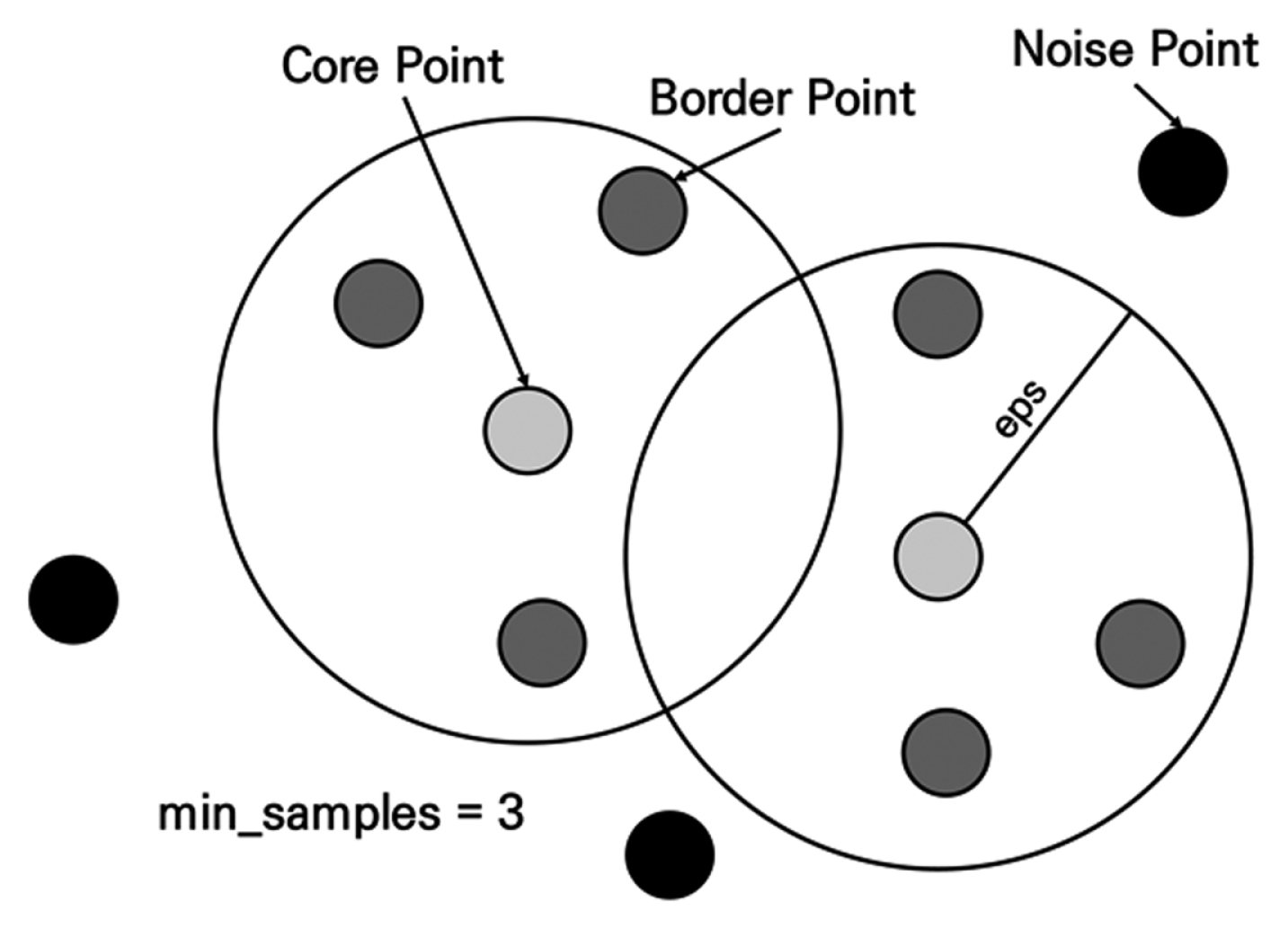
위성영상 기반 해안선 추출 과정에서는 적설, 구름 및 그림자, 태양 반사 등으로 인해 수체와 육역의 분광 특성이 불명확해질 수 있으며, 이에 따라 실제 해안선과 다른 위치가 추출될 수 있다. 이러한 이상치를 제거하기 위하여 밀도 기반군집 알고리즘인 DBSCAN(Density-Based Spatial Clustering of Applications with Noise)(Ester et al., 1996)을 적용하였다. DBSCAN은 사전에 군집 수를 설정할 필요 없이, 반경(eps) 내에 최소 표본 수(min samples) 이상이 밀집된 영역을 하나의 군집으로 정의하는 비지도 학습 알고리즘이다(Fig. 3). 각 자료는 핵심점(core point), 경계점(border point), 노이즈점(noise point)으로 구분되며, 밀도 조건을 충족하지 못하고 주변 군집에 포함되지 않는 자료는 노이즈로 분류된다. 본 연구에서는 동일 해변에서 시계열적으로 추출된 해안선좌표점들을 결합한 후 DBSCAN을 적용하였다. min_samples는 10으로 설정하였으며, eps는 해변별 해안선 점 간 중앙 간격의 1.0배로 자동 산정하였다. 이는 해변마다 해안선 길이, 추출 점 간격, 공간 해상도가 다르기 때문에 모든 해변에 동일한 고정 반경을 적용할 경우 과도한 제거 또는 과소 제거가 발생할 수 있기 때문이다. DBSCAN 적용 후 노이즈가 아닌점들 중 가장 큰 군집을 주 군집으로 정의하고, 각 해안선의전체 유효 좌표점 중 주 군집에 포함되는 좌표점의 비율을 주군집 포함률로 산정하였다. 본 연구에서는 주 군집 포함률 기준값을 1.0으로 설정하여 모든 유효 좌표점이 주 군집에 포함된 해안선만 유지하였으며, 이 조건을 만족하지 못한 해안선은 이상치로 분류하여 제외하였다. 또한 유효 해안선 수가10개 미만이거나 필터링 이후 유지된 해안선 수가 10개 미만인 해변은 분석에서 제외하였다.
2.3 시계열 해빈폭 변동량 산정
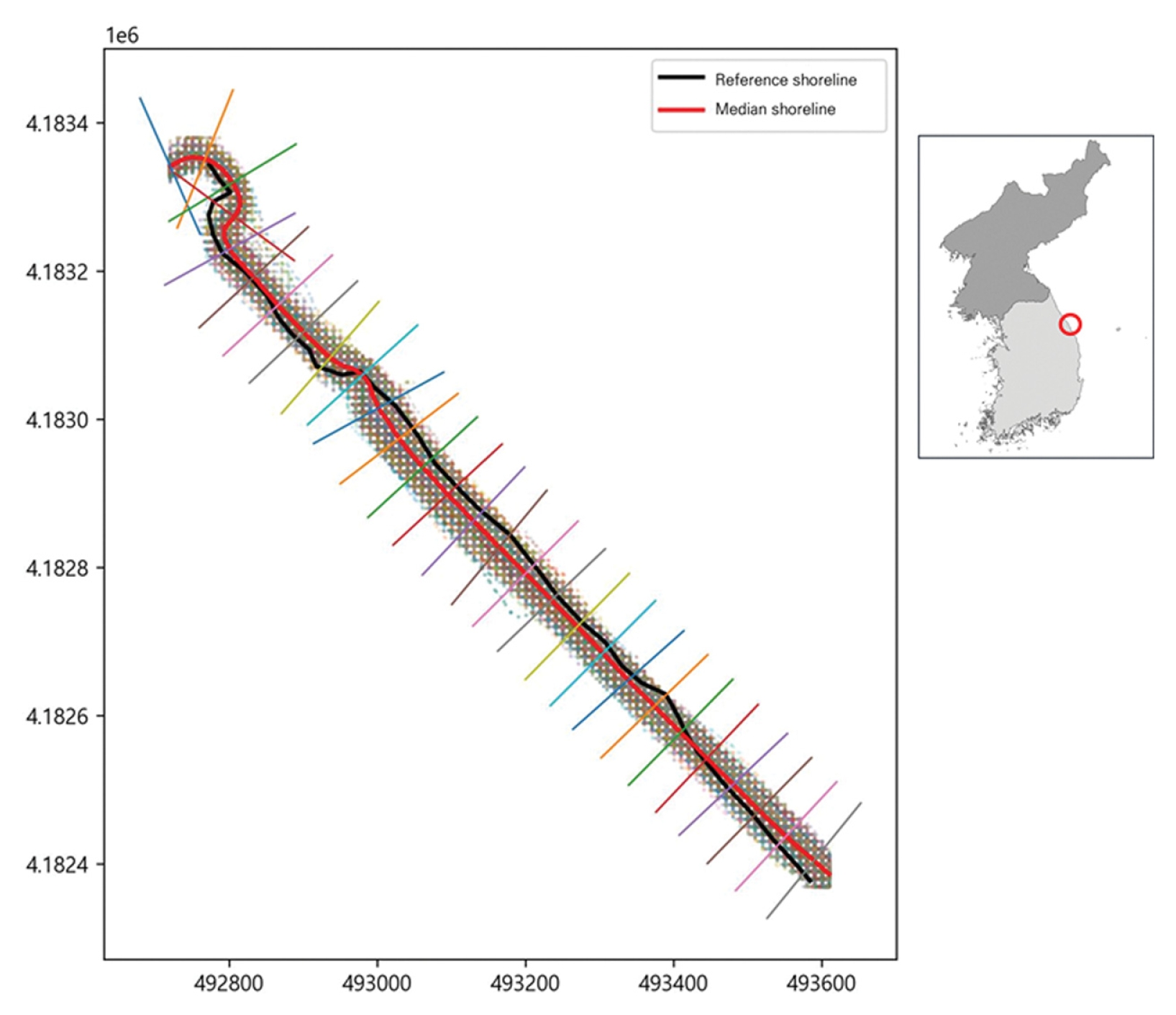
구축된 시계열 해안선 자료를 기반으로 해빈폭 변동량을 정량적으로 산정하였다. 먼저 동일 해변에 대해 10년간 추출된 시계열 해안선의 교차거리 값을 기반으로 각 위치별 중앙값을 산정하여 대표 해안선을 설정하였다. 평균값 대신 중앙값을 사용하여 일부 시기에 발생한 폭풍 또는 오추출로 인한 극단값의 영향을 최소화하였다. 설정된 대표 해안선을 기준선으로 하여 해당 선에 수직한 측선(transect)을 50 m 간격으로 자동 생성하였다(Fig. 4). 각 측선은 해안선 변화 방향과직교하도록 구성하여 교차거리 계산의 기하학적 왜곡을 최소화하였다. 각 시점의 해안선과 생성된 측선의 교차점을 계산하여 단면별 교차거리 값을 산정하였다. 이를 통해 각 단면에서 시간에 따른 해안선 전진 및 후퇴량을 정량화하였다.
그러나 위성영상 기반 해안선은 촬영 시점의 조위 조건을 포함하는 순간 해안선(instantaneous shoreline)에 해당하며, 조석에 따른 수직 수위 변동이 수평 위치 변동으로 중첩되어 나타난다. 따라서 위성 기반 해안선 시계열에는 조위 변동과실제 침·퇴적 신호가 혼합되어 포함되며, 이를 분리하지 않을 경우 형태 변화 해석에 오차가 발생할 수 있다. 조위 보정을 수행하지 않을 경우 단순한 수위 변동이 장기 침·퇴적신호로 오인될 가능성이 있다.
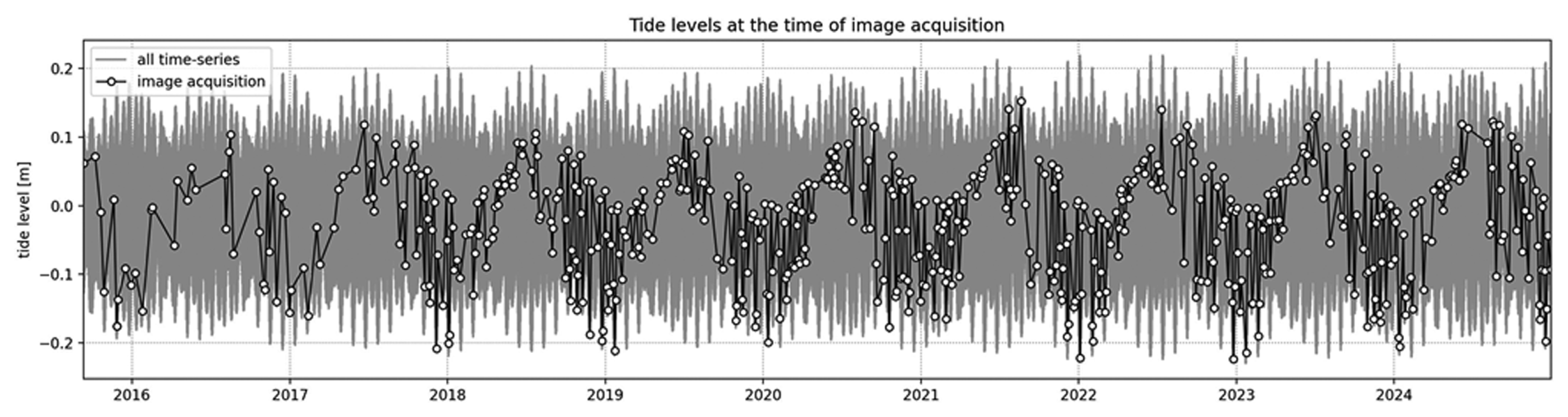
본 연구에서는 조위 보정을 위해 AVISO에서 제공하는 FES2022(Finite Element Solution 2022) 조위 모델을 활용하였다. AVISO는 프랑스 CNES(Centre National d'EtudesSpatiales)에서 운영하는 해양 위성고도계 및 조위 자료 서비스 플랫폼으로 전지구 해양 조위 모델과 위성 기반 해수면 자료를 제공한다. FES2022는 전지구 조석 조화상수를 기반으로 구축된 고해상도 수치 조위 모델로, 주요 조석 성분을 포함하여 시간과 위치에 따른 해수면 변동을 계산할 수 있는 최신 세대의 조위 예측 모델이다. Fig. 5와 같이 조위 모델을활용하여, 각 위성영상 취득 시점에 해당하는 해변 위치의 조위 값을 계산하였다. 계산한 조위 값을 이용하여 위성 영상촬영 당시 해안선이 평균 해수면(Mean Sea Level) 대비 어느 수위에서 형성되었는지를 산정하였다. 조위 보정은 선형해빈 경사 가정을 기반으로 수행되며, 해수면 상승 또는 하강에 따른 수평 이동량은 식(1)과 같이 계산된다.
여기서 Δx는 순간 해안선 위치, ztide는 해당 시점의 조위,tanβ는 해빈 경사이다. 이와 같은 수평 보정 관계는 해빈 경사가 일정하다는 가정 하에서 조위에 따른 위치 변동을 제거하기 위한 일반적인 접근으로 활용된다(Stockdon et al.,2002). 한편, 위성 기반 해안선 시계열로부터 해빈 경사를 직접 추정하는 방법도 제시되어 있으나, 이는 조위 신호가 충분히 명확하게 분리될 수 있는 조건에서 안정적으로 적용 가능하다. 특히 조차(TR)와 해빈 경사(tanβ)의 비(TR/tanβ)가 충분히 클 때 정확도가 높아지며, 해당 비율이 작아질수록 오차가 증가하는 것으로 보고된 바 있다(Bujan et al., 2019). 동해안과 같이 상대적으로 조차가 크지 않고 해빈 경사가 비교적 가파른 환경에서는 영상 기반 경사 추정의 불확실성이 증가한다(Vos et al., 2020).
따라서 본 연구에서는 강원도 연안침식 실태조사에서 제시된 현장 관측 해빈 경사 값을 기반으로 단일 대표 경사값을tanβ = 0.17로 설정하였다. 기존 전지구 또는 광역 규모 해안 침수·해수면 상승 영향 평가 연구에서는 해빈 경사 자료의 부재로 인해 전역 상수 해빈 경사(tanβ = 0.1)를 가정하거나 경사 비의존적 접근을 적용한 사례가 보고된 바 있다(Vitousek et al., 2017; Melet et al., 2018; Aucan et al.,2019). 이에 따라 본 연구에서는 전역 상수 가정 대신 동해안 지역의 현장 관측값을 기반으로 한 대표 경사값을 설정하고, 이를 적용하여 조위 보정량을 산정한 후 모든 단면에 일관되게 적용하였다.
2.4 표사계 분석을 위한 무차원수 정의
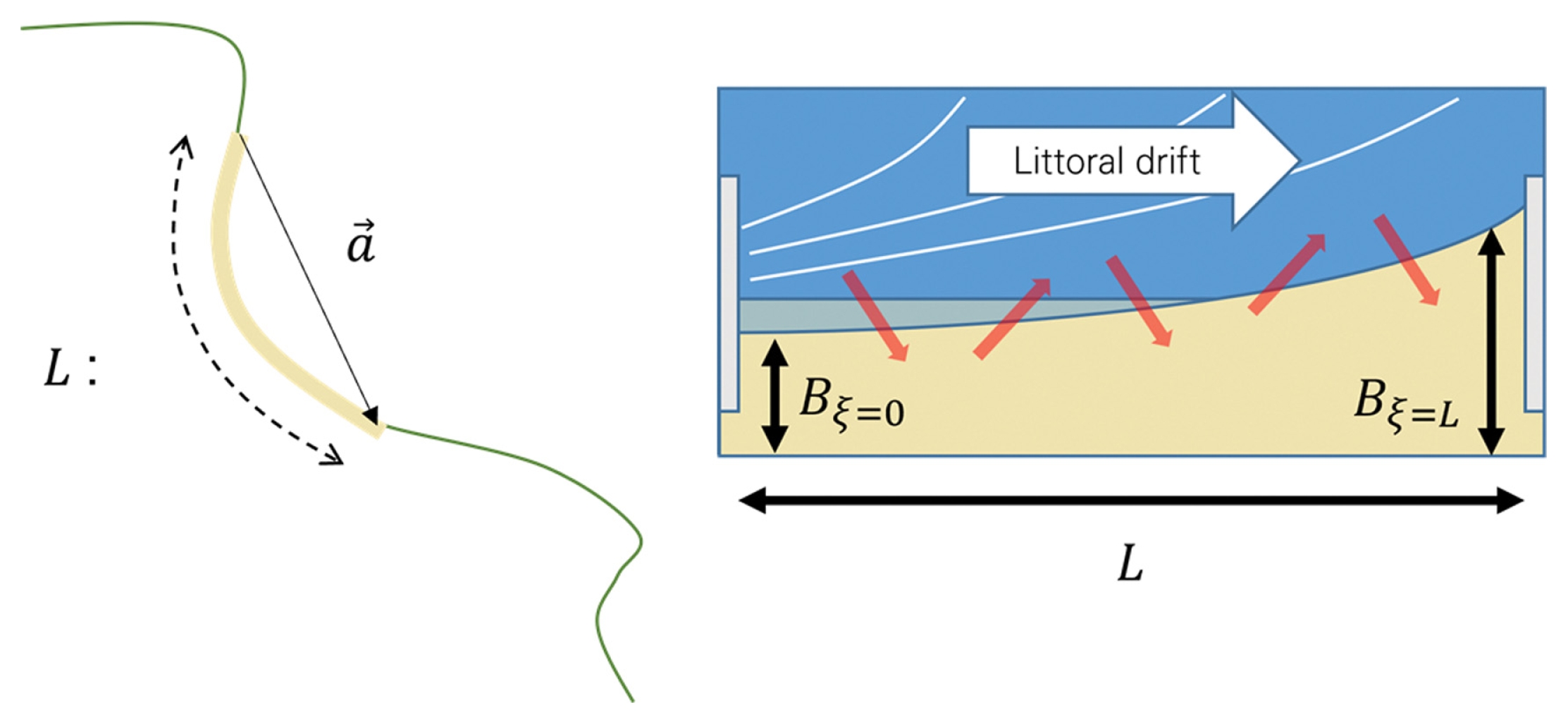
본 연구에서는 해빈폭 변동을 단순한 지형 변화로 보지 않고, 연안에서 장기간 누적된 표사 이동의 결과로 해석하였다. 즉, 특정 해변에서 나타나는 해빈폭의 시공간적 변화는 파랑과 연안류에 의해 유도되는 표사의 이동 방향성, 이송 강도, 그리고 공간적 비대칭 분포 특성을 반영하는 지형적 지표로 간주하였다. 이에 따라 해안선 형상과 해빈폭 변동을 무차원화하여 서로 다른 규모와 형상을 갖는 해변 간에도 비교가 가능하도록 정량적 지표를 산정하였다(Fig. 6).
우선 유사 이송 경로의 공간적 특성에 따라 표사계를 구분하고자 하였다. 이를 위해 해안 형상과 표사 이동 결과의 공간적 비대칭성을 정량화하는 방법을 도입하였다. 기본적으로각 해안 구간이 향하는 방향은 벡터로 정의하였으며 이는해안 형상이 갖는 전체적인 공간적 지향성을 나타낸다. 해당벡터를 정규화하여 단위 방향 벡터를 식(2)와 같이 정의하였다.
다음으로 해안선을 따라 길이 방향 좌표계를 정의하였다. 해안선 전체 길이를 L이라 할 때, 길이 방향 좌표 ζ를 다음과 같이 설정하였다.
일반적으로 표사 이동의 결과는 전사구 경사(Foredune Slope), 입도(D50), 해빈폭 등 다양한 지형·퇴적 변수의 공간적 변화로 나타난다. 본 연구에서는 이러한 표사 이동의 결과로 나타나는 임의의 물리량을 θ로 일반화하였다. 해안선 길이 방향 좌표계에 따라 임의의 변수 θ의 공간적 변화율은 다음과 같이 정의된다.
이는 해안선 방향을 따라 나타나는 비대칭도의 정도를 의미하며 값이 0에 가까울수록 공간적으로 균형 상태에 가깝고,절대값이 클수록 특정 방향으로의 침식 또는 퇴적 경향이 우세함을 의미한다. 여기에 단위 방향 벡터를 곱함으로써 실제공간 좌표계에서의 방향성을 부여할 수 있다.
이를 통해 각 해변의 표사 이동 특성을 벡터 형태로 공간적으로 표현할 수 있다. 또한 해안 형상의 영향을 고려하기위해 만입도를 무차원 지표로 정의하였다. 만입 깊이 a →
만입도는 단순한 기하학적 비율이 아니라 표사 이동 체계의 구조적 경계를 반영하는 변수이다. 해안이 직선에 가까울수록 a →
다만 본 연구는 위성영상 기반 분석을 수행하므로 모든 표사 이동 결과 변수를 직접적으로 산정하기에는 한계가 있다. 전사구 경사나 입도와 같은 변수는 영상 자료만으로 정량화하기 어렵기 때문에, 실제 분석에서는 위성영상으로 안정적으로 추출 가능한 해빈폭 B만을 사용하였다. 따라서 본 연구에서 적용된 비대칭도는 다음과 같이 구체화된다.
그리고 공간적 방향성을 고려한 해빈폭 비대칭도는 다음과 같이 표현된다.
결과적으로 본 연구에서는 해안 방향성에 따른 해빈폭 비대칭도 F b →
2.5 차원축소 및 군집분석을 통한 표사 이동 분석
본 연구에서는 앞서 산정한 무차원 표사 특성 지표와 해변의 지리적 위치 정보를 함께 활용하여 해변 간 물리적 유사성과 공간적 연속성을 동시에 고려하였다. 이를 위해 UMAP(Uniform Manifold Approximation and Projection)을 이용한 차원축소 분석을 수행하였다. UMAP은 고차원 데이터의국지적 구조와 전역적 구조를 동시에 보존하면서 저차원 공간으로 사상하는 비선형 차원축소 기법으로, 데이터 간 거리기반 위상 구조를 근접 그래프로 구성한 뒤 이를 저차원 공간에 최적화하여 임베딩을 생성한다(McInnes et al., 2018). 본 연구에서는 표사 이동 특성을 설명하는 다변량 무차원 변수들의 상대적 유사성을 시각적으로 파악하고, 해변 유형 간잠재적 군집 구조를 탐색하기 위해 UMAP을 적용하였다. 이를 통해 단일 지표로는 파악하기 어려운 표사계의 다차원적 특성을 저차원 공간에서 직관적으로 해석하고자 하였다.
UMAP의 입력값은 각 해안별 변수의 계절 평균값으로 구성하였다. 물리적 특성 변수로는 해빈폭 비대칭도 F b → F b →
UMAP 임베딩 구조는 주로 두 가지 하이퍼파라미터에 의해 결정된다. 하나는 고차원 공간에서 각 자료점에 대해 고려하는 최근접 이웃의 수를 정의하는 최근접 이웃 수(n_neighbors)이며, 다른 하나는 저차원 임베딩 공간에서 자료점들이 얼마나 조밀하게 배치될 수 있는지를 조절하는 최소 거리(min_dist)이다. 본 연구에서는 임베딩 결과의 안정성과 군집 구조 재현 정도를 비교하기 위해 다양한 조합의 하이퍼파라미터를 적용하여 비교하였다.
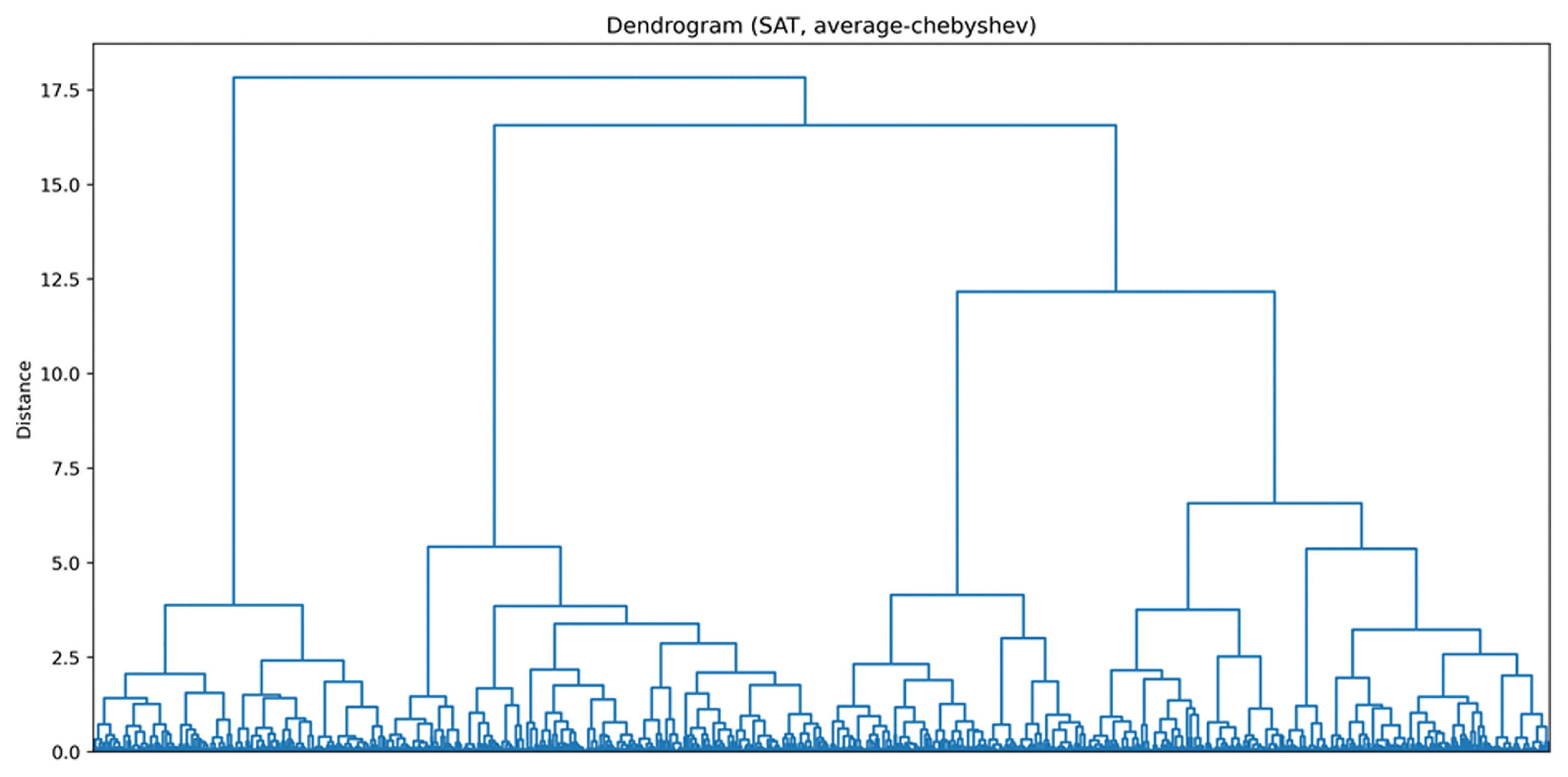
이후 UMAP 공간에서 해변 간 유사성을 기반으로 계층적군집분석(hierarchical clustering)을 수행하였다. 계층적 군집분석은 각 개별 자료점을 하나의 군집으로 시작하여 자료 간 거리를 기준으로 가장 유사한 군집부터 단계적으로 병합해 나가는 방법으로, 최종적으로는 모든 자료가 하나의 집단으로 통합되는 트리(tree) 구조를 형성한다(Ward, 1963). 이 과정은 덴드로그램(dendrogram)이라 불리는 계층 구조도로 시각화되며 세로축은 군집이 병합되는 거리를 의미한다. 따라서 덴드로그램의 상위 단계는 광역적 표사계 단위를, 하위 단계는 보다 세분화된 국지적 표사계를 해석하는 데 활용될 수있다.
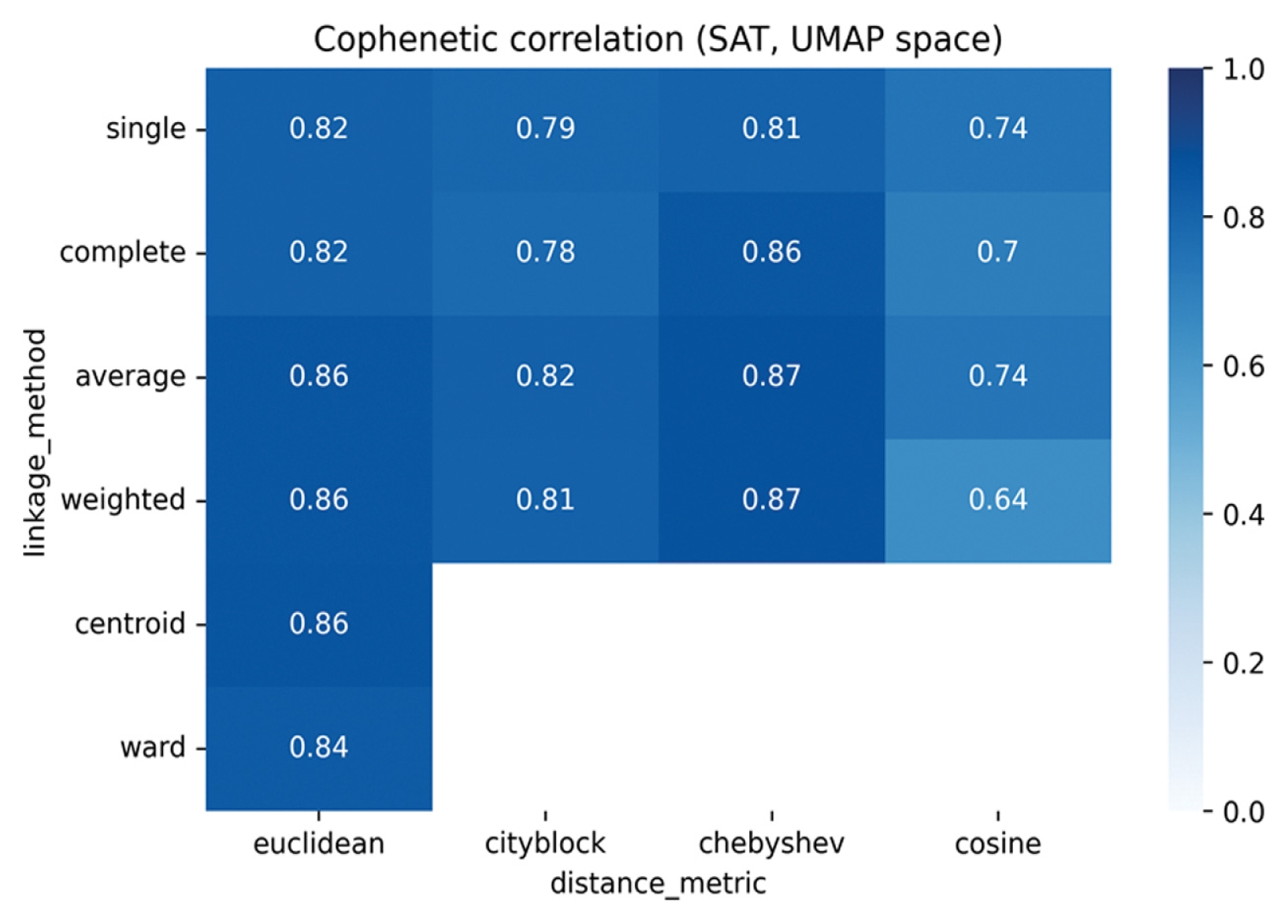
군집 형성 결과는 연결 기준(linkage method)과 거리 척도(distance metric)의 정의에 따라 달라진다. 연결 기준은 두 군집 간 거리를 산정하는 방식으로, 평균 연결법(average linkage)은 두 군집에 속한 모든 점 쌍 간 거리의 평균값을 군집 간거리로 정의하며, 완전 연결법(complete linkage)은 최대 거리, 단일 연결법(single linkage)은 최소 거리를 기준으로 군집을 병합한다. 한편, 거리 척도는 개별 자료점 간 비유사성을 정량화하는 방법으로 본 연구에서는 유클리드 거리(Euclidean distance), 맨해튼 거리(Manhattan distance), 체비쇼프 거리(Chebyshev distance), 코사인 거리(cosine distance) 등을 비교하였다. 이와 같은 연결 기준과 거리 척도의 조합에 따라 형성된 계층적 군집 트리가 UMAP 임베딩 공간에서의 거리 구조를 얼마나 충실히 반영하는지를 평가하기 위하여 코페네틱상관계수(cophenetic correlation coefficient)를 산정하였다.코페네틱 상관계수는 원자료 간 거리와 덴드로그램 상에서 두점이 동일 군집으로 병합될 때의 병합 거리인 코페네틱 거리(cophenetic distance) 간의 상관계수를 의미하며, 그 값이 1에 가까울수록 군집 구조가 원자료의 거리 구조를 잘 보존함을 의미한다.
이후 최적 군집수의 결정은 실루엣 계수(silhouette score)를 이용하여 수행하였다. 실루엣 계수는 각 자료점에 대해 동일 군집 내 평균 거리(di)와 가장 가까운 다른 군집과의 평균거리(do)를 비교하여 다음과 같이 계산한다.
값이 1에 가까울수록 군집 내부 응집도는 높고 군집 간 분리는 뚜렷함을 의미한다. 실루엣 계수를 사용하여 최적 군집수를 계산하였고, 이를 표사 이동의 관점에서 분석을 하였다.
3. 연구결과
3.1 위성영상 기반 해안선 추출 및 정확도 검증
CoastSat을 이용한 위성영상 기반으로 추출된 해안선의 경우 일부 구간에서는 육역과 해역의 분광 특성이 명확히 구분되지 않는 사례가 확인되었다. 특히 Fig. 7(a)와 같이 북한 동해안 지역의 겨울철에는 해변에 적설이 형성되어 모래와 수체의 경계가 뚜렷하게 식별되지 않는 경우가 발생하였다. 이는 자동 분류 과정에서 모래와 수체 간 분광 대비가 약화되면서 경계 인식이 불안정해지는 데에서 기인한다. 또한 Fig. 7(b)과 같이 구름 및 그림자의 영향으로 수면 반사 특성이 왜곡되거나 반사도가 감소하여 수역과 육역이 오분류되는 사례가 나타났다. 더불어 태양 고도 및 촬영 시점에 따른 음영 차이, 지형 음영, 강한 태양 반사(sun glint) 현상 역시 실제 경계 위치와 상이한 해안선이 추출되는 요인으로 작용하였다.
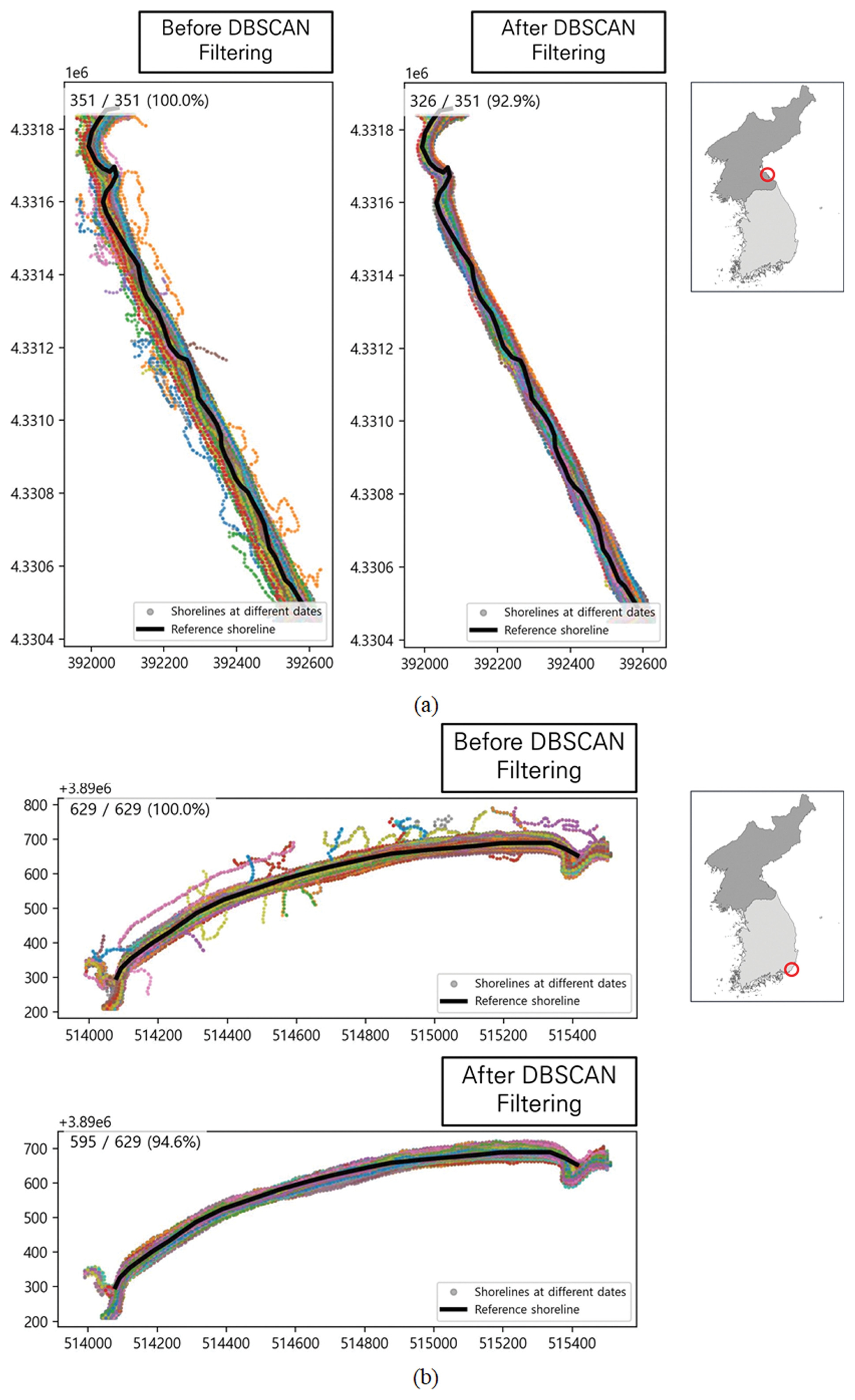
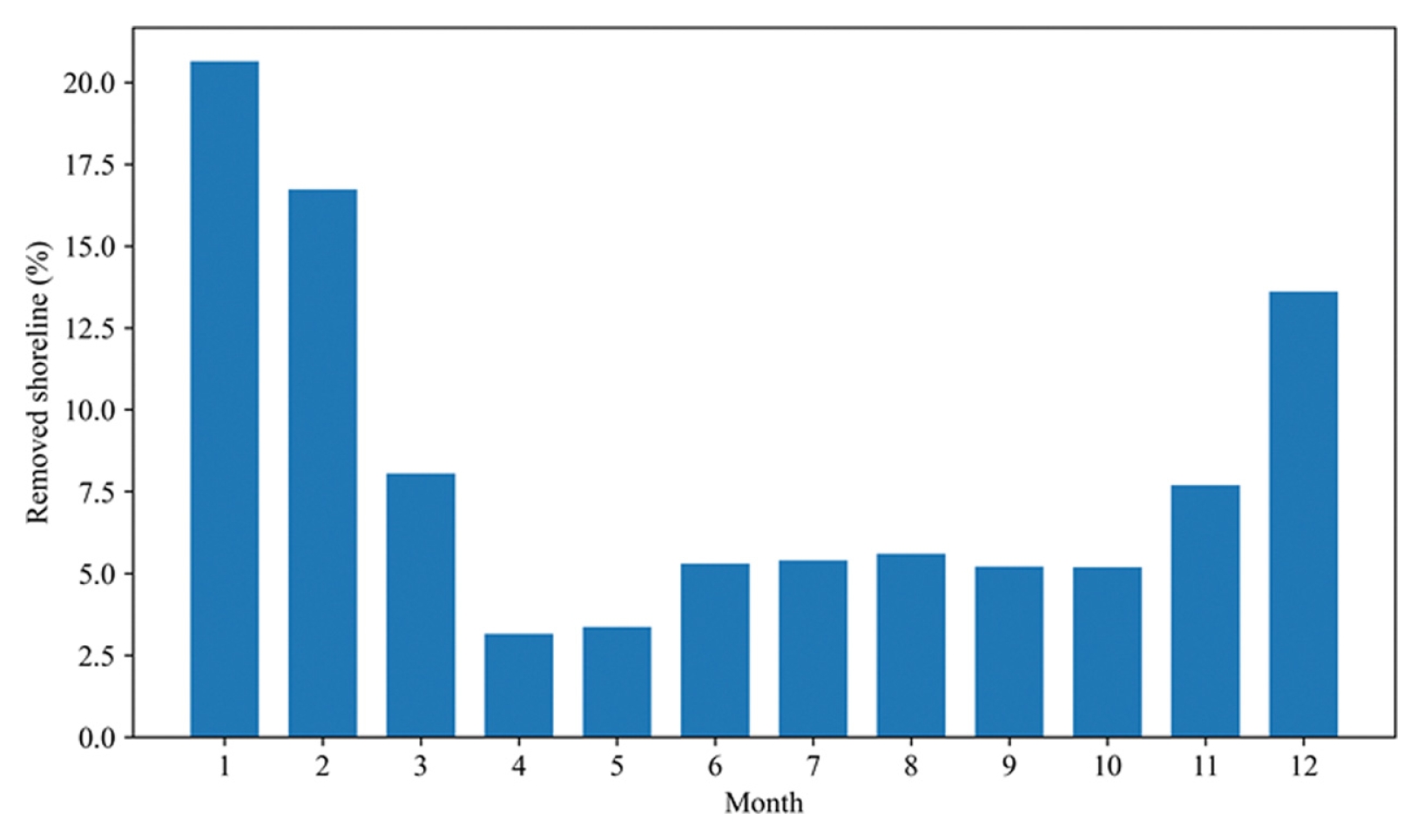
DBSCAN을 적용하여, 다수 시기에 반복적으로 나타나는 정상 해안선 군집을 식별하고, 주변 해안선과 공간적으로 유사한 패턴을 형성하지 못하고 단독으로 이격된 해안선은 노이즈로 판별하여 제거하였다. 이 과정은 군집 수를 사전에 가정하지 않고도 자동으로 이상 해안선을 선별할 수 있다는 점에서 효과적이었다(Fig. 8). 결과적으로 육역과 해역 경계 오인식으로 인해 비정상적으로 돌출되거나 급격히 후퇴한 해안선을 체계적으로 구별할 수 있었으며 공간적 연속성과 시간적 일관성을 확보한 해안선 시계열을 구축할 수 있었다. 각해안별 평균 90.7%의 해안선이 보존되었으며 Fig. 9와 같이해변에 적설이 잦은 겨울철에 오추출된 해안선 비율이 높음을 확인하였다.
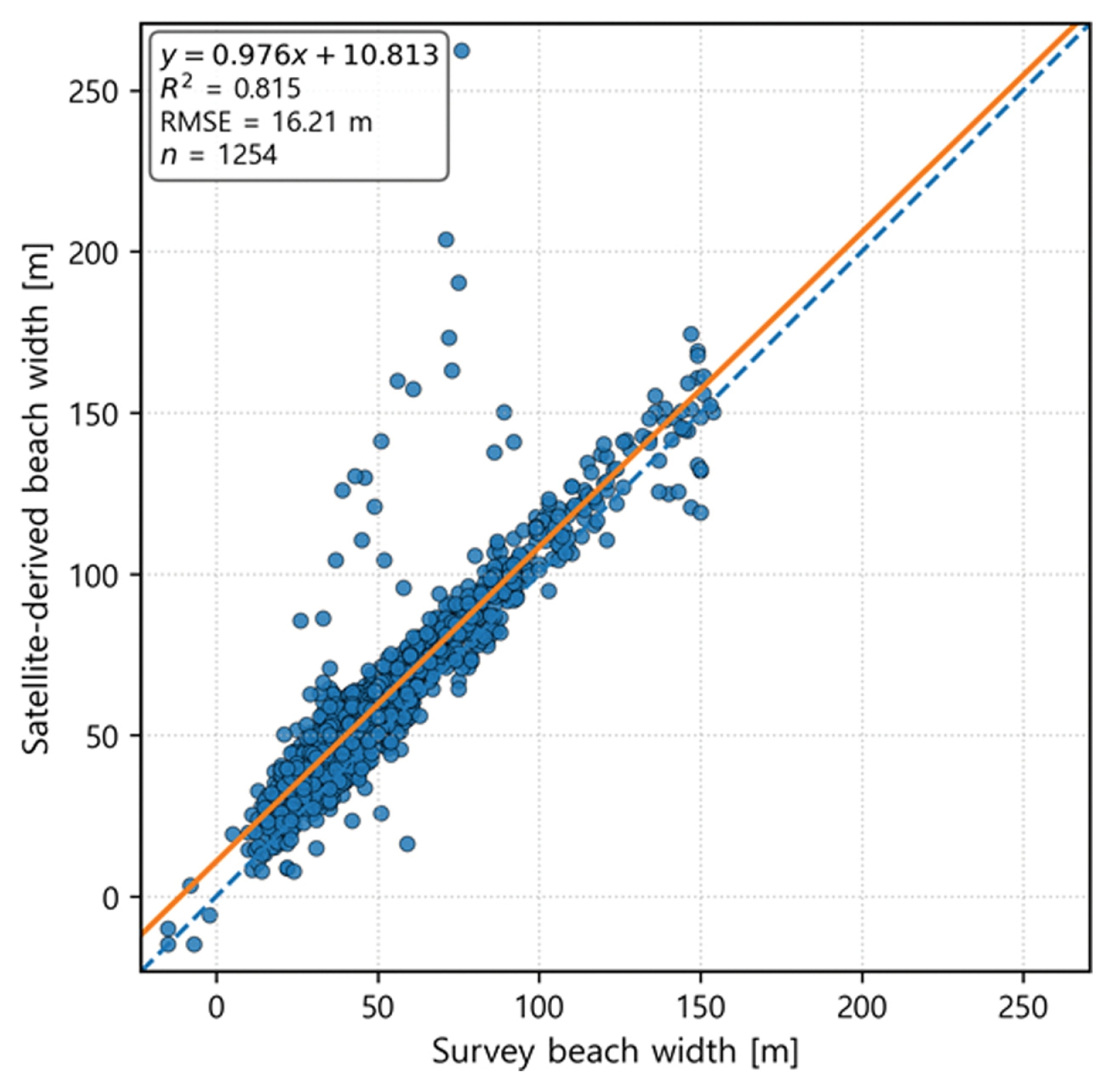
추출된 해안선의 신뢰도를 검증하기 위해 2022년 연안침식실태조사 보고서(Gangwon-do East Sea Rim Headquarters, 2022)에 수록된 강원도 해안 구간의 현장 측량 해안선 자료와 비교 분석을 수행하였다. 동일 시기 위성영상으로부터 추출한 해안 폭과 현장조사 해안 폭을 비교하여 교차거리 기반오차를 산정하였다. Fig. 10과 같이 두 자료 간에는 결정계수 R2= 0.815의 높은 상관성이 확인되었으며, 평균제곱근오차는 16.21 m로 위성영상의 해상도가 10 m임을 고려하였을때, 비교적 낮은 오차 수준을 보였다. 이러한 결과를 종합할때, CoastSat로 추출한 해안선과 DBSCAN으로 이상치를 보정한 결과가 현장 측량 자료와 전반적으로 높은 일치도를 보이는 것으로 판단하였다. 따라서 본 연구에서 구축한 해안선시계열 자료는 장기 연안 지형 변화 분석에 활용 가능한 수준의 신뢰도를 확보한 것으로 판단하였다.
3.2 해빈폭 변동 경향 분석
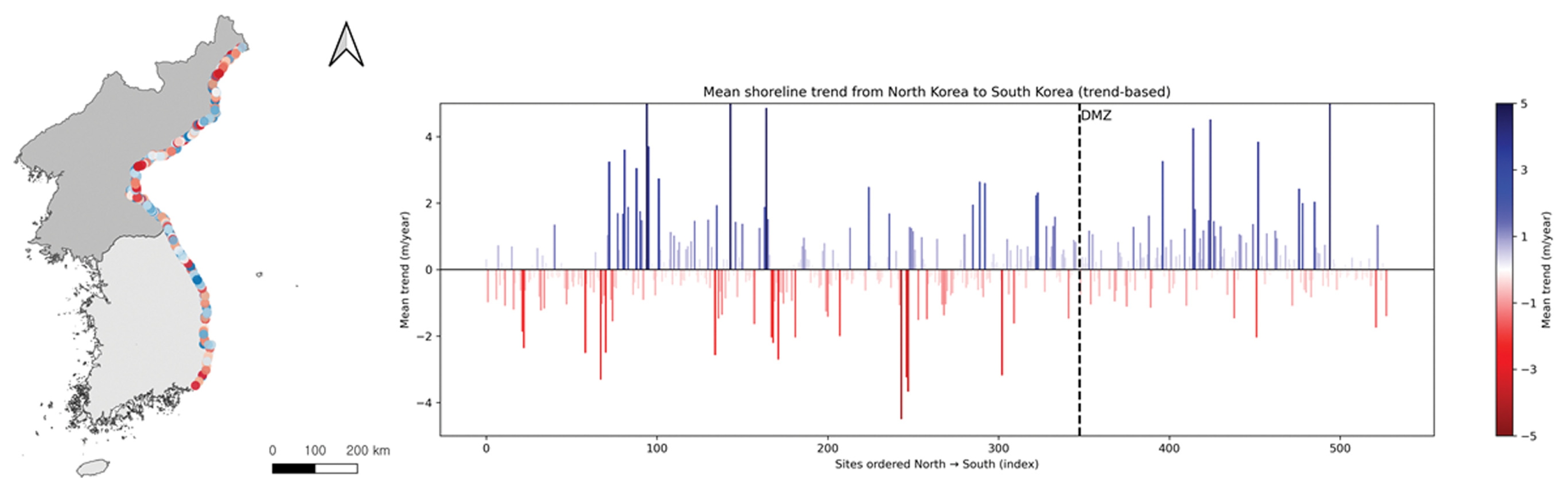
조위 보정이 완료된 이후에는 단면별 해빈폭 시계열의 장기 변동 경향을 분석하였다. 각 단면에 대해 시간에 따른 해빈폭 변화를 선형회귀로 추정하여 연간 변동률(m/year)을 산정하고, 이를 동해안 전 구간에 걸쳐 공간적으로 비교하였다. Fig. 11과 같이 해빈폭 변화율의 부호와 크기를 색상으로 구분하여 나타내었으며, 음의 변화율(적색)은 침식 경향, 양의변화율(청색)은 퇴적 경향을 의미한다. 분석 결과, 동해안 전반에서 침식(음의 추세)과 퇴적(양의 추세)이 교차하여 나타났으며, 특정 구간에서는 상대적으로 강한 침식 또는 퇴적 경향이 집중되는 양상이 확인되었다.
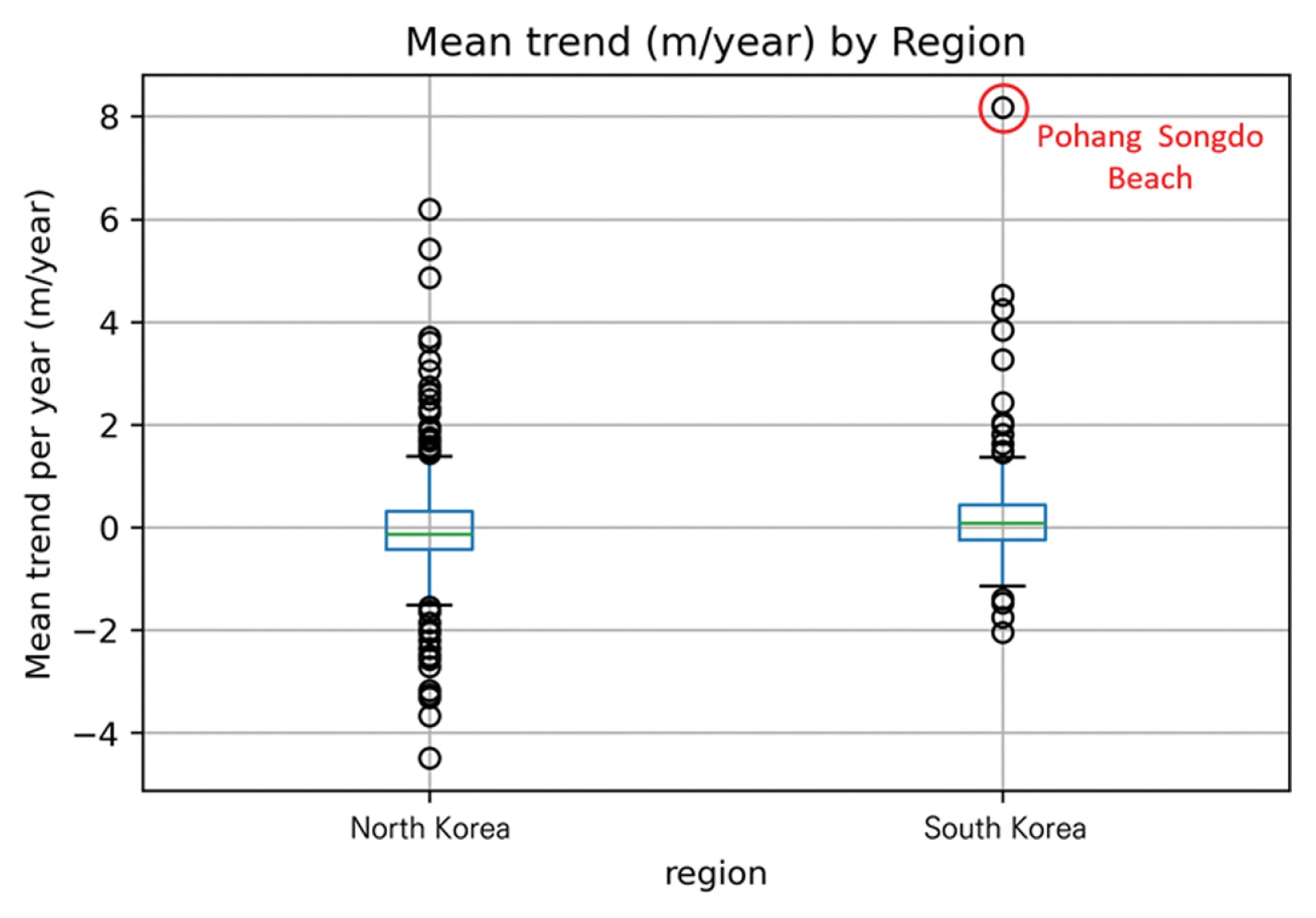
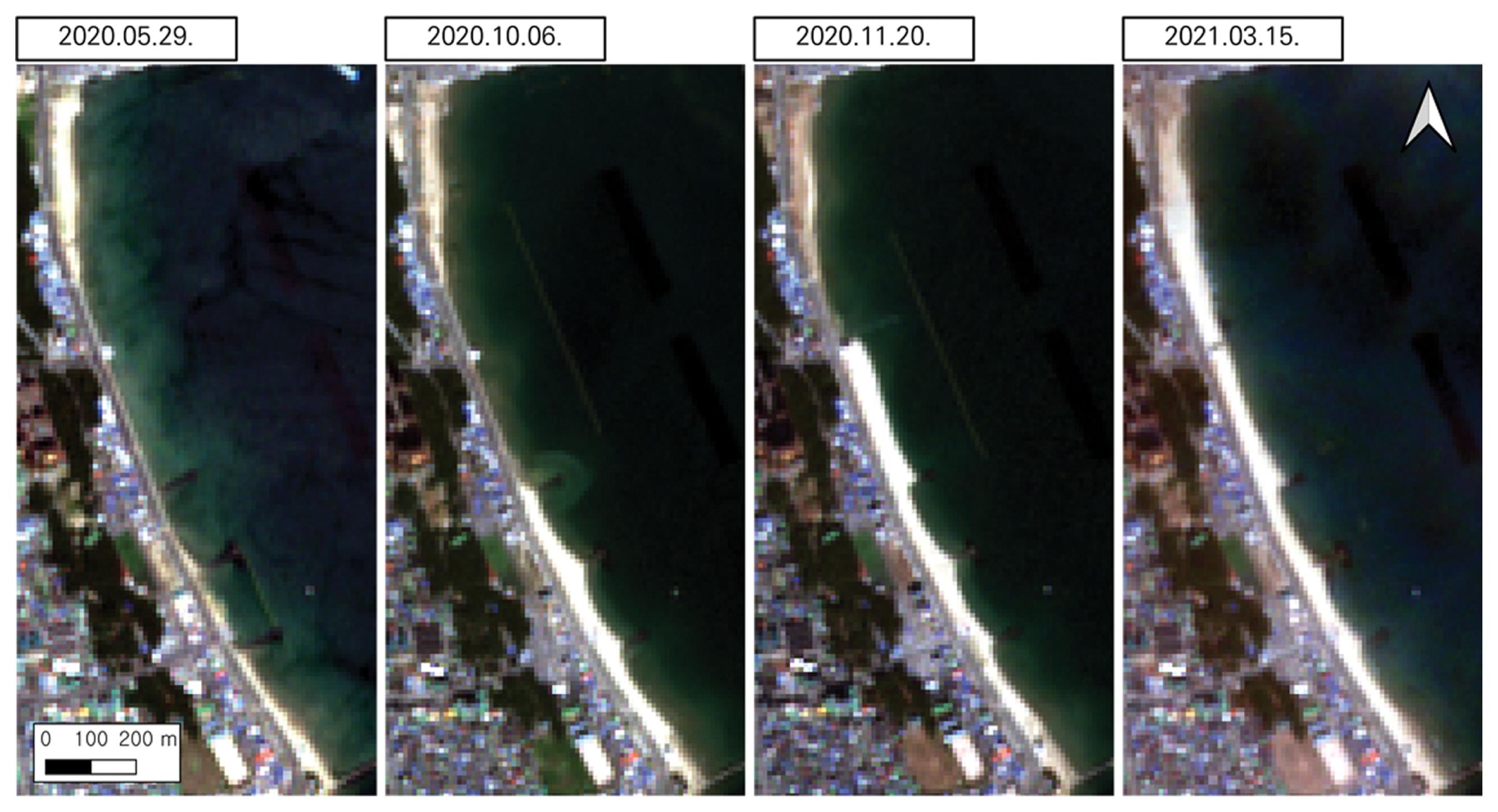
그러나 전체 구간의 평균적인 경향은 Fig. 12와 같이 0 m/year에 근접하여, 동해안이 일관된 장기 침식 또는 퇴적 체계라기보다는 국지적 요인에 의해 지배되는 공간적 변동 구조를 보임을 시사한다. 남한 구간에서는 일부 지점에서 비교적큰 양의 추세가 관측되었으며, 그중 포항 송도해수욕장은 상자그림에서 양의 이상치로 분류되었다. 이는 자연적 표사 이동에 의한 장기 퇴적 경향이라기보다는 2020년에 수행된 대규모 양빈 사업의 영향이 반영된 결과로 판단된다. Fig. 13의 위성영상 시계열에서도 2020년 이후 해빈폭이 급격히 증가하는 양상이 확인되며, 이는 해당 이상치가 인위적 연안 관리 활동과 밀접하게 관련되어 있음을 보여준다. 반면 북한 구간에서는 일부 강한 침식 구간이 산발적으로 나타났으나, 구간별 편차가 크게 나타나 전반적인 일률적 경향을 보이지는않았다. 이러한 결과는 동해안 연안 표사 체계가 대규모 일방향 이동보다는 해안 형상과 구조물, 하천 유입, 양빈과 같은 인위적 관리 활동 등의 복합적인 요인에 의해 공간적으로 분절된 특성을 가진다는 점을 보여준다.
3.3 차원축소 및 군집분석을 통한 표사 이동 분석
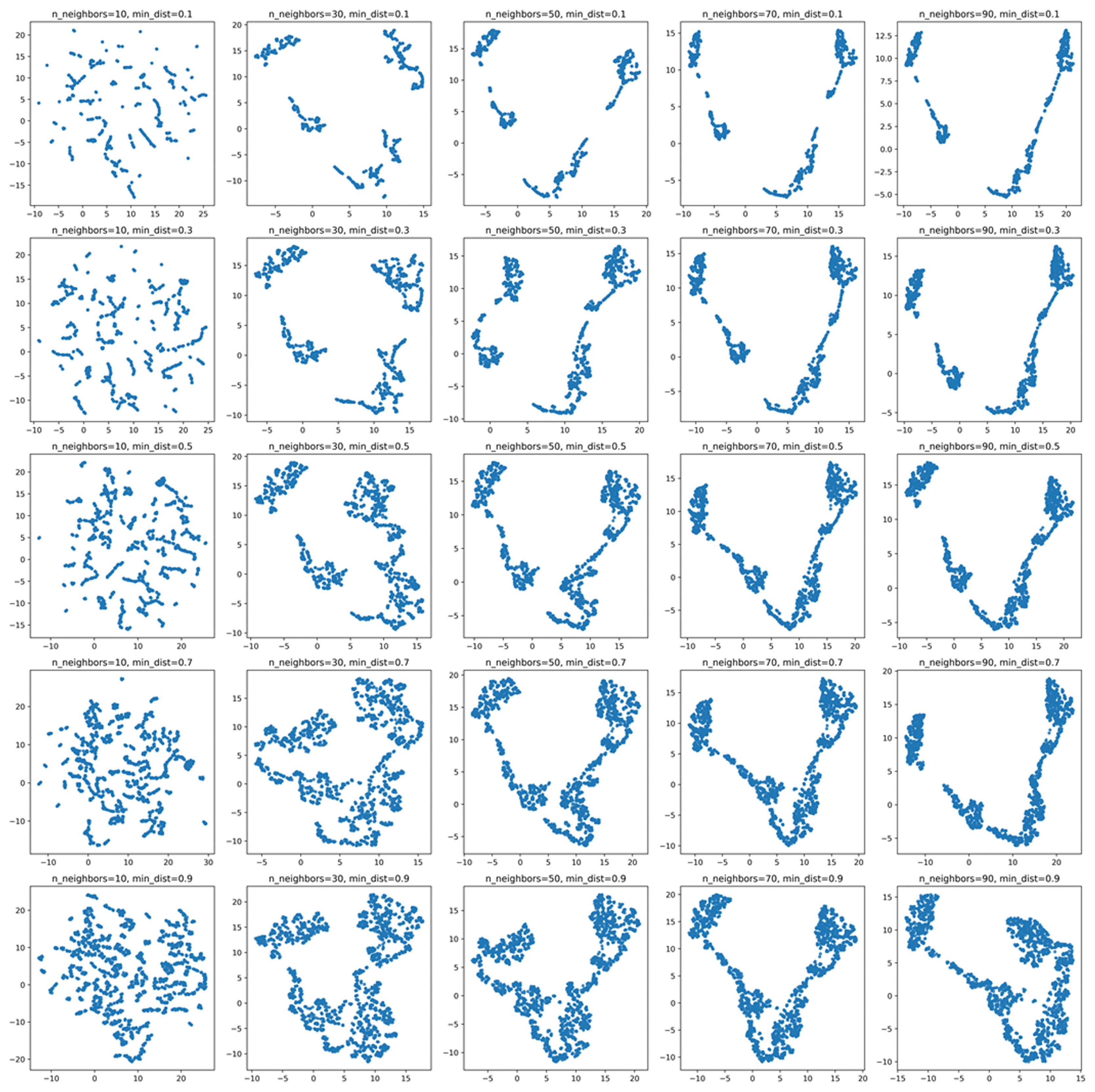
UMAP의 최적 하이퍼파라미터를 결정하기 위해 다양한 하이퍼파라미터 조합을 적용하여 각 조합별로 2차원 임베딩을 수행하였으며, 군집 형성 패턴과 구조 보존 특성을 비교하였다(Fig. 14). 분석 결과, 최근접 이웃 수가 10과 같이 작은 경우에는 국지적 구조가 과도하게 강조되어 점들이 산발적으로분산되며 전역적 형태가 뚜렷하게 형성되지 않는 경향이 나타났다. 반대로 최근접 이웃 수가 70 이상으로 증가할 경우에는 전체 구조가 지나치게 평균화되어 군집 간 경계가 완만해지고 세부 분리 특성이 약화되는 양상이 확인되었다. 최소거리에 대해서는 0.1과 같이 작은 값을 적용했을 때 군집 내부 밀도가 높아 비교적 조밀한 구조가 형성되었으나 일부 영역에서 점들이 과도하게 압축되는 경향이 나타났으며 0.7, 0.9와 같이 큰 값을 적용한 경우에는 점들이 전반적으로 퍼지면서 군집 응집성이 낮아지고 구조적 구분이 희석되는 경향이 관찰되었다.
여러 조합을 종합적으로 비교한 결과, 최근접 이웃 수가 30,최소 거리가 0.3인 설정에서 국지적 군집 구조와 전역적 분리 구조가 균형 있게 유지되었으며 해변 간 상대적 유사성과 분리 특성이 가장 명확하게 표현되었다. 해당 조합은 점들의 과도한 압축이나 과도한 확산 없이 구조적 형태를 안정적으로 재현하였으며 표사계 특성의 공간적 패턴을 해석하기에 적합한 임베딩 결과를 제공하였다. 따라서 본 연구에서는 최근접 이웃 수를 30, 최소 거리는 0.3을 최종 UMAP 분석 파라미터로 채택하였다.
UMAP 공간에서 해변 간 유사성을 기반으로 계층적 군집분석(hierarchical clustering)을 수행하였다. 연결 기준(linkage method)과 거리 척도(distance metric) 조합에 따라 군집 형성 결과를 코페네틱 상관계수를 산정하여 평가하였다(Fig. 15). 분석 결과 체비쇼프 거리 조합에서 상대적으로 높은 코페네틱 상관계수가 도출되었으며, 이는 해당 조합이 UMAP임베딩 공간에서의 유사성 구조를 가장 안정적으로 재현하는것으로 해석할 수 있다.
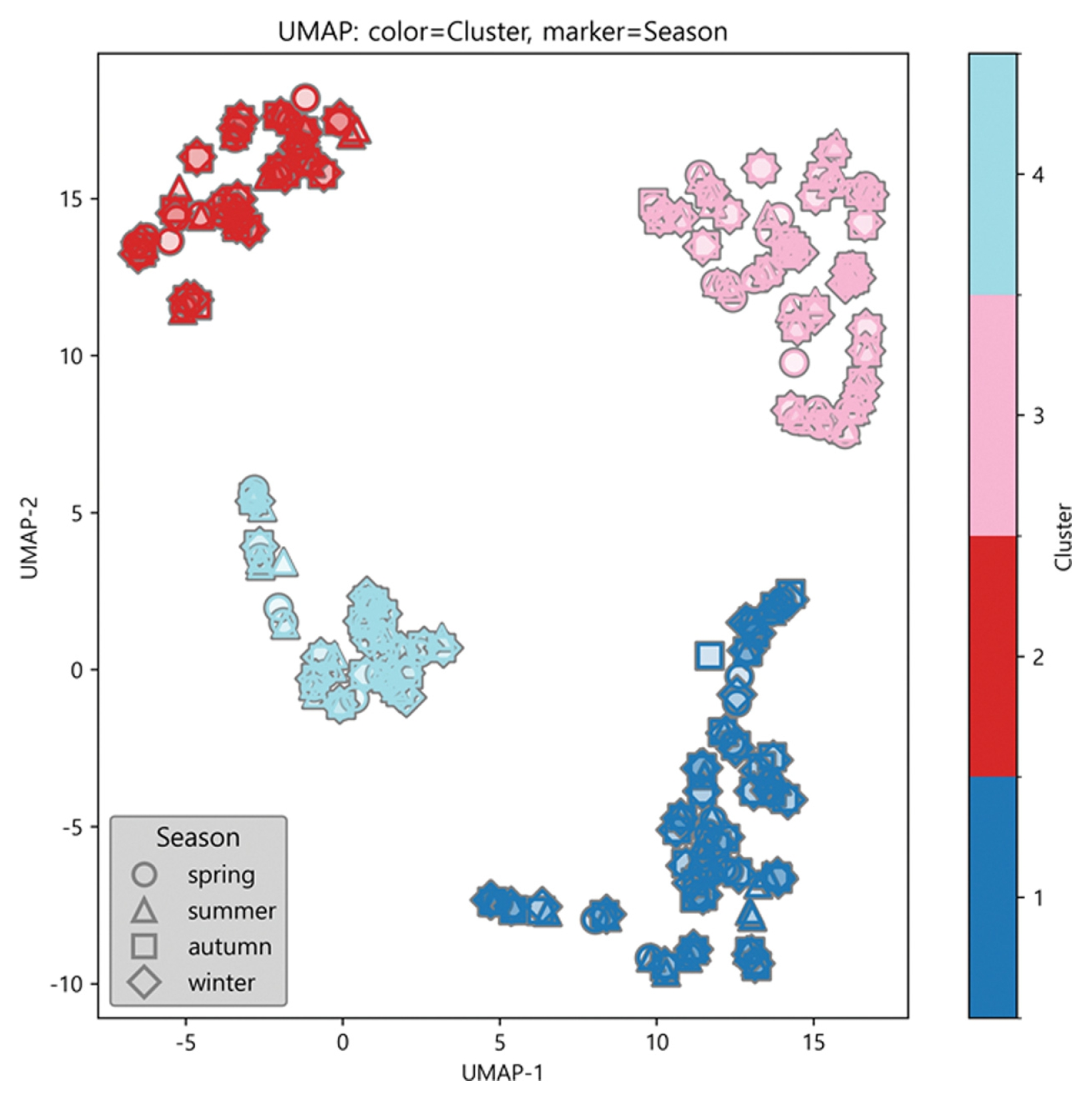
이어 코페네틱 상관계수로 결정한 거리척도와 연결방법을 기반으로 덴드로그램 분석 결과, 상위 단계에서 몇 개의 대규모 집단이 먼저 분리된 이후, 병합 거리가 점진적으로 감소하면서 하위 단계로 갈수록 세부 집단이 형성되는 계층적구조가 확인되었다(Fig. 16). 이는 동해안 연안이 광역적인 파랑 및 연안류 체계에 의해 1차적으로 구분되며, 이후 해안 형상, 만입도, 하천 유입, 인위적 구조물 등 국지적 요인에 의해 세분화된 표사계를 형성하고 있음을 보여준다. 또한 군집별 계절 구성비를 분석한 결과 각 군집 내에서 봄·여름·가을· 겨울의 비율이 거의 균등하게 나타나, 본 군집 구조가 계절적 변동성보다는 해변 고유의 구조적·공간적 표사 이동 특성에 기반하여 형성되었음을 확인하였다(Fig. 17).
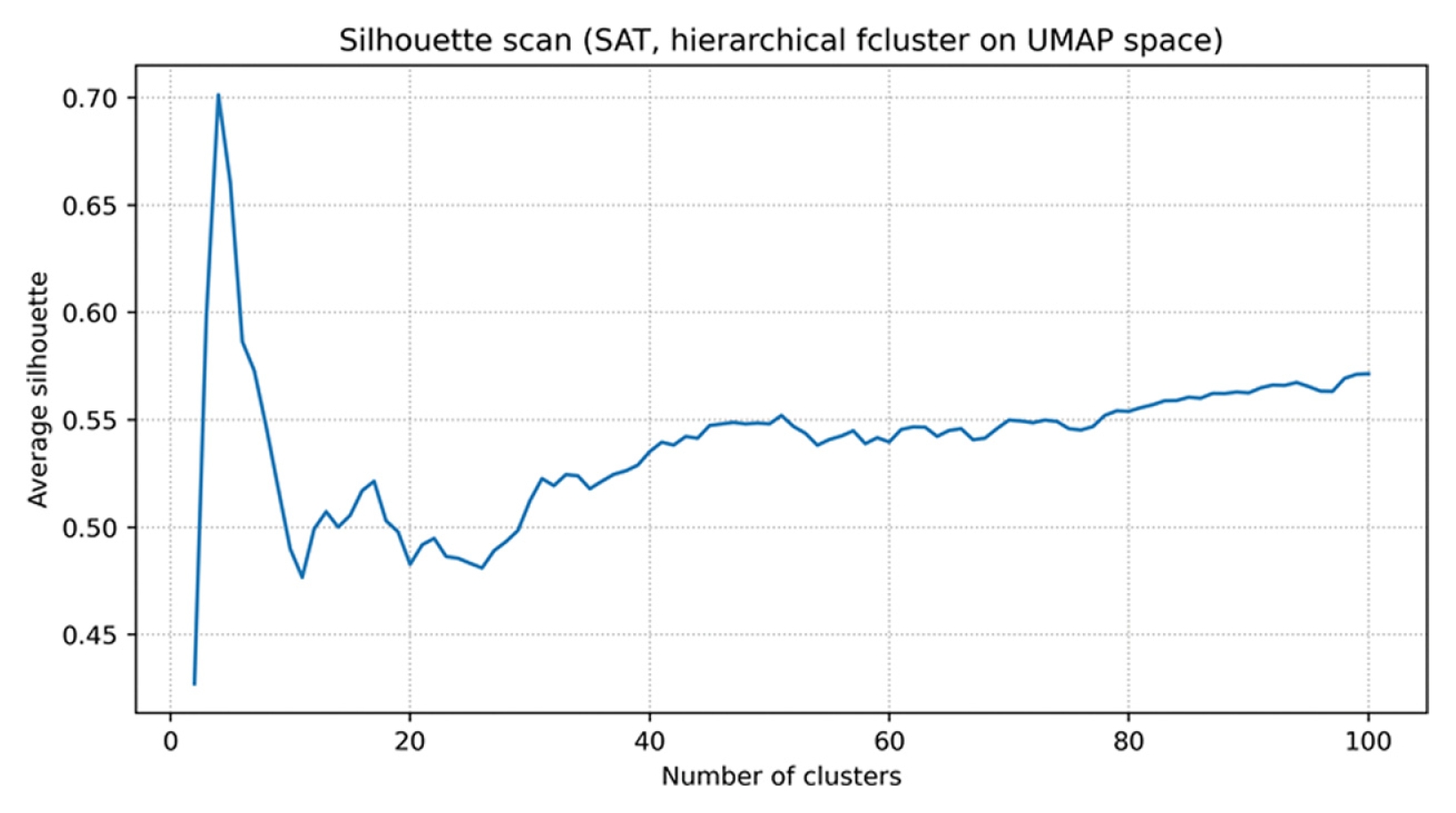
이어 코페네틱 상관계수로 결정한 거리척도와 연결방법을기반으로 최적 군집 수를 결정하였다. 실루엣 계수(silhouette score)의 경우 군집 수를 단계적으로 변화시키며 평균 실루엣값을 비교한 결과, 군집 수가 4일 때 평균 실루엣 계수가 가장 높은 값을 나타냈다(Fig. 18). 이는 4개 군집으로 구분할경우 동일 군집 내 해변들은 서로 유사한 표사 이동 특성을 공유하면서도, 다른 군집과는 충분히 분리되어 있음을 의미한다. 반면 군집 수가 2 또는 3과 같이 더 작은 경우에는 일부 이질적인 해안 구간이 하나의 군집으로 통합되어 내부 분산이 증가하였고, 군집 수가 5 이상으로 증가할 경우에는 기존의 응집된 군집이 불필요하게 분할되면서 군집 간 분리도는 유지되더라도 내부 응집도가 감소하는 경향이 나타났다. 따라서 군집 수 4는 과도한 단순화와 과도한 세분화를 모두피하면서, 동해안 표사계의 공간적 분절 구조를 가장 균형 있게 반영하는 최적의 구분으로 판단된다. 이는 동해안 표사 체계가 단일한 대규모 연속 체계라기보다는 유사 이동 특성에 따라 구분되는 네 개의 주요 공간 단위로 구조화되어 있을 가능성을 시사한다.
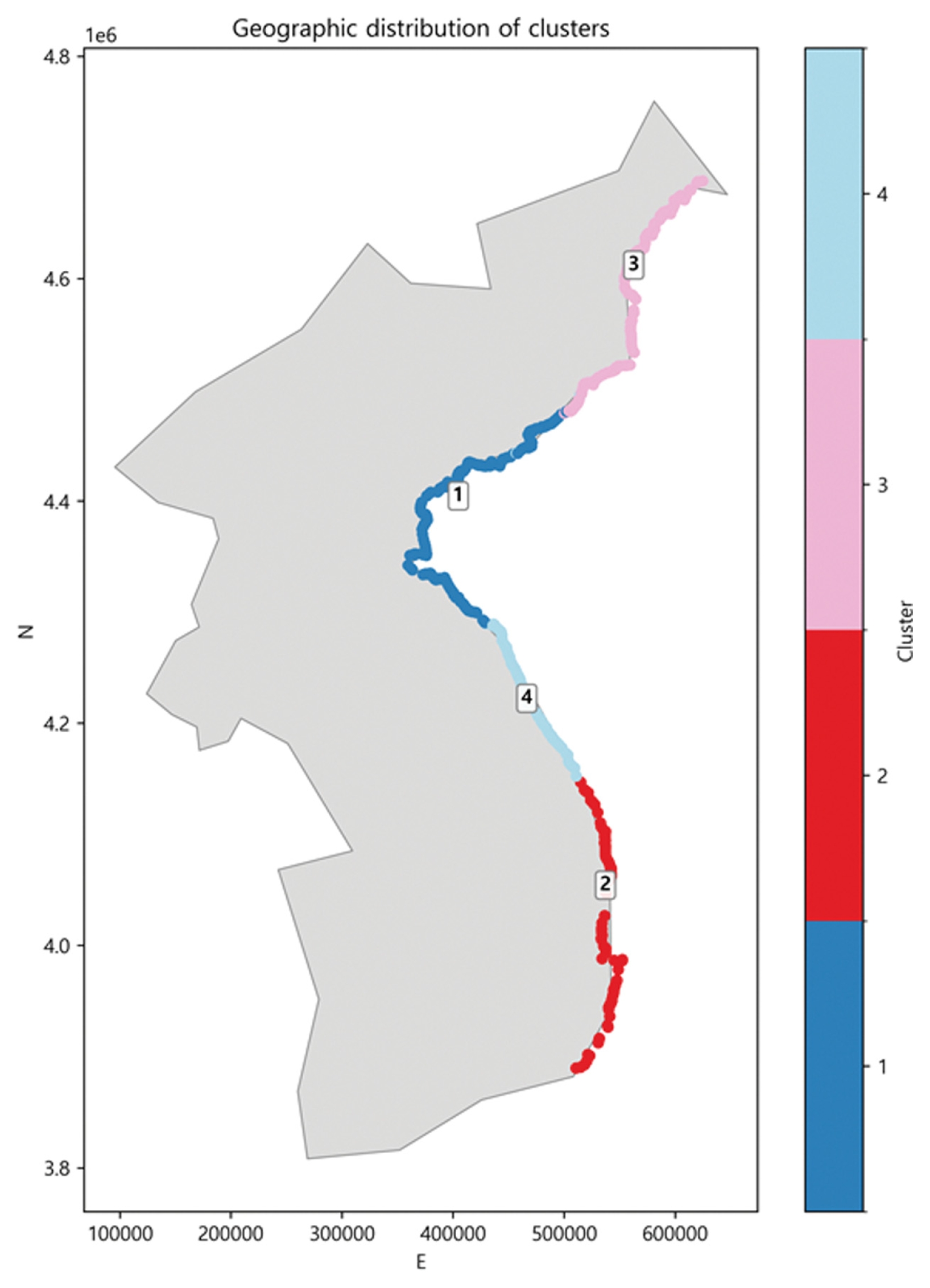
실루엣 계수 분석을 통해 결정된 최적 군집 수 4개를 지리적 공간(E-N 좌표) 상에 재투영한 결과(Fig. 19), 각 군집은 동해안을 따라 연속적인 구간 단위로 분포하는 공간적 응집 구조를 보였다. 특히 중간에 위치한 두 개 군집은 군사분계선 인근을 경계로 남한과 북한 해안을 동시에 포함하는 형태로 나타났으며, 이는 표사 이동 특성이 행정적 경계와 반드시 일치하지 않음을 의미한다.
4. 결 론
본 연구는 2015~2025년 Sentinel-2 위성영상을 활용하여 북한 동해안을 포함한 한반도 동해안 해안선 변동을 정량적으로 분석하였다. 해빈폭 비대칭도와 만입도를 무차원 표사특성 지표로 구성하고, 지리 좌표를 공간 제약 변수로 포함하여 해안 구간의 군집 구조를 분석하였다. CoastSat 기반 해안선 추출과 DBSCAN 노이즈 제거, FES2022 조위 모델을사용한 보정을 적용하여 장기 시계열 해안선 데이터베이스를 구축하였으며 현장 측량 자료와의 비교에서 높은 상관성을 확보하여 분석의 신뢰성을 검증하였다. 또한, 한반도 동해안의평균 장기 변동 경향에서 국지적으로 침식과 퇴적이 교차하는 공간적 분절 구조가 확인되었으며 이는 해안 형상, 하천유입, 연안류 및 인위적 관리 등의 복합 요인에 의해 지배되는 것으로 판단된다. 군집분석 결과 남북 동해안은 하나의 연안 시스템으로 연결되어 있을 가능성이 높으므로, 표사계 단위 장기 모니터링과 과학적 기반의 연안관리 협력 체계 구축이 필요함을 시사한다.
다만 본 연구에는 다음과 같은 한계가 존재한다. 첫째, 현재 군집 결과를 실제 관측된 표사 이동량이나 독립적으로 정의된 표사계 경계와 직접 비교하여 정확도를 검증하지 못하였다. 즉, 절대적인 검증 자료에 기반한 외적 타당도 검증이 수행되지 않았다는 점에서 해석에는 신중함이 필요하다. 둘째, 입력 변수는 해빈폭 변동을 기반으로 산정된 무차원 지표에 한정되어 있어, 표사 이동을 지배하는 모든 물리적 요인을 충분히 반영하지 못하였다. 향후 연구에서는 LiDAR 및고해상도 위성영상 기반 해빈 경사 추출 기법을 적용하고(Xuet al., 2025), 이를 통해 평행 해빈 단면을 따라 계산된 해빈경사 및 추정 모래 입도 분포를 무차원 변수로 추가함으로써표사 이동 특성의 물리적 기반을 보다 정교하게 반영할 필요가 있다. 이러한 확장은 군집 결과의 해석력을 높이고 표사계 구분의 물리적 타당성을 강화하는 데 기여할 것이다.



 PDF Links
 PubReader
 ePub Link
 Full text via DOI
 Download Citation
  Print
Print