





1. 서 론
우리나라 동해안에서는 매년 주로 9월에서 이듬해 4월 사이에 갑작스러운 큰 파로 인한 사고가 빈번하게 발생하고 있다. 이는 중국 내륙 및 우리나라 부근에서 강하게 발달한 온대성 저기압이 동해안 부근으로 접근해 올 때 발생한 폭풍파의 내습에 의해 발생하는 것으로 알려져 있다(Jeong et al., 2007, 2008; Jeong and Oh, 2009). 그런데 의외로 이러한 고파가 발생할 때의 날씨가 좋은 경우가 상당하여 이에 대한 대비의 부족으로 상당한 인명과 재산 피해를 야기하고 있다(Oh et al., 2010). 이러한 고파는 통상의 풍파 수준을 상회하는 수치여서 너울 또는 풍파로 간단하게 정의하기 다소 힘들기 때문에 Oh et al.(2010)은 유의파주기가 길고(T1/3 ≥ 9 s) 유의파고가 큰(Hs ≥ 3 m) 파랑을 너울성 고파라고 지칭하였다. Kim et al.(2016), Oh et al.(2019)은 이러한 너울성 고파 중에서 갑자기 파고가 증가하는 경우를 현상의 돌발성(suddenness)을 표현하고자 돌연 고파(sudden high wave)라고 지칭하였다.
돌연 고파의 가장 중요한 특성 중 하나는 갑작스럽게 고파로 발전하는 돌발성으로서 상당한 인명과 재산 피해를 야기하기도 한다. 이런 돌발성과 고파를 동시에 잘 나타내기 위해서는 얼마나 짧은 시간 안에 돌연 고파가 발생하는가와 돌연 고파의 크기(파고 및 주기)가 어느 정도인가에 대한 분석이 필요하다. 본 연구에서는 여기에 대한 Kim et al.(2016), Oh et al.(2019)의 선행 연구를 더 발전시켜서 보다 직관적으로 돌연 고파에 대한 기준을 제시하고자 한다. 여기에는 돌연 고파의 시점을 결정할 파고, 고파 기준이 되는 파고, 시점 이전의 정온유지 시간, 고파의 시작 시점에서 고파 기준 파고에 도달하기까지의 돌연출현 시간 등에 대한 변수들의 도입 및 이들의 변화에 따른 돌연 고파 이벤트들의 발생 빈도에 대한 검토도 필요하다. 그리고 돌연 고파의 강도를 나타내는 변수로 파고 기울기와 파랑 에너지 기울기에 대한 분석도 요구된다. 최종적으로 산출된 돌연 고파 이벤트에 대해서는 파고 기울기와 파랑 에너지 기울기의 최대치 및 도달시간을 분석하여 돌연성에 대한 검토를 보다 엄밀하게 수행한다. 또한 돌연 고파 이벤트의 월별 출현율, 주요 발생 계절, 폭풍파 대비 돌연 고파의 출현빈도 등도 검토할 필요가 있다.
다음 장에서는 연구에 사용된 자료에 대하여 설명한다. 3장에서는 돌연 고파 이벤트의 결정, 돌연 고파 강도 변수의 선정과 계산 방법에 대해 기술하고, 4장에서는 강릉 해변의 돌연 고파를 분석하고 주요 돌연 고파의 지역별 특성 출현 분석 및 강릉항에서 2008년 2월 24일에 발생한 사고의 발생 원인에 대해 기술한다. 마지막으로 5장에서 본 연구의 주요 결론을 기술한다.
2. 자 료
2.1 자료 수집
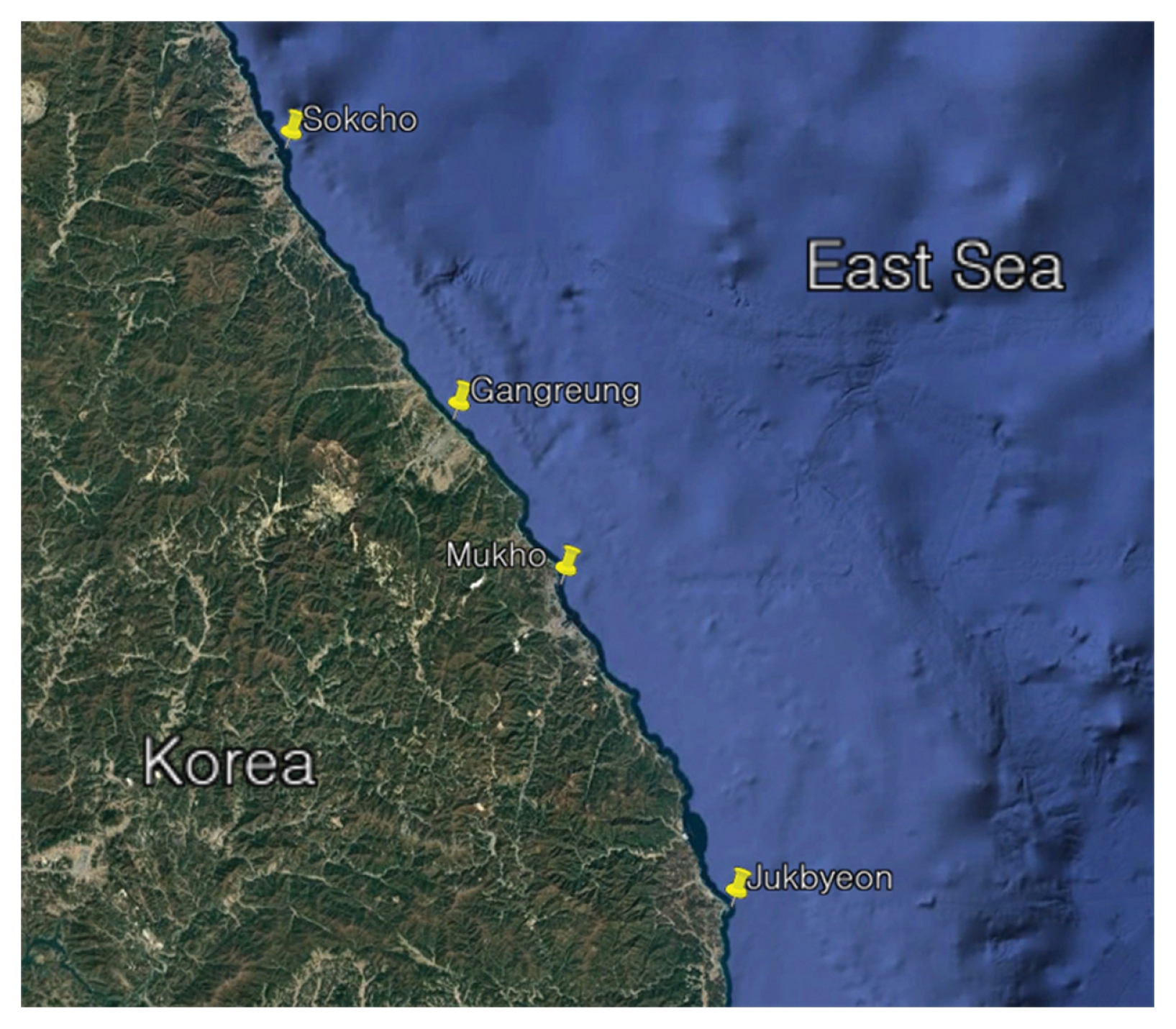
본 연구에서는 한국해양과학기술원에서 수압식 파고계(WTG; Wave and Tide Gauge)를 사용하여 취득한 동해 중북부 지역의 4개 파랑관측소 자료들을 분석하였다. Fig. 1에는 구글 위성영상에 4개 파랑관측소의 위치를 표시하였으며, Table 1에는 각 관측소들의 경도 및 위도, 설치수심 등을 기술하였다. Kim et al.(2016), Oh et al.(2019)은 강릉과 왕돌초에서 취득된 2005년 2월부터 2013년 2월까지의 자료들을 사용한 바 있으며 본 연구에서는 외해에 위치한 왕돌초는 제외하였다. 강릉에서는 2005년 2월 27일부터 2013년 5월 9일까지 자료가 취득되었으며 본 연구에서는 주요 돌연 고파들의 시·공간적인 분포 등도 같이 검토하기 위하여 2005년 1월 1일부터 2013년 12월 31일까지의 속초, 묵호 및 죽변의 관측자료도 함께 사용하였다. 수압식 파고계를 사용하여 자료를 취득된 자료에 대해서는 스펙트럼법(spectral method)과 파별분석법을 모두 사용하여 분석하였다. 먼저 수압 스펙트럼을 구하고 수심과 주기별로 미리 구해진 수압-해수면 변위 간의 전달함수를 여기에 곱하여 해수면 변위에 대한 스펙트럼을 구하게 된다. 본 연구에서는 전체 자료에서 30분마다 2,048개의 0.5초 간격의 연속된 자료를 선택한 후 다음의 식 (1)을 이용하여 유의파고와 평균주기를 산정하였다.
여기서, Hs(= Hm0)는 유의파고(m), Ts는 평균주기(초)를 나타내며, m0와 m2는 각각 수면 변위 스펙트럼 함수에 대한 0차 및 2차 모멘트이다. 일반적으로 n차 모멘트 mn에 대한 정의는 식(2)로 표현된다.
여기서, f는 주파수(Hertz), S(f)는 주파수 f에 대한 수면변동에 대한 스펙트럼 밀도함수, f1과 f2는 각각 하한 및 상한 절단주파수(cutoff frequency)이다. 본 연구에서는 f1을 5/128 Hz, f2를 64/128 Hz로 설정하였다. 한편 동일한 자료에 대해 영점상향교차법을 사용하여 유의파주기(T1/3)도 구하였다. 그리고 Fig. 2에는 4개 파랑관측소에서 관측된 30분 간격의 유의파고(Hs)와 유의파주기의 시계열을 각각 도시하였다. 이하에서 사용되는 파고(H), 주기(T), 파장(L)은 특별하게 명시하지 않으면 모두 유의파에 대한 것이다.
2.2 대표적인 폭풍파 이벤트
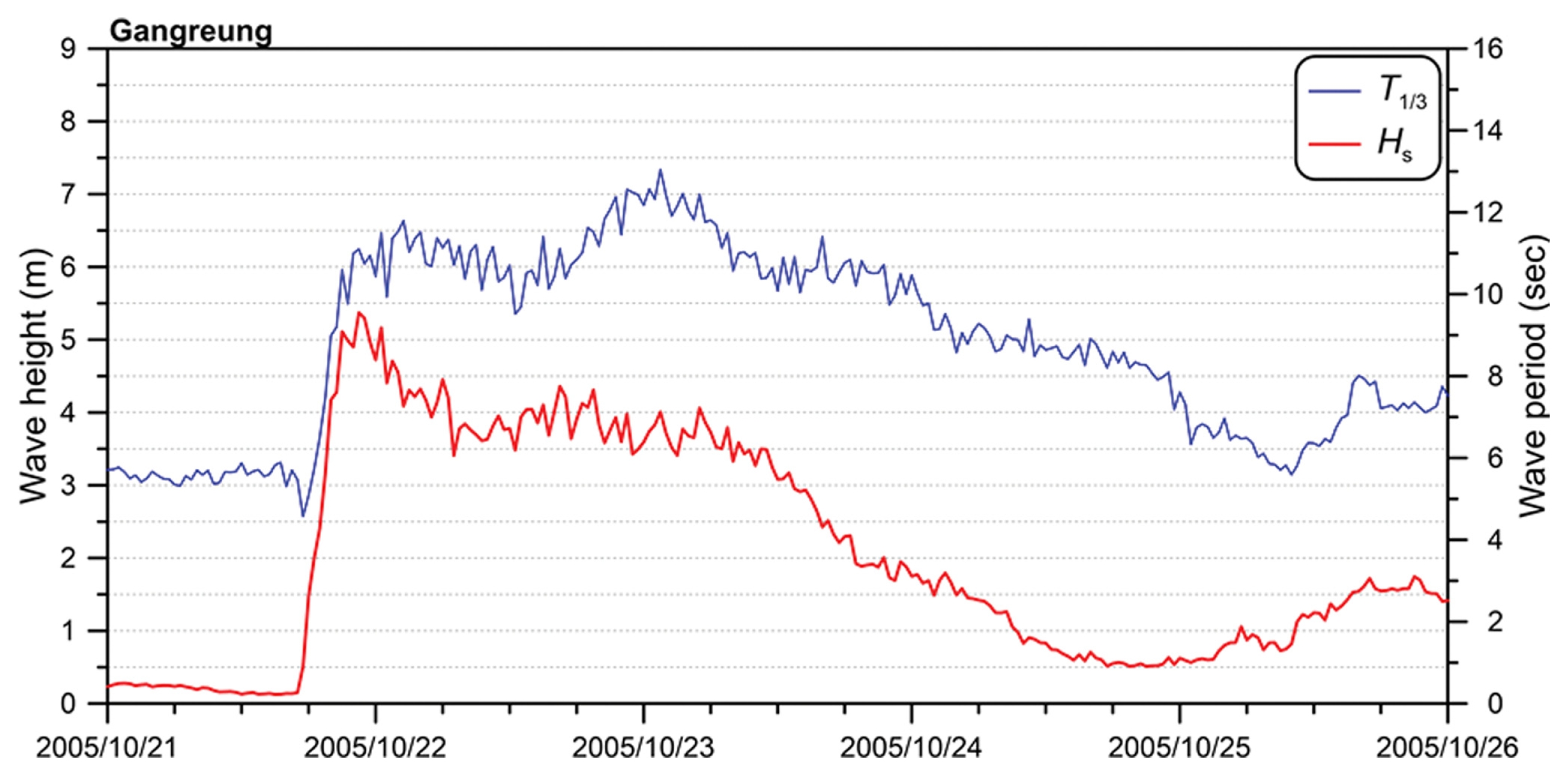
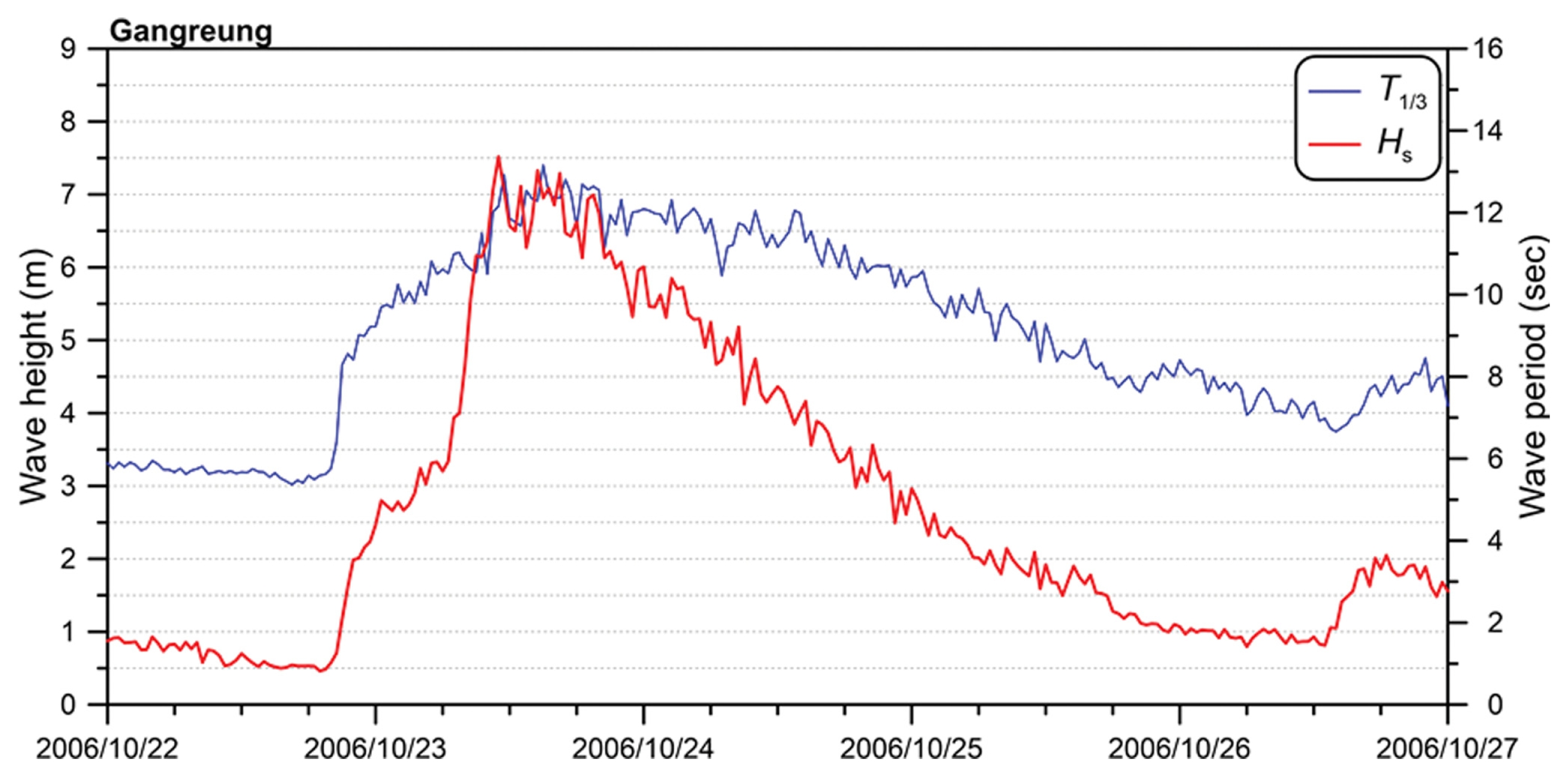
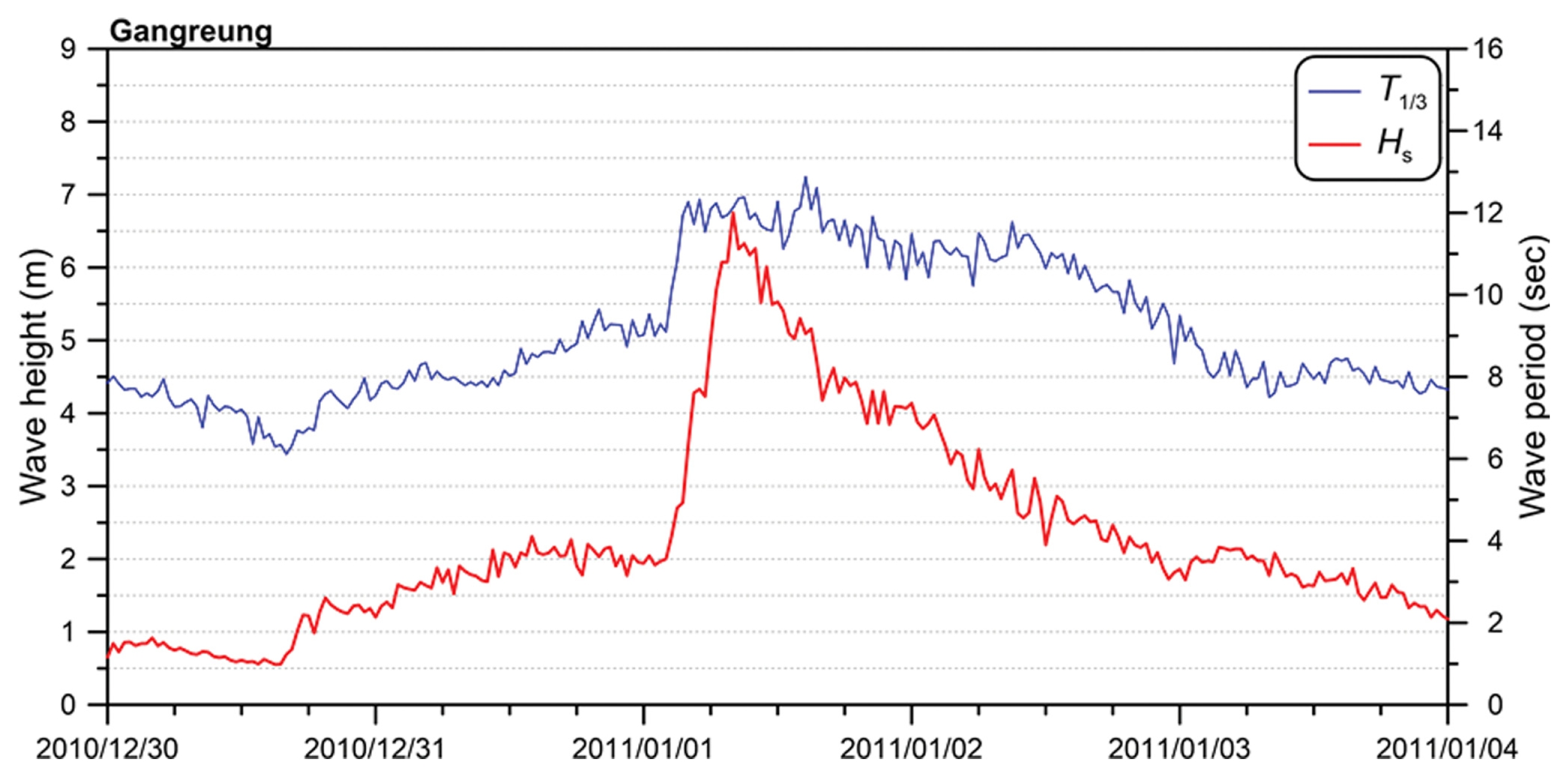
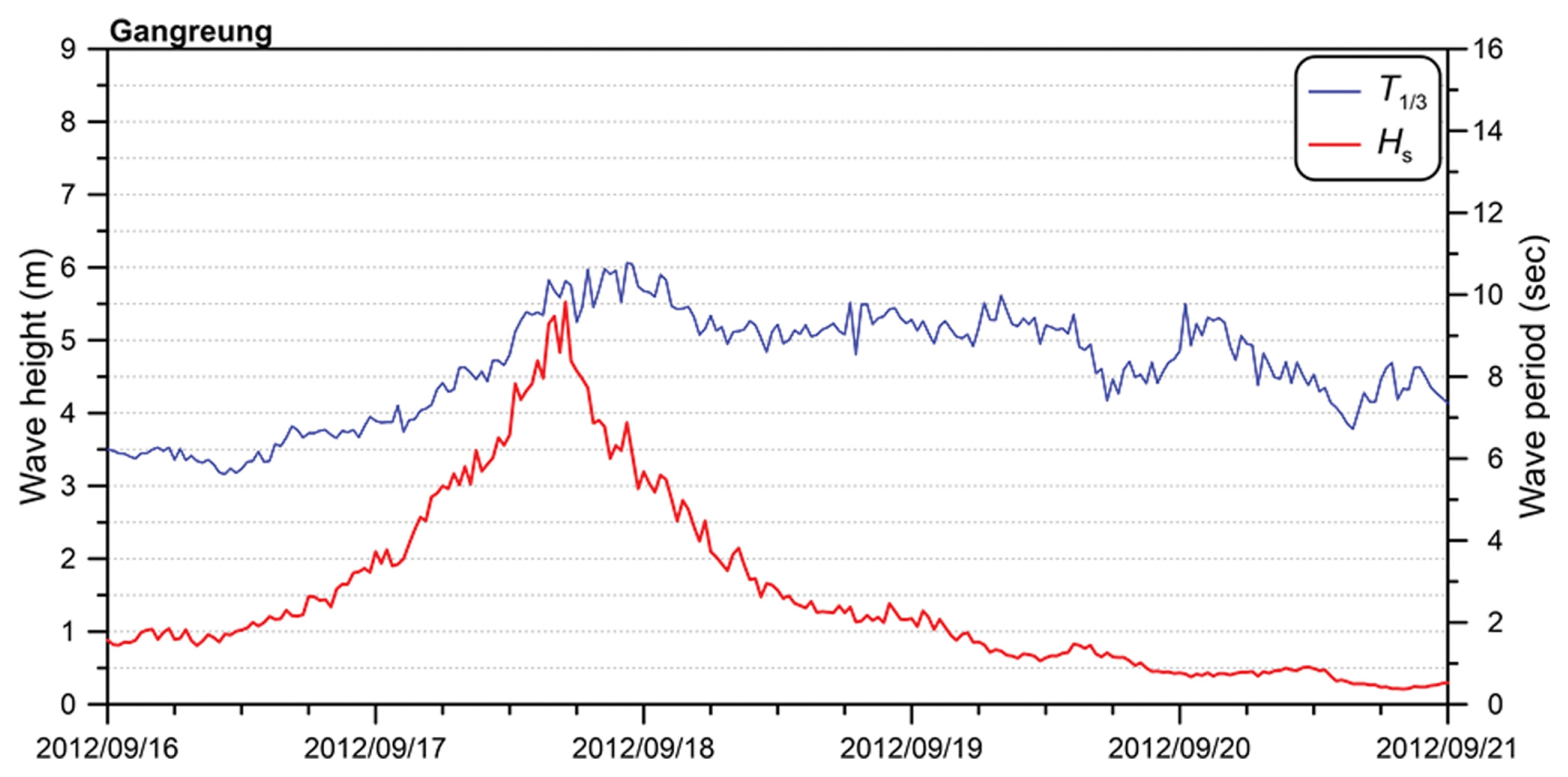
Table 2와 Figs. 3~6에는 강릉에서 2005년 2월부터 2013년 5월까지 관측된 파랑 중에서 유의파고가 5 m를 초과하는 폭풍파 이벤트들을 정리하였다. 8년 동안 유의파고가 5 m를 초과하는 큰 폭풍파는 4차례 내습하였으며 특히 2006년 10월 23일의 폭풍파는 동해 해안에서 1999년부터 2025년까지 관측된 파랑 중에서 온대성저기압에 의해 발생된 폭풍파 중에서는 가장 큰 파고를 기록(속초에서는 8.95 m, 묵호에서는 8.37 m를 기록)하였다. 한편 2012년 9월 17일의 폭풍파는 제 1216호 태풍 SANBA에 의해 발생되었다.
Kim et al.(2016)은 Fig. 3과 4의 폭풍파들을 대표적인 돌연 고파 이벤트로 제시하였으며, 이들에 따르면 이 시기에는 적지않은 인명과 재산 피해가 야기되었다. 이들을 살펴보면 파고가 갑자기 커지기 전에는 유의파고가 1 m 미만, 유의파 주기가 6초 미만으로 잔잔한 상태였으나 그 직후부터는 파고가 급격하게 상승한 것을 알 수 있다. 2005년의 폭풍파는 특히 21일 17시의 0.15 m(유의파주기 5.5초)에서 22시 30분의 5.37 m(유의파주기 11.1초)까지 불과 5시간 30분만에 유의파고가 5.22 m나 증가하였다. 한편 2006년의 폭풍파는 다소 다른 패턴을 보여서 22일 20시의 0.57 m에서 23일 0시 30분의 2.80 m까지 급상승(4시간 30분동안 2.23 m 상승)했다가 상승 기울기가 다소 완만해진 후 4시 30분의 3.03 m에서 11시의 7.52 m까지 다시 급상승(6시간 30분동안 4.49 m 상승)하는 계단 형태의 상승 형태를 나타내었다. 이 두 폭풍파를 비교해보면 전자는 급작스런 파고 증가, 후자는 7.52 m에 달하는 고파가 피해 유발의 보다 직접적인 원인이 되었을 것으로 추론할 수 있다. 즉, 전자와 같은 돌연 고파는 통상의 너울성 고파에 비하여 유의파고가 크고, 통상의 풍파에 비하여 유의파주기가 길며, 국지적 강풍을 동반하지 않고 갑작스럽게 발생하는 특성을 갖는다(Oh et al., 2010; Kim et al., 2016).
Fig. 5에 제시된 2011년 1월 1일의 폭풍파는 1일 2시의 2.0 m에서 8시의 6.75 m까지 6시간만에 4.75 m가 상승하였으나 파고 증가의 시점 부근부터 이전의 거의 하루동안 유의파고가 1.5~2.3 m를 오르내리는 상당한 크기의 파고(유의파 주기는 7~9초의 범위)가 지속되는 상태여서 후술하는 돌연 고파의 범위에 포함되기는 어려운 폭풍파로 보여진다. Fig. 6의 폭풍파는 제1216호 태풍인 SANBA에 의해서 발생되었으며 유의파고가 거의 이틀에 걸쳐서 1 m에서 5.5 m까지 상승하였으며 역시 돌연 고파에 포함되지는 않는다. 한편, 돌연 고파의 선정 기준에 대해서는 후술하는 3절에서 자세하게 기술하였다.
3. 돌연 고파의 선정 및 강도
3.1 돌연 고파 이벤트의 결정
Kim et al.(2016)은 돌연 고파의 기준을 제시하기 위하여 먼저 잔잔한 파고(0.875 m)와 최소치 비교기간(Comparison period of minimum wave height, 60시간)이라는 개념을 도입하고, 잔잔한 파고 이하가 나타난 시각을 기준하여 60시간 이내에 이를 초과하는 파고가 출현하는 경우 고파 이벤트로 결정하는 방식으로 고파 이벤트들을 선정하였다. 다음에는 단위시간당 파고와 파랑 에너지의 변화율을 계산하는 돌연 고파 강도 변수(파고의 기울기 ∆H/∆t와 파랑 에너지의 기울기 ∆(H2L)/∆t)를 도입하였다. 한편 이들은 실제로 돌연 고파를 구할 때는 보다 보수적인 값으로 Douglas sea scale(World of Earth Science, 2003)의 Degree 3인 Slight sea(파고가 0.5~1.25 m 사이)의 상한치인 1.25 m를 사용하였다. 이들은 고파 이벤트에서 파고가 1.25 m 이하인 시각이면서 H(또는 H2L)이 그 최대치의 1/10 이하인 경우들을 구하고 이들 중에서 ∆H/∆t(또는 ∆(H2L)/∆t)가 최대가 되는 시각을 돌연 고파의 시점으로 채택하였다. 관측기간 동안의 해난사고 기록들과 비교한 결과 ∆H/∆t보다 ∆(H2L)/∆t가 보다 연관성이 높게 나타나서 후자를 돌연 고파 강도 변수로 채택하였다. ∆(H2L)/∆t의 누적백분율은 처음에는 급격히 증가하다가 대략 상위 20% 범위 안에서 완만하게 증가하는 특성을 보여서 이들은 그 상위 20% 값인 88.6 m3/hr을 초과하는 이벤트를 돌연 고파 이벤트로 결정하였다.
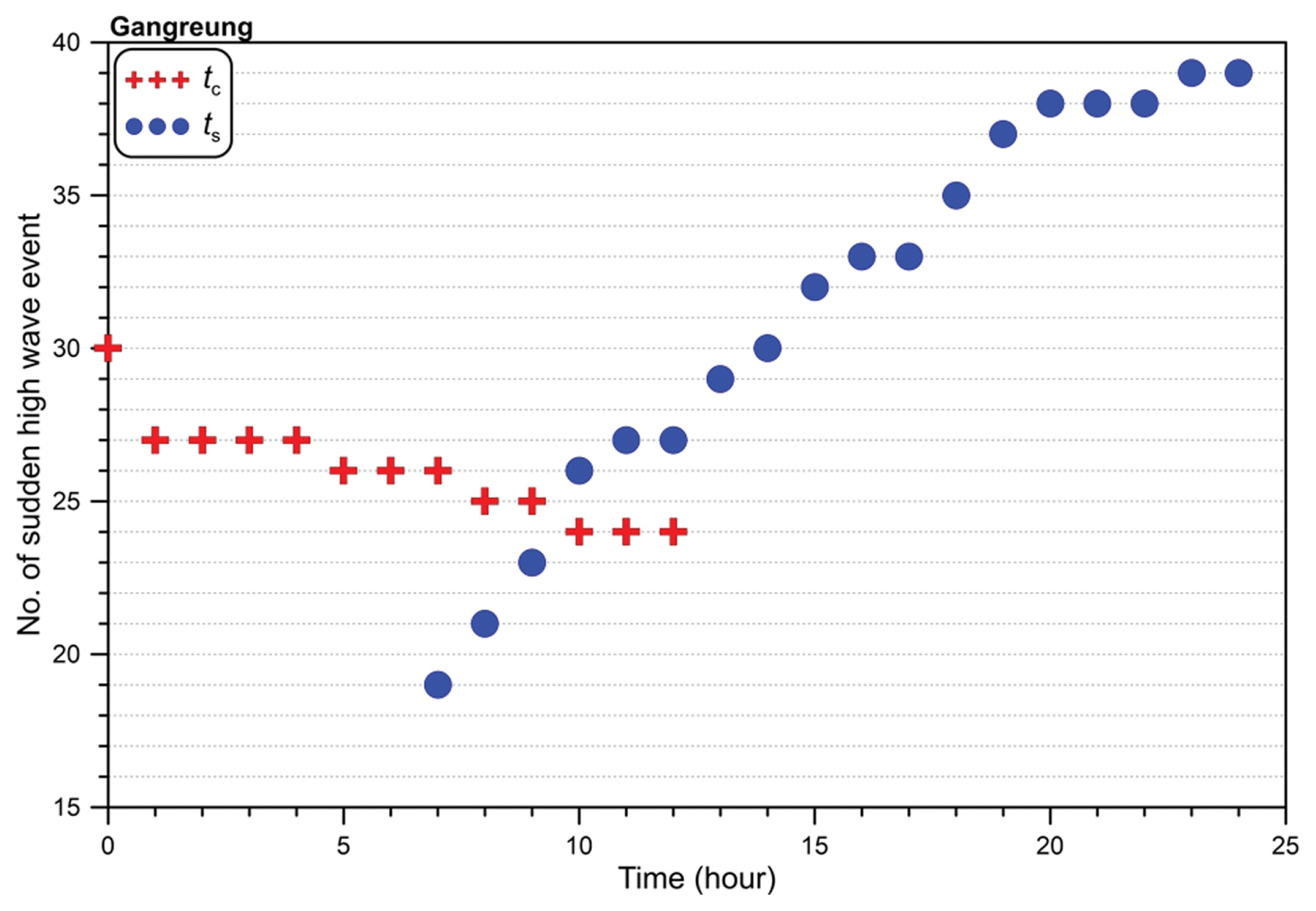
본 연구에서는 그들의 결정과정을 참조하되 보다 직관적이고 단순하게 돌연 고파 이벤트를 결정할 수 있는 방법을 제안하였다. 돌연 고파 이벤트를 찾기 위하여 선행적으로 몇 가지 기준을 가정하였다. 먼저 본 연구에서도 Kim et al.(2016)과 같이 Douglas sea scale(World of Earth Science, 2003)의 Degree 3인 Slight sea(파고가 0.5~1.25 m 사이)를 잔잔한 해면의 기준으로 삼고 돌연 고파의 위험성을 고려하여 보수적인 관점에서 최대치인 1.25 m를 돌연 고파의 시점을 결정하는 기준으로 선정하였다. 다음에는 고파의 기준으로 잠정적으로 풍랑주의보 발효 기준인 유의파고 3 m를 도입하였다. 돌연성을 검토하기 위해서는 시점에서 유의파고 3 m에 도달하기까지의 시간을 결정해야 하며 또한 잔잔한 상태를 고려하기 위해 시점으로부터 그 이전에 얼마동안 유의파고 1.25 m가 유지되었는가에 대한 정의도 필요하다. 본 연구에서는 시점 이전의 시간을 정온유지 시간(tc), 시점 이후의 시간을 돌연출현 시간(ts)으로 명명하였다. Kim et al.(2016)에서는 tc가 0시간(또는 30분)으로 설정되었으나 이렇게 하면 잔잔한 파의 지속시간이 너무 짧은 것으로 사료된다. ts의 경우 너무 길게 설정하면 돌연성의 정의와 상충되므로 적절한 값을 선택할 필요가 있는 것으로 보인다. tc, ts 및 고파의 기준치들은 각각이 돌연 고파의 수효와 상관성이 높기 때문에 다른 변수들을 고정시키고 특정 변수를 먼저 결정하는 방법을 고려하였다. 본 연구에서는 먼저 유의파고 3 m를 고파의 기준으로, tc는 12시간으로 설정한 다음 tc를 0~12시간의 범위에서 각각 1시간씩 증가시키면서 강릉 해변의 자료를 대상으로 돌연 고파 이벤트를 추출하여 그 결과를 Fig. 7에 도시하였다. 이를 살펴보면 tc를 0시간으로 설정한 경우 돌연 고파 이벤트가 30회였고 1~4시간에서 27회, 5~7시간에서 26회, 8~9시간에서 25회, 10~12시간에서 24회로 1~4시간부터는 수효가 계단 형태로 감소하였다. 여기서는 잔잔한 파가 어느 정도 지속되어야 사람들의 접근성이 증가할 것이라는 점을 감안하여 tc를 3시간으로 결정하였다. 다음에는 고파 기준을 3 m로, tc를 3시간으로 설정한 후 ts를 7~24시간의 범위에서 각각 1시간씩 증가시키면서 돌연 고파 이벤트를 추출하고 역시 그 결과를 Fig. 7에 도시하였다. ts의 경우 7시간에서 19회, 11~12시간에서 27회, 20~22시간에서 38회, 그 사이에는 거의 선형적인 형태로 증가하였다. 여기서는 돌연성의 정의를 감안하여 ts를 12시간으로 결정하였다. 마지막으로 tc를 3시간, ts를 12시간으로 선정하고 고파의 기준을 3 m에서 2.5 m까지 0.1 m씩 낮춰가면서 돌연 고파 이벤트를 산출한 결과 3.0 m[27회], 2.9 m[29회], 2.8 m[42회], 2.7 m[56회], 2.6 m[65회], 2.5 m[78회]로 각각 나타났다. 즉, 2.9 m로 설정할 때까지는 이벤트 수효에 큰 차이가 없었으나 2.8 m부터는 크게 늘어났으며 고파 기준의 결정에 특별한 기준이 없으므로 본 연구에서는 풍랑주의보 발효 기준인 3 m를 선택하였으며 결과적으로 강릉 해역의 경우 8년 동안 27회의 돌연 고파가 발생하였다.
이상의 과정을 간단하게 정리하면 다음과 같다. 파고 시계열을 대상으로 특정 시각에서 유의파고가 1.25 m 이하인 경우 돌연출현 시간(ts = 12시간) 이내에 유의파고가 3 m 이상인 경우를 찾으며 없는 경우에는 나타날 때까지 계속 자료를 탐색한다. 이 조건을 만족하는 시각이 나타나면 다시 정온유지 시간(tc = 3시간) 동안 유의파고가 1.25 m 이하를 만족하는지 탐색하고 양자를 만족하는 경우 그 시각은 돌연 고파 이벤트의 시점에 포함된다. 이러한 과정을 파고 시계열이 끝날 때까지 계속하면 복수의 시점들을 가진 여러 개의 돌연 고파 이벤트들이 구해지게 된다. 본 연구에서는 각 폭풍파를 대상으로 돌연 고파 이벤트의 기간을 시점으로부터 최대 유의파고가 나타난 시각까지로 정의하되 최대 24시간으로 한정하였다. Table 3에는 Kim et al.(2016)의 연구와 본 연구에서 적용한 돌연고파 선정기준들을 정리하였다.
3.2 돌연 고파 강도 변수의 선정과 계산
돌연 고파가 결정되면 돌연성과 고파를 평가하기 위한 변수에 대한 검토가 필요하게 된다. 돌연 고파를 나타내는 변수로는 우선적으로 유의파고(Hs)를 생각할 수 있다. 유의파고는 파로 인한 피해에 가장 직접적인 영향을 주는 변수이다. 그러나 Figs. 3과 4에서 보듯이 돌연 고파 발생 시에는 짧은 시간 동안에 유의파고뿐만 아니라 유의파주기(T1/3)도 급격히 증가한다. Kim et al.(2016)은 파의 주기가 증가하면 파장(L)도 증가하기 때문에 파고와 주기의 영향을 동시에 나타낼 수 있는 변수로 H2L을 고려하였으나 본 연구에서는 파장 대신에 유의파주기를 사용(H2T)하였으며 이것도 일종의 파랑 에너지 형태라고 간주할 수 있다. 두 번째 변수로는 해수면이 잔잔한 상태에서 갑자기 파고 및 주기가 증가하는 돌발성으로 이를 나타내기 위해서는 잔잔한 상태에서 고파로 발전하는 데 걸리는 시간 ∆t가 필요하다. 따라서 본 연구에서는 돌연 고파의 강도를 나타내는 변수로 파고 기울기(단위시간당 파고의 증가량 ∆H/∆t)와 파랑 에너지 기울기(단위시간당 파랑 에너지의 증가량 ∆(H2T)/∆t)를 선정하였다.
다음에는 각 돌연 고파 이벤트에 대해서 시점 별로 파고 및 파랑 에너지의 기울기들을 구하고 그 중에서 최대치를 나타내는 기울기를 그 돌연 고파의 강도로 결정한다. Fig. 8은 2013년 4월 6~7일에 발생한 돌연 고파의 강도 변수를 계산하는 과정을 설명하기 위해 채택하였다. 이 그림에서 적색원들에 해당되는 파고와 시각들은 각각 돌연 고파 이벤트 시점들의 유의파고와 시각을 나타내고 있다. 돌연파고 이벤트 시점들 중에서 가장 이른 시각의 경우 해당 시각의 파고와 다음 시각(바로 인접한 파고들 간의 기울기는 큰 의미가 없으므로 최소 시간간격을 3시간으로 설정)에서의 파고의 차를 시간 간격(3시간)으로 나눈 값이 첫 번째 파고 기울기가 되고 H2T의 차이를 시간 간격으로 나눈 값이 첫 번째 파랑 에너지 기울기가 된다. 다음에는 3시간 30분 후의 값들과의 차이를 3시간 30분으로 나누게 되며 돌연 고파 이벤트의 기간동안 이런 식으로 파고와 에너지 기울기를 구하는 과정을 계속하게 된다. 이 과정이 끝나면 다음 돌연 고파 이벤트 시점이 해당 시각으로 설정되고 동일한 과정이 반복되며 가장 나중에 해당되는 시점에서의 계산이 끝나면 해당되는 돌연 고파 이벤트에 대한 파고와 파랑 에너지 기울기를 모두 구하게 되며 이 중에서 가장 큰 값이 이 돌연 고파의 강도로 결정된다.
Fig. 8에서 검은 실선은 파고 기울기, 그리고 푸른 실선은 파랑 에너지의 기울기 변화를 도시한 것으로 파고 기울기는 돌연 고파가 시작되는 초기부터 증가하다가 최대치를 기록한 이후에는 거의 일정하게 감소하고 있으며 파랑 에너지의 기울기는 빨간 실선으로 표시된 유의파고의 변화와 어느 정도 유사한 변화를 나타내다가 유의파고가 정점을 지난 이후에는 파고 기울기와 유사하게 감소하는 경향을 보여준다. 한편 주황색으로 빗금을 친 구간은 위의 방법으로 구한 파고 기울기 중에서 최대가 나타났던 시각과 그것의 시작 시각을 포함한 범위, 그리고 녹색으로 빗금을 친 구간은 파랑 에너지의 기울기가 최대였던 시각과 그것의 시작 시각을 포함한 범위를 각각 표시한 것으로 파고와 파랑 에너지의 기울기가 최대였던 시기가 달랐던 점에 유의할 필요가 있다. 한편 이 돌연 고파 이벤트에서 최대 유의파고가 나타난 시각을 ■로 표시하였으며 이 또한 기울기들이 최대였던 시각과는 다른 시각에 출현하였다.
4. 결 과
4.1 강릉 해변의 돌연 고파 분석
Table 4에는 3절에서 제시한 방법에 의하여 강릉 해변의 8년간 파랑 관측 자료에 대해 구해진 돌연 고파 이벤트들을 정리하였다. 여기에는 각 돌연 고파 이벤트들의 출현일시, 최대 유의파고, 파고 기울기와 파랑 에너지 기울기의 최대치들을 각각 제시하였다. 그리고 Table 4에서 괄호 안의 숫자들은 최대 파고 기울기와 파랑 에너지 기울기가 나타났던 경우의 경과시간(∆t)을 시간 단위로 표시한 것이다. 강릉 해변에서는 8년 동안 27회의 돌연 고파 이벤트들이 발생하였으며 Kim et al.(2016)의 방법에 의한 41회(206개 × 0.2 = 41.2)에 비해 상당히 적어졌다. 3.1절의 결과를 참조하면 tc를 3시간, ts를 12시간으로 설정한 경우 기준파고가 2.8 m였을 때 돌연 고파 이벤트가 42회로 나타나서 Kim et al.(2016)의 결과와 비슷하였다. 한편 Kim et al.(2016)에서는 2009년 1월 9일 이벤트의 ∆(H2L)/∆t의 순위가 22위를 기록하였으나 본 연구에서는 돌연 고파로 선정되지 않았다. 이 이벤트는 본 연구의 경우 정온유지시간을 0시간(9일 1시 30분에만 유의파고가 1.25 m 이하였고 그 전후는 그보다 높았음)으로 설정한 경우에 돌연 고파 이벤트에 포함되었으며 돌연 고파라기보다는 너울성 고파(9일 13시 30분에 Hs = 3.75 m, Tp= 10.7 s, T1/3 = 9.9 s)로 보는 것이 타당한 것으로 판단되었다.
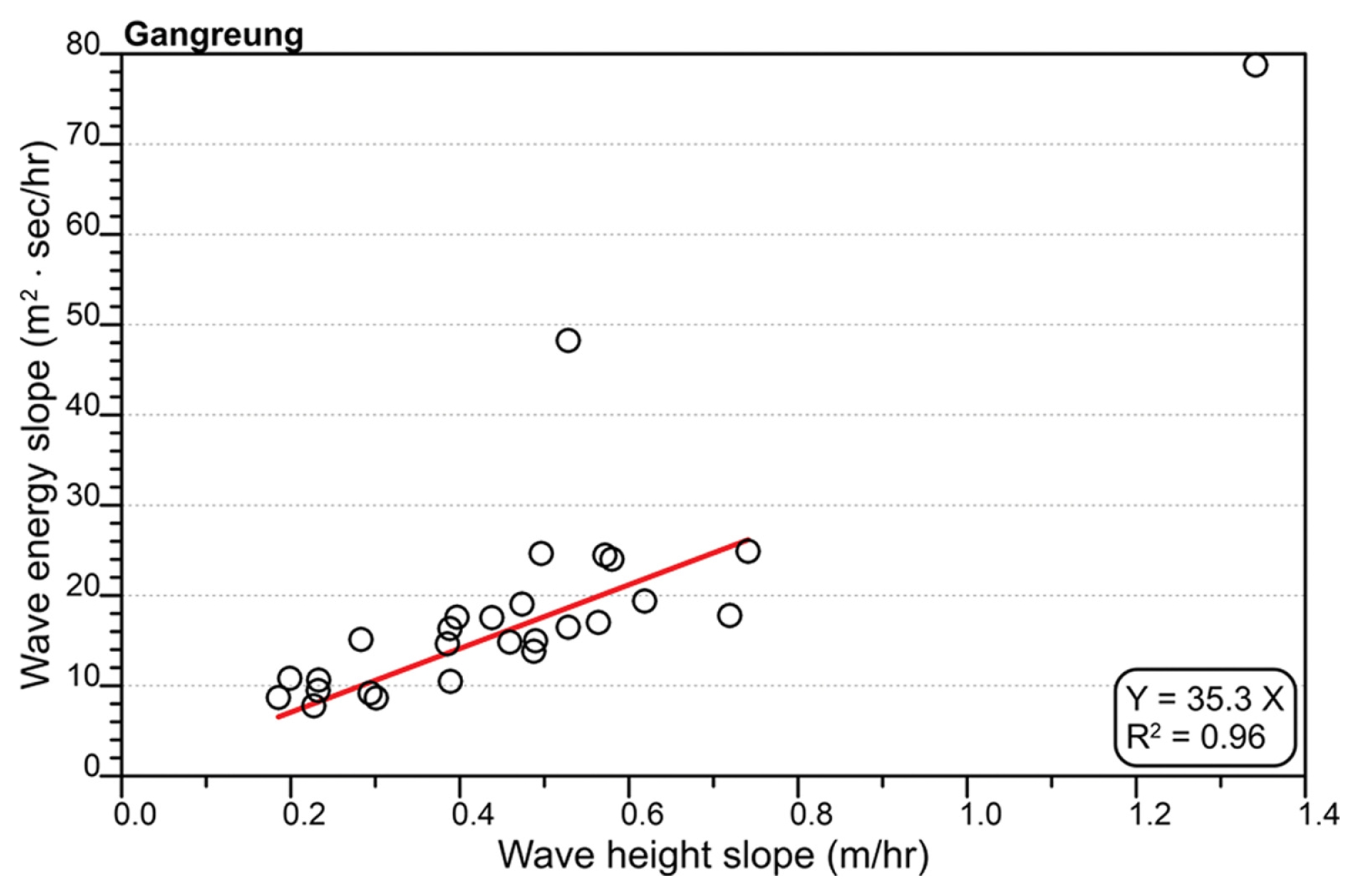
또한 Table 4에는 유의파고, 파고 기울기, 파랑 에너지 기울기가 가장 큰 값들을 적색으로, 두 번째로 큰 경우를 청색으로 표시하였는데 이를 Kim et al.(2016)의 결과와 비교해보면 파고와 파랑 에너지의 기울기가 최대인 이벤트는 2005년 10월 21일(Table 4의 No. 3)로, 파랑 에너지가 두 번째로 큰 경우는 2006년 10월 23일(Table 4의 No. 6)로 동일하게 제시되었다. 27회의 돌연 고파 이벤트의 파고 기울기와 파랑 에너지 기울기 산정에 사용된 경과시간(∆t)의 범위는 3.0~12.0 시간과 3.0~17.5시간이었으며 그 평균치는 5.1시간과 7.0시간으로 나타나서 최대 파고 기울기보다 최대 에너지 기울기의 출현시간이 더 길게 제시되었다. 파고 기울기의 경우 거의 절반(27회 중에서 12회)의 돌연 고파가 3시간만에 최대 기울기에 도달하였으며 2005년 10월 21일의 돌연 고파도 여기에 포함되었다. Fig. 9에는 27회의 돌연 고파 이벤트의 Max. ∆(H2T)/∆t에 대한 Max. ∆H/∆t를 도시하였으며 Max. ∆(H2T)/∆t가 1, 2위인 경우를 제외하면 양자가 거의 선형적인 관계를 나타내고 있음을 알 수 있다. 참고로 1, 2위를 제외한 이벤트들의 회귀식은 Max. ∆(H2T)/∆t = 35.3(Max. ∆H/∆t), 결정계수(R2)는 0.96으로 제시되었다.
돌연 고파 이벤트들의 월별 출현을 정리해보면 12월이 5회로 가장 많았으며 4월, 10월과 11월이 각각 4회, 3월이 3회, 1, 2, 8월이 각각 2회로 나타났다. Kim et al.(2016)은 10월에서 다음 해 2월까지를 돌연 고파가 주로 나타나는 것으로 제시하였으나 4월에도 출현빈도가 상당히 많음에 유의할 필요가 있다. 그리고 2006년 9월 17일의 돌연 고파 이벤트는 태풍 0613호인 SHANSHAN에 의해 발생하였다. 한편 유의파고 3 m 이상을 폭풍파로 간주할 때 강릉 해변에서는 8년 동안 53회의 폭풍파가 내습하였으며 이 중에서 돌연 고파는 약 51%로 절반을 차지하였다.
돌연 고파의 파고 기준, 돌연출현 및 정온유지 시간의 설정, 월별 출현 특성이나 일반적인 폭풍파 중에서 돌연 고파가 차지하는 비중에 대한 검토를 위해서는 8년간의 관측자료가 상대적으로 짧게 여겨질 수도 있다. 차후에는 한국해양과학기술원이 동해안에서 20년 이상 장기간 운영 중인 파랑관측소들의 자료를 입수하여 보다 면밀한 검토를 수행할 계획이다.
4.2 돌연 고파의 지역별 출현 특성
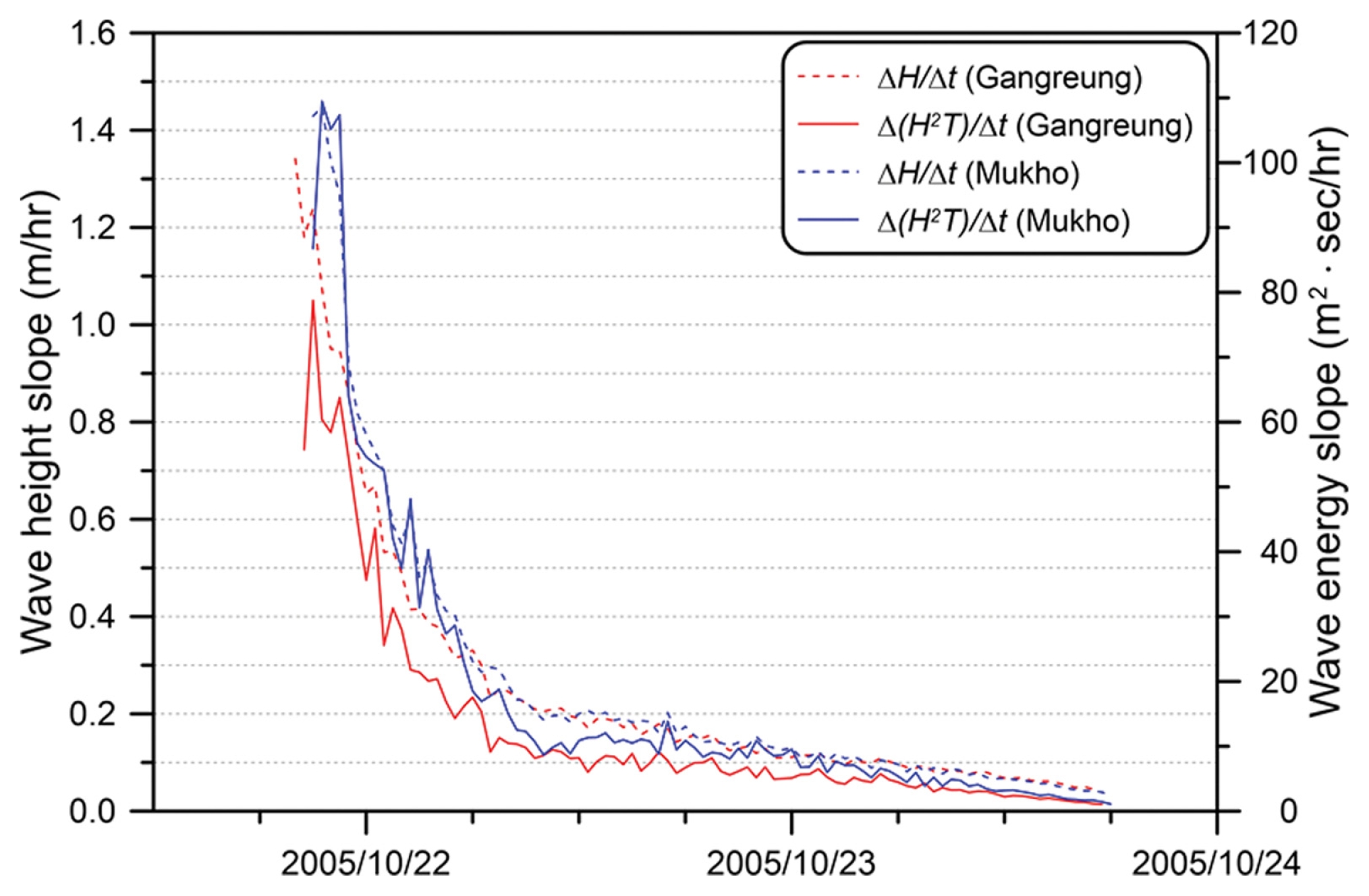
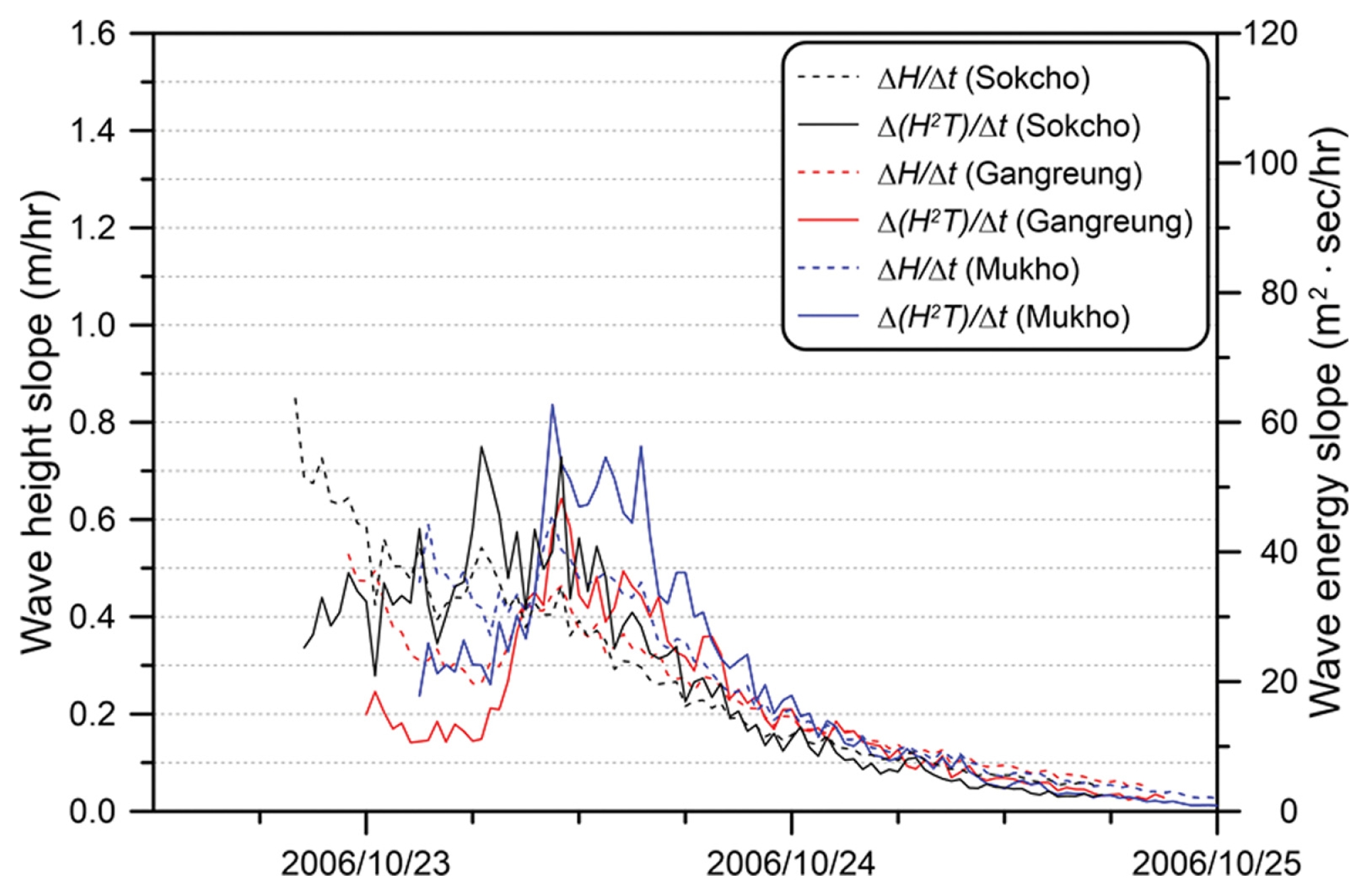
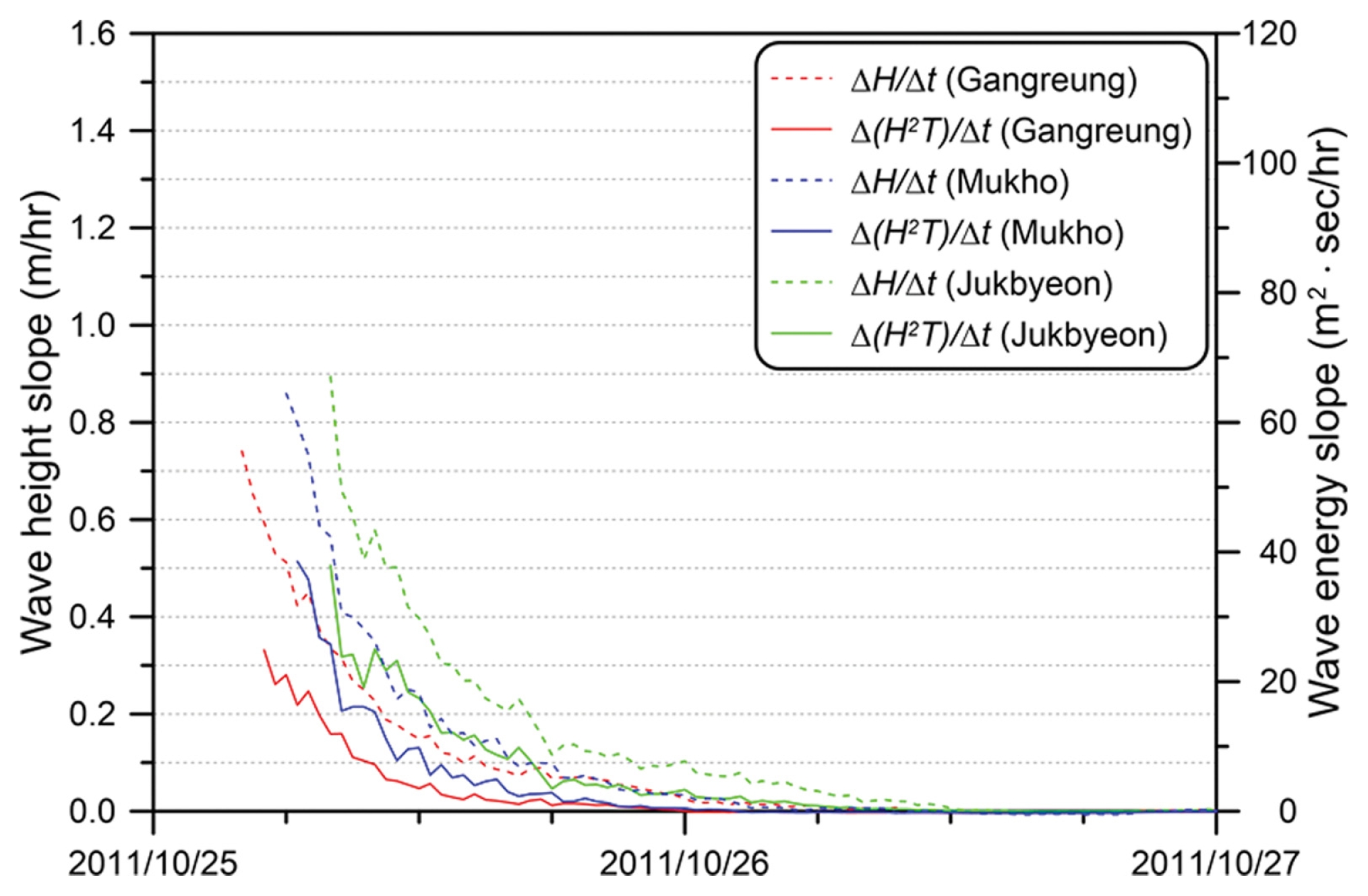
2005년 10월 21일에 나타났던 돌연 고파의 경우 묵호항 부근의 파랑관측소에서도 자료가 수집되었으며 Fig. 10에 강릉과 묵호의 기울기들을 같이 표시하였다. 이를 살펴보면 돌연 고파의 출현 시기가 묵호에서 약간 늦게 나타났고 파고와 파랑 에너지의 기울기도 남쪽에 위치한 묵호에서 약간 더 크게 제시되었다. Fig. 11에 나타낸 것처럼 2006년 10월 22~23일에 나타났던 돌연 고파의 경우에도 북쪽에서 남쪽으로 가면서 돌연 고파의 출현시기가 늦어졌다. 파고의 기울기는 속초, 파랑 에너지의 기울기는 묵호에서 가장 크게 제시되었다. Fig. 12에 나타낸 것처럼 2011년 10월 25일에 나타났던 돌연 고파의 경우에도 북쪽에서 남쪽으로 가면서 돌연 고파의 출현 시기가 늦어졌으며 파고의 기울기는 죽변에서 가장 크게 제시되었다.
4.3 2008년 2월 24일의 사고 원인 분석
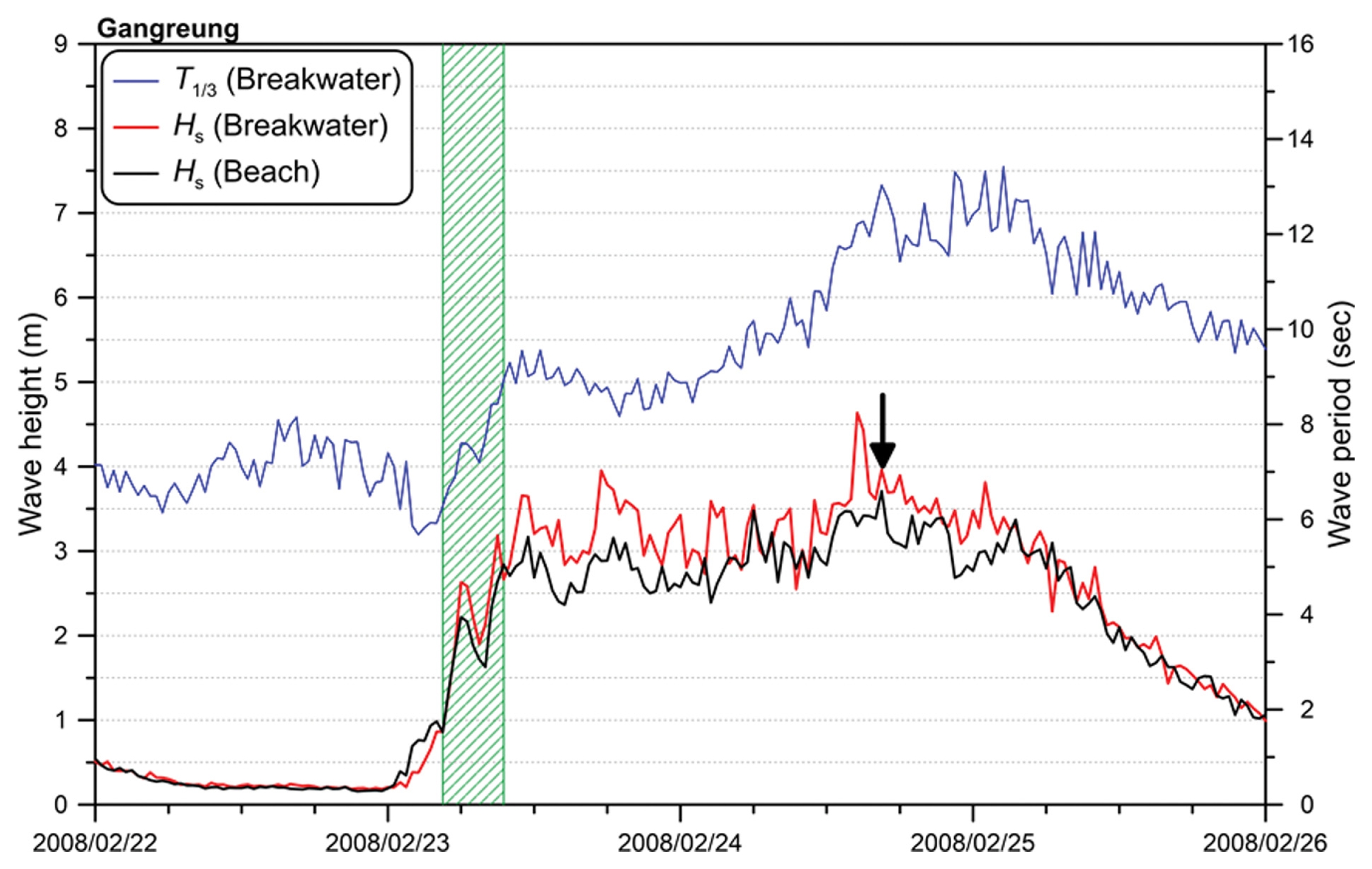
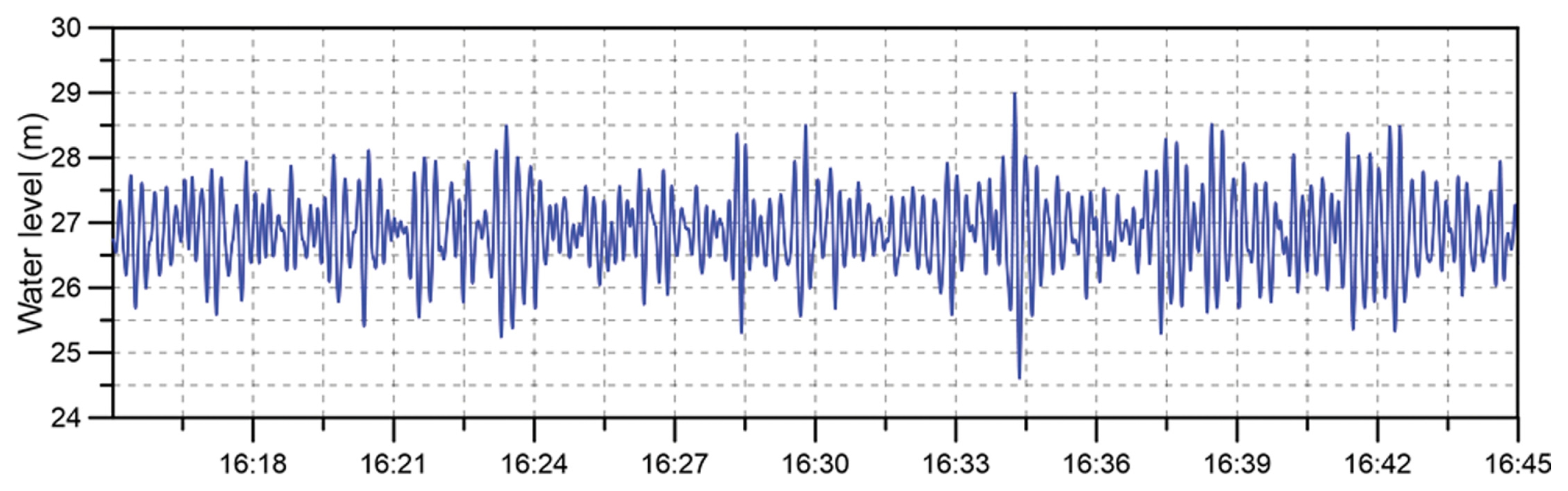
2008년 2월 24일 16시 30분 경에 발생한 강릉항의 사고(연합뉴스 보도에 따르면 관광객 13명이 파도에 휩쓸렸으며 3인 사망)에 대해 Raw data의 Plotting 등을 사용하여 피해가 유발되었던 시기의 해수위 변화를 보다 상세하게 제시하고 사고 원인에 대해 분석하였다. Fig. 13은 2008년 2월 22일부터 25일까지 강릉항 방파제 전면(수심 약 27 m)과 경포 해수욕장 전면(수심 약 15 m)에 각각 설치되었던 수압식 파고계에서 관측된 유의파고와 유의파주기들을 도시한 것이다. Table 4에 제시된 것처럼 이 시기의 고파도 돌연 고파 이벤트에 포함되었으며 시점은 23일 새벽으로 설정되었다. 또한 이 그림에는 돌연 고파의 파랑 에너지의 기울기가 최대였던 시각과 그것의 시작 시각을 포함한 범위를 녹색 빗금으로, 그리고 사고가 발생하였던 시각을 화살표로 각각 표시하였다. 이를 살펴보면 방파제 전면에서는 24일 14시 30분에 최대 유의파고 4.64 m(유의파주기 12.2초)를, 경포 해수욕장에서는 16시 30분에 유의파고 3.71 m(유의파주기 11.8초)를 기록하여 인접한 곳에서 동시관측한 자료에서 유의파고 최대치가 나타난 시점이 다소 차이를 보였다. 이 고파 이벤트는 23일 6시부터 유의파고가 2 m를 초과하였으며 사고가 발생했던 24일 오후까지 고파가 지속되었으므로 방파제 출입이 통제되었더라면 사고를 방지할 수 있었을 것이다. Fig. 14에는 24일 14시 30분부터 30분동안, Fig. 15에는 24일 16시 15분부터 30분 동안 0.5초 간격으로 수집된 수면변동 자료의 시계열을 도시하였는데 두 경우 모두 Hmax/Hs = 1.6로 나타나서 비교적 큰 최대파고/유의파고의 비를 나타냈으나 Rouge wave(또는 freak wave)의 기준으로 제시되는 Hmax/Hs = 2.0(Sand et al., 1989; Ahn et al., 2015; Teutsch et al., 2020)에는 미치지 못하였다. 이들을 살펴보면 최대 유의파고가 기록되었던 14시 46~47분에 진폭이 상대적으로 큰 고파가 내습하였으며 사고가 발생되었던 16시 34~35분 사이에도 상당히 진폭이 큰 고파가 내습하였고 이 파가 사고를 유발하였을 것으로 추론할 수 있다. 전자의 경우 단일 최대파고가 내습하기 이전에도 상당히 높은 파고들이 계속되어 방파제의 전체 구간에서 월파가 계속되어 사람들의 출입이 상대적으로 제한된 반면 후자에서는 월파가 제법 약해져서 사람들의 출입이 재개되었고 갑작스런 최대파고에 따른 월파로 사고가 발생된 것으로 생각되었다. 이렇게 갑자기 최대파고가 나타나는 경우는 예보가 불가능할 것으로 사료되므로 이들의 출현에 앞서서 돌연 고파 이벤트의 출현이 예보되면 즉각적으로 방파제 출입을 통제하여 사고를 방지해야 할 것으로 사료된다.
5. 결 론
본 연구에서는 강릉을 포함한 동해 중북부 지역의 4개 파랑관측소에서 8년간 취득된 자료들을 분석하여 돌연 고파 출현 특성을 검토하였다. 돌연 고파 선정 방법으로 Kim et al.(2016)을 참조하되 보다 직관적이고 단순하게 돌연 고파 이벤트를 결정할 수 있는 방법을 제안하였고, 또한 돌연성 분석을 보다 엄밀하게 수행하였다. 여기서는 돌연 고파의 시점 기준 파고는 1.25 m를 동일하게 사용하였으나 고파 기준으로 풍랑주의보 발효 기준인 3 m를 채택하였다. 그리고 정온 유지 시간(tc)과 돌연출현 시간(ts)을 도입하고 변수들을 변화시키면서 돌연 고파 이벤트들을 산출함으로써 tc를 3시간, ts를 12시간으로 결정하였으며 결과적으로 강릉 해역의 경우 8년 동안 27회의 돌연 고파가 발생하였다.
돌연 고파의 강도를 나타내는 변수로 파고 기울기(단위시간당 파고의 증가량 ∆H/∆t)와 파랑 에너지 기울기(단위시간당 파랑 에너지의 증가량 ∆(H2T)/∆t)를 선정하였다. 27회의 돌연 고파 이벤트의 파고 기울기와 파랑 에너지 기울기 산정에 사용된 경과시간(∆t)의 범위는 3.0~12.0시간과 3.0~17.5시간이었으며 그 평균치는 5.1시간과 7.0시간으로 나타나서 최대 파고 기울기보다 최대 에너지 기울기의 출현시간이 더 길게 제시되었다. 파고 기울기의 경우 거의 절반(27회 중에서 12회)의 돌연 고파가 3시간만에 최대 기울기에 도달하였다. 돌연 고파 이벤트의 Max. ∆(H2T)/∆t)에 대한 Max. ∆H/∆t는 거의 선형적인 관계를 나타내었다.
돌연 고파 이벤트들의 월별 출현 빈도는 12월이 5회로 가장 많았으며 4월, 10월과 11월이 각각 4회로 나타나서 Kim et al.(2016)이 제시한 10월에서 다음 해 2월까지 이외에 4월에도 출현빈도가 상당히 많음에 유의할 필요가 있다. 한편 유의파고 3 m 이상을 폭풍파로 간주할 때 강릉 해변에서는 8년 동안 53회의 폭풍파가 내습하였으며 이 중에서 돌연 고파는 약 51%를 차지하였다. 한편 지역별 돌연 고파의 출현 시기는 북쪽에서 남쪽으로 가면서 늦어지는 경향을 나타냈다. 차후 연구에서는 보다 많은 정점에서 장기간(20년 이상)의 자료를 수집하여 이러한 특성들에 대해 면밀한 검토를 수행할 계획이다.
추가적으로 2008년 2월 24일 16시 30분 경에 발생한 강릉항의 사고원인에 대해 분석한 결과 방파제 전면에서 최대 유의파고가 나타났던 14시 30분 이후에 발생하였으며 전자의 경우 단일 최대파고가 내습하기 이전에도 상당히 높은 파고들이 계속되어 방파제의 전체 구간에서 월파가 계속되어 사람들의 출입이 상대적으로 제한된 반면 후자에서는 월파가 제법 약해져서 사람들의 출입이 재개되었고 갑작스런 최대파고 내습에 따른 월파로 사고가 발생된 것으로 생각되었다. 이렇게 갑자기 최대파고가 내습하는 경우는 예보가 불가능할 것으로 사료되므로 이들의 출현에 앞서서 돌연 고파의 출현이 예보되면 즉각적으로 방파제 출입을 통제하여 사고를 방지해야 할 것으로 사료된다.

 : significant wave height and time at the sudden high wave event, –: slope of the wave height,
 : variation in the slope of wave energy,
 : interval including the time when the maximum wave height slope occurred and its starting point,
 : interval including the time when the maximum wave energy slope occurred and its starting point, ■: time at which the maximum significant wave height occurred during the sudden high wave event).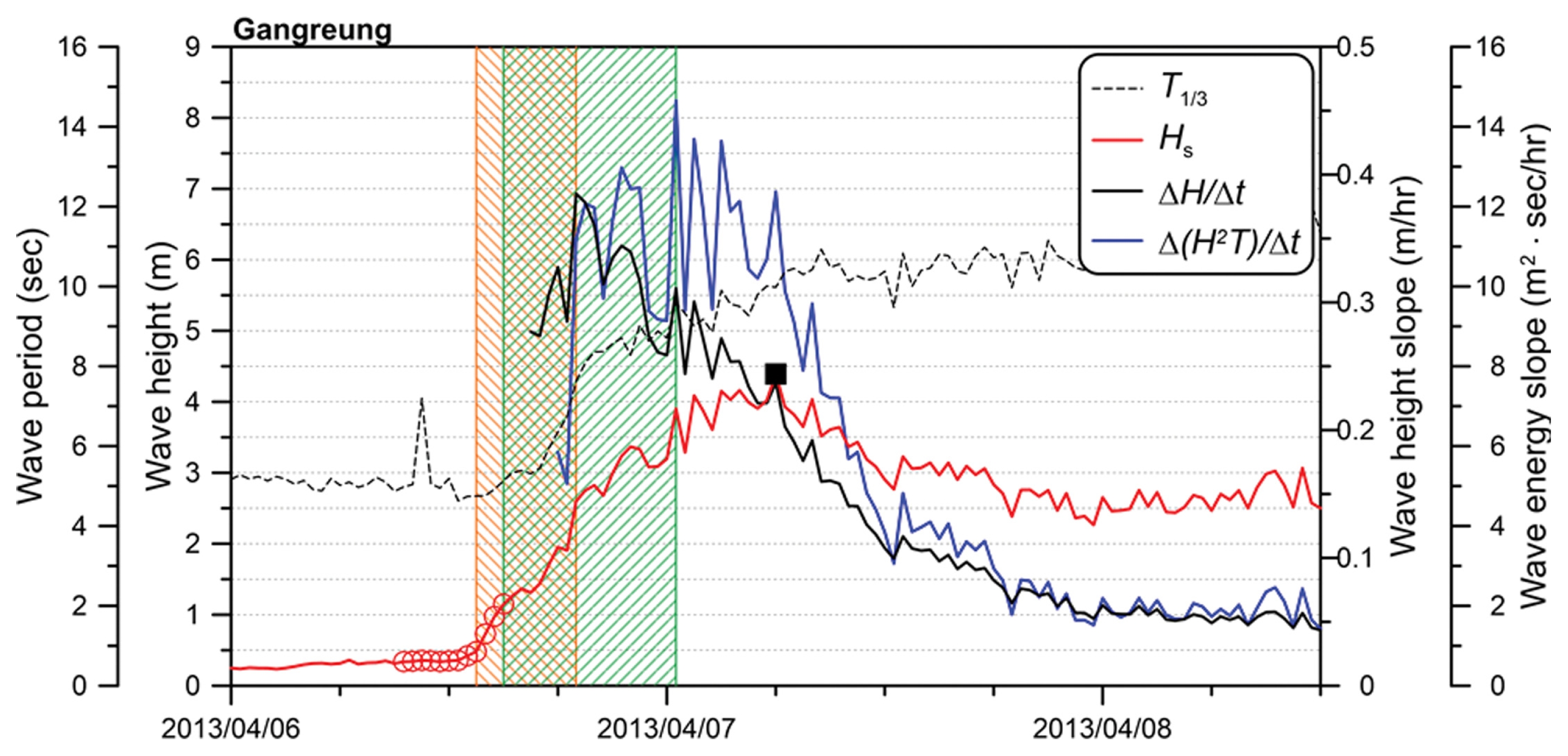



 PDF Links
 PubReader
 ePub Link
 Full text via DOI
 Download Citation
  Print
Print