





1. 서 론
항만의 직립형 구조물(안벽 ·상치 구조물)은 일반적으로 방파제 등 외곽 방호시설에 의해 외해 고파로부터 보호되도록 계획·운영된다(해양수산부, 2023). 그러나 최근에는 고파 내습 사건의 빈도 증가와 함께 태풍 내습이 잦아지고, 폭풍 해일고의 증가, 평균해수면 상승(기후변화에 따른 장기 상승), 조위 조건의 불리한 중첩 등으로 총 수위가 높아지는 사례가 누적되면서, 기존 방호 체계하에서도 항 내측에서 월파가 발생하거나 월파 규모가 증가할 가능성이 커지고 있다(Glavovic et al., 2022; Seneviratne et al., 2021; WCRP, 2025). 월파된 해수는 에이프런과 야드로 유입되어 단시간 내 침수 및 배수 지연을 유발하며, 침수의 지속시간이 길어질수록 시설 운영 차질뿐 아니라 부대 구조물(포장·부속시설 등)의 손상 위험도 증가한다(Van der Meer et al., 2018).
외곽 방파제 사이 개구부를 통과해 항 내로 내습하는 파랑이 안벽 전면까지 전달되어 월파를 유발할 수 있으며(Maravelakis et al., 2021), 부산항 감만부두의 경우 시설 관리자 인터뷰에 따르면 태풍 내습 시 월파로 인한 침수가 반복적으로 발생하고, 해측 수위가 높아 배수가 지연되어 통상 1~3시간 이후 배수가 완료되는 것으로 보고된 바 있다. 또한 에이프런 인근에는 복개식 수로 및 배수구가 존재하나, 안벽으로부터 가장 인접한 우수 배수로가 내측에 위치하고(안벽에서 내측으로 약 26 m 지점), 일부 구간에서는 수로 덮개가 콘크리트 플레이트로 교체되는 등 배수 여건이 시공·운영 과정에서 변화해 왔다. 2020년 9월 태풍 마이삭 내습 시 감만부두에서는 안벽 월파와 부두 전역 침수가 동반되었고, 2, 3선석 에이프런에서 아스팔트 콘크리트 포장 파괴가 발생하였다. 피해는 상치 콘크리트 구조물과 포장 경계부에서 집중적으로 나타났으며, 구간에 따라 약 2~5.6 m 범위의 파손이 관찰되었다. 파괴 단면 및 현장 사진에서는 (1) 표층과 바인더층의 분리, (2) 상치-포장 접합부의 별도 처리 부재 및 콘크리트 측의 비교적 깨끗한 파단면, (3) 파괴 이후 기층 자갈의 세굴·이송 및 물고임의 존재가 확인된다. 이러한 손상 양상은 월파 충격압만으로 설명하기 어려운 ‘침수-포화-압력 전달’의 복합 메커니즘 가능성을 제기한다.
감만부두는 케이슨 및 배후 매립으로 조성된 계류시설로, 케이슨 상부에 상치 구조물을 설치하여 천단고를 확보한다. 표준 단면에서 포장은 해측 직벽으로부터 일정 이격된 위치에 시공되며, 아스팔트 포장층(표층 50 mm + 바인더 100 mm)과 기층(200 mm), 보조기층(300 mm)으로 구성된다. 태풍 내습 시 월파수 유입과 배수 지연이 중첩될 경우, 포장 상부 침수와 하부 기층의 포화가 동시에 발생할 수 있으며, 이때 포장 하부에서는 지하수위 상승 및 공극수압 증가에 의해 상향압력(uplift pressure)이 작용할 가능성이 있다(Chanson, 2015; Wan and Wang, 2025). 특히 상치 콘크리트-포장 경계부의 틈(gap) 또는 불연속은 상부 수체의 압력 변동이 포장 하부로 전달되는 주요 유입 경로로 작용할 수 있으므로, 해당 경계부의 세부 조건은 포장 파괴 메커니즘을 지배하는 중요한 인자가 될 수 있다.
본 연구는 현장 손상 양상과 배수 여건을 고려하여 포장 파괴의 잠재 원인을 (i) 기층 포화 및 세립분 유실(파이핑 등)에 따른 지지력 저하와 국부 침하, (ii) 침수에 따른 지하수위 상승 및 기층 포화로 인한 양압 작용의 두 가지로 정리하고, 그중 수치모델로 직접 검토가 가능한 두 번째 가설(월파-침수-양압 연계)을 중심으로 정량 평가를 수행하였다. 이를 위해 이상화 단면에서 VOF 기반 전산유체역학(CFD) 모델을 구축하고, 상치 콘크리트-포장 경계부 틈의 폭을 변수로 설정하여 포장 상·하부 압력차와 순상향압력의 형성 특성을 비교하였다. 특히 틈 폭 1 cm와 5 cm 조건을 대상으로 경계부 세부 형상이 포장 하부 상향압력 형성에 미치는 영향을 검토하였다.
본 논문에서 가정하는 지배 파괴 모드는 상부 충격압에 의한 압축파괴가 아니라, 침수-포화 조건에서 포장 하부면에 형성되는 간극수압이 포장층에 순상향력을 유발하고 그 결과 휨 인장응력이 지배적으로 증가하는 메커니즘이다(Wan and Wang, 2025; CEDD, 2006). 포장층 상·하면 압력차에 의해 발생하는 순상향력이 15 cm 두께 아스팔트 포장의 자중 면압보다 클 경우, 이는 포장층에 등가 분포하중으로 작용하여 휨모멘트를 생성하며, 상치-포장 계면의 비부착 또는 간극이 존재할 때 경계 구속이 약화되어 들림(박리)과 함께 인장 균열 개시가 촉진될 수 있다(Dempsey, 1982; Wan and Wang, 2025). 반대로 계면이 완전 구속되고 하부가 비포화 상태로 배수가 원활하다면 포장 하부면의 외력(상향력)은 제한되며, 이 경우 상부 압력 성분은 주로 압축응력으로 전달되어 관찰된 박리·들림 양상과 하중 경로 측면에서 정합성이 낮다(Chanson, 2015). 또한 월파 하중은 국부적 충격 성분뿐 아니라, 침수 수심에 의해 지배되는 준정수압(quasi-hydrostatic) 성분이 동반될 수 있으며(Van der Meer et al., 2018; Bruce et al., 2009), 배수 지연 시 하부 수압의 지속시간이 증가하여 구조적 관점에서 불리한 하중 조합(상향력 발생 및 유지)이 형성된다(Chanson, 2015; Chen and Wang, 2025). 따라서 본 연구의 이상화 단면 CFD 및 준해석적 검토는 실제 월파를 재연하거나 다양한 시나리오를 포괄적으로 예측하기 위한 것이 아니라, 현장 관찰로부터 도출된 핵심 조건, 즉 계면 취약, 유입 경로 존재, 배수 저하 및 포화가 결합될 때 ‘양압-들림-휨 인장 파괴’ 메커니즘이 물리적으로 성립 가능한지를 정량적으로 확인하기 위한 가능성 검토로 해석된다.
따라서 본 연구의 목적은 감만부두에서 실제 관찰된 포장 파괴 양상에 대해 월파-침수-양압 연계 메커니즘이 물리적으로 성립 가능한지를 검토하고, 상치 콘크리트-포장 경계부 틈 조건 변화가 그 발생 가능성을 어떻게 변화시키는지를 평가하는 데 있다. 이를 위해 이상화 단면 기반 CFD 해석을 수행하고, 15 cm 두께 아스팔트 포장의 자중 면압을 고려한 순상향압력과 구조응답을 분석하였다. 2장에서는 대상 시설의 구조 및 현장 관측 정보를 정리하고, 3장에서는 수치모델의 지배방정식, 계산영역 및 경계조건을 제시한다. 4장에서는 틈폭에 따른 포장 상·하부 압력차와 상향압력 특성을 비교하고, 5장에서는 순상향압력을 기반으로 구조응답과 파괴 가능성을 논의한다. 마지막으로 6장에서는 연구 결과를 요약하고 설계·유지관리 관점의 시사점과 향후 연구 방향을 제시한다.
2. 대상 구조 및 파괴 시나리오
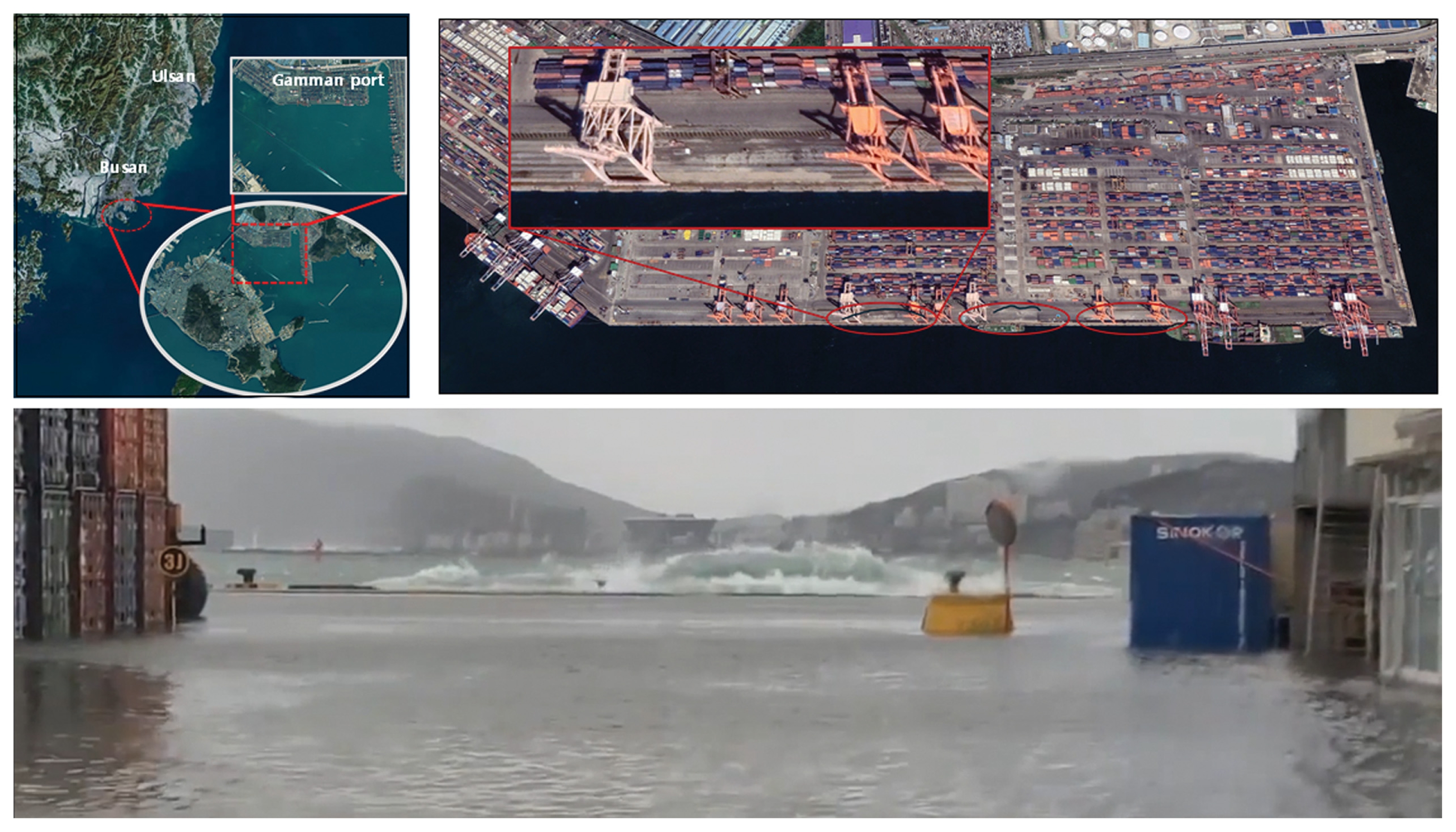
부산항 감만부두는 컨테이너 화물 처리를 위한 계류시설로, 본 연구는 태풍 마이삭(2020) 내습 시 포장 파괴가 보고된 2~3선석 일대를 대상으로 한다(Fig. 1). 감만부두 에이프런은 상치 콘크리트 구조물 배후에 아스팔트 콘크리트 포장이 적용된 형식이며, 포장 단면은 아스팔트 콘크리트 표층 50 mm와 바인더층 100 mm(총 150 mm), 하부 파쇄석 기층 200 mm, 보조기층 300 mm로 구성된다. 또한 표면 배수를 위해 에이프런 구간에 약 1.0% 경사를 부여하도록 설계되었고, 시공 시 0.5~1.5% 범위의 경사를 확보한 것으로 제시되어 있다.
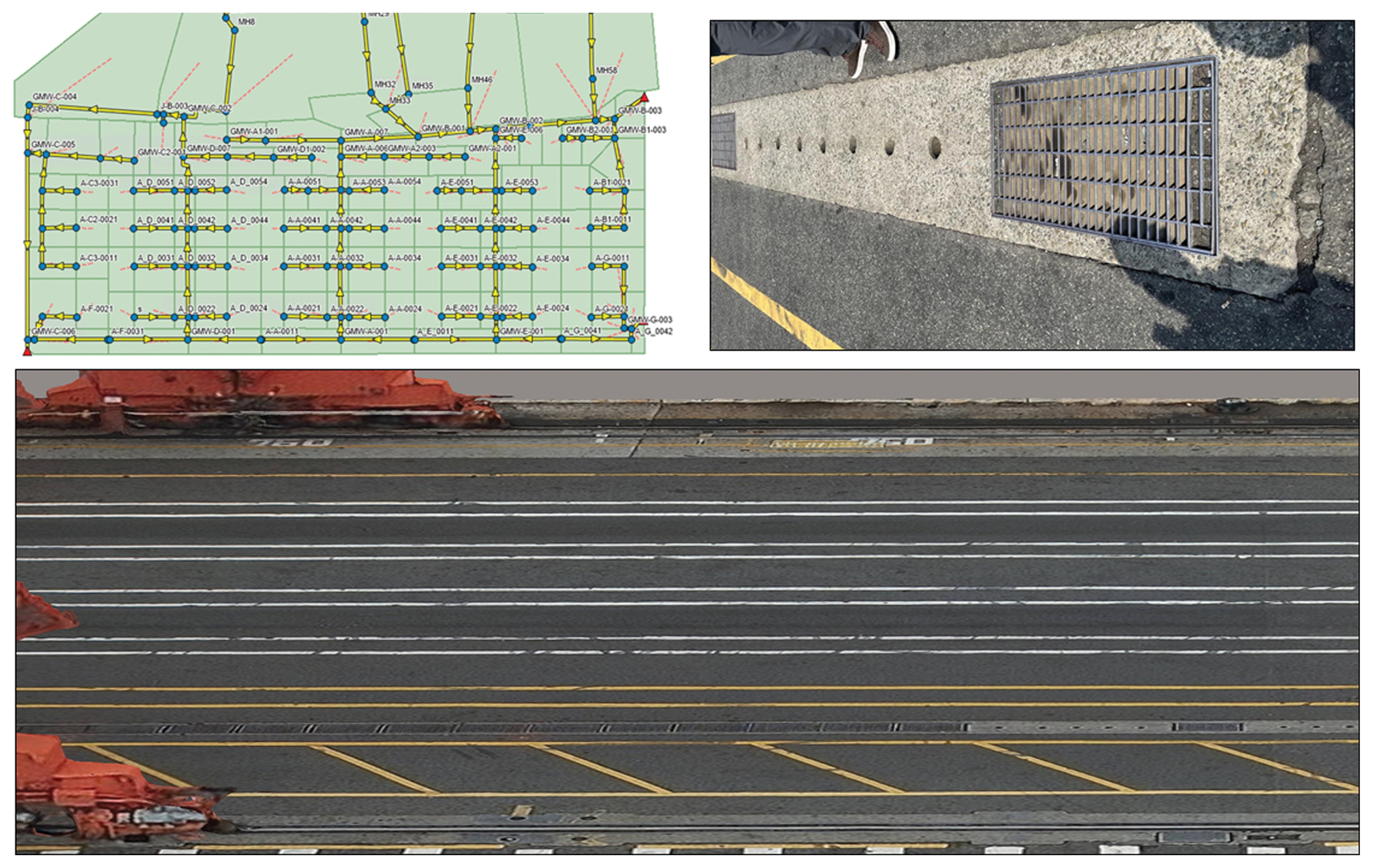
현장 및 관계자 인터뷰에 따르면 감만부두 침수는 강우보다는 월파와 연계되어 발생하는 경향이 강하며, 태풍 시 해측 평균수위 상승으로 배수가 지연되고 침수 후 1~3시간 이후 배수가 완료되는 것으로 언급된다(Fig. 1(c)). 안벽에서 가장 인접한 우수 배수로는 안벽에서 약 26 m 내측에 위치하고 복개식 수로가 설치되어 있으며, 상부 덮개는 구간에 따라 스틸 그레이팅 또는 콘크리트 플레이트 형태로 운영되어 왔다(Fig. 2). 일부 구간에서는 덮개 교체 및 보조 배수 조치(그레이팅 플레이트 및 천공/PVC 홀)가 확인되며, 이는 태풍 내습 시 표면수의 배출 효율과 침수 지속시간에 영향을 줄 수 있는 현장 조건으로 해석된다.
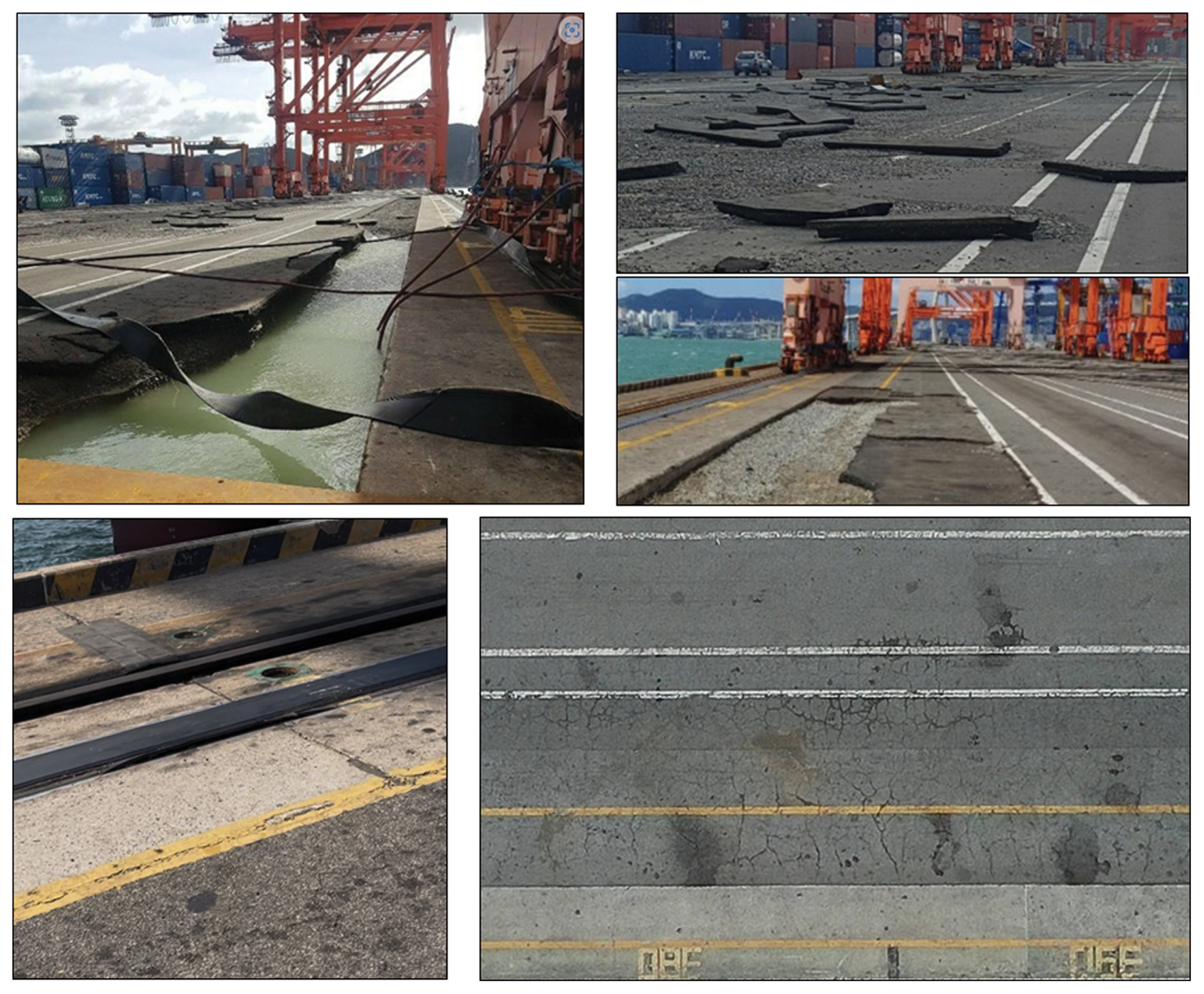
태풍 마이삭(2020) 내습 당시 감만부두에서는 안벽 월파와 부두 전역 침수가 동반되었고, 2~3선석 에이프런에서 포장 파괴가 발생하였다(Fig. 3(a), (b)). 피해는 상치 콘크리트 구조물과 포장 경계부(최외측)에서 집중적으로 나타났으며, 구간에 따라 약 2~5.6 m 길이의 파손이 관찰되었다. 현장 사진에서 확인되는 대표적인 손상 형상은 (i) 포장 들림과 물고임의 동시 발생, (ii) 파편의 대면적 박리 및 분포, (iii) 피해 구간 전경에서의 경계부 집중 파손, (iv) 상치-포장 경계부에서의 접합면 노출로 요약된다(Fig. 3).
또한 파괴 단면 및 파편 관찰에서는 표층과 바인더층의 분리(층간 박리) 정황이 확인되고, 상치-포장 접합부에 별도 계면 처리의 부재 또는 계면 취약 정황이 제시된다(Fig. 3(b)). 파괴 이후에는 기층 자갈의 세굴·이송 정황과 물고임이 동반된 사례가 보고되어, 포장 하부 지지층의 포화 및 공극수압 상승(또는 지하수위 상승)이 결합되었을 가능성을 시사한다(Fig. 3(a), (b)). 한편, 케이슨 이음부의 유격/틈새가 관측되어 태풍 내습시 해수 또는 월파수가 배후로 유입될 수 있는 경로 가능성이 제기된다(Fig. 3(c), (d)). 이와 함께 상치 콘크리트-포장 경계부의 틈 또는 불연속 역시 상부 수체의 압력 변동이 포장 하부로 전달될 수 있는 잠재적 경계부 유입 경로로 해석될 수 있다.
이상의 관측은 ‘층 분리-계면 취약-하부층 이상(세굴·이송)-침수 지속’이 단일 원인으로 독립적으로 발생했다기보다, 태풍 내습 시 월파수 유입과 배수 지연으로 형성된 침수-포화 조건에서 포장 하부에 상향압력이 작용하고, 계면 구속이 약화된 상태에서 박리·들림 및 휨 인장균열이 촉진될 수 있음을 뒷받침한다(Figs. 2 and 3). 즉, 현장 관찰로부터 도출되는 핵심 조건은 침수 지속 및 배수 저하, 계면 취약, 하부층 포화 가능성, 그리고 경계부 또는 배후측 잠재 유입 경로의 존재로 정리될 수 있다.
따라서 본 연구는 관측으로부터 도출된 핵심 조건이 결합될 때 포장 상·하부 압력차에 의한 순상향력이 형성될 수는지, 그리고 그 결과 휨 인장응력이 지배적으로 증가하는 파괴 경로가 물리적으로 성립 가능한지를 이상화 단면 기반 수치 재구성으로 정량 검토한다. 특히 본 연구에서는 상치 콘크리트-포장 경계부 틈 폭을 주요 변수로 설정하여, 경계부 세부 조건변화가 포장 하부 양압 형성과 구조응답에 미치는 영향을 비교·검토한다.
3. 연구 방법
본 연구는 태풍 마이삭(2020) 내습 시 감만부두 에이프런에서 관측된 포장 파괴 양상(Figs. 1~3)을 설명할 수 있는 ‘월파-침수-양압’ 연계 메커니즘의 물리적 성립 가능성을 정량적으로 검토하기 위해, ANSYS Fluent를 사용하여 이상화 단면 기반 전산유체역학(CFD) 해석을 수행하였다. 자유수면의 큰 변형과 유체-공기 계면의 급격한 변화를 재현하기 위해 VOF(Volume of Fluid) 기법을 적용하였고, 포장 상·하부 압력의 시공간 분포로부터 포장 자중 면압을 고려한 순상향 압력을 산정하여 이후 준해석적 구조 평가의 등가 외력으로 사용하였다.
3.1 전산유체역학 모델
본 연구에서 활용한 모델은 ANSYS Fluent 모델로 비압축성 유체에 대한 연속방정식과 나비에-스톡스 방정식을 활용하고, 해당 지배방정식은 다음과 같이 기술된다.
여기서, 수식은 아인슈타인 표기법을 활용하였으며, u는 유속을, p는 압력을, ρ는 유체 밀도(= 998.2 kg/m3)를, g는 중력 가속도를, τ와 τt는 각각 점성과 난류에 의한 전단응력을, Fi는 외력 성분(external force)으로 본 연구에서는 다공성 매체로 인한 소산 항(sink term)으로 활용된다.
유속 및 압력은 상기한 식(1) 및 식(2)을 유한 체적법으로 차분하여 계산된다. 물과 공기를 함께 표현하기 위해 다상(multi-phase) 흐름을 고려하였고, 상간의 계면 산정을 위해 VOF법을 활용하였다. 두 개 상의 혼합 밀도(식(3))와 유수면의 추적을 위해 사용된 부피 분율(volume fraction)의 이송방정식(식(4))은 아래와 같다.
여기서, α는 부피 분율로 격자가 물로 가득 찬 경우는 1의 값을, 공기로 가득 찬 경우 0의 값을 갖는다.
난류 모형은 벽 근처의 역 압력 구배와 벽에서 먼 위치의 난류 흐름을 함께 고려할 수 있는 SST k-omega 모형을 활용하였다. Fluent 모델은 상용 모델로 이론 설명서(Ansys, 2025)에서 다상 흐름에 대한 지배방정식에 관해 자세히 다루고 있기에 본 논문에서 부가적인 상세 설명은 생략하였다.
3.2 계산 영역 및 설정
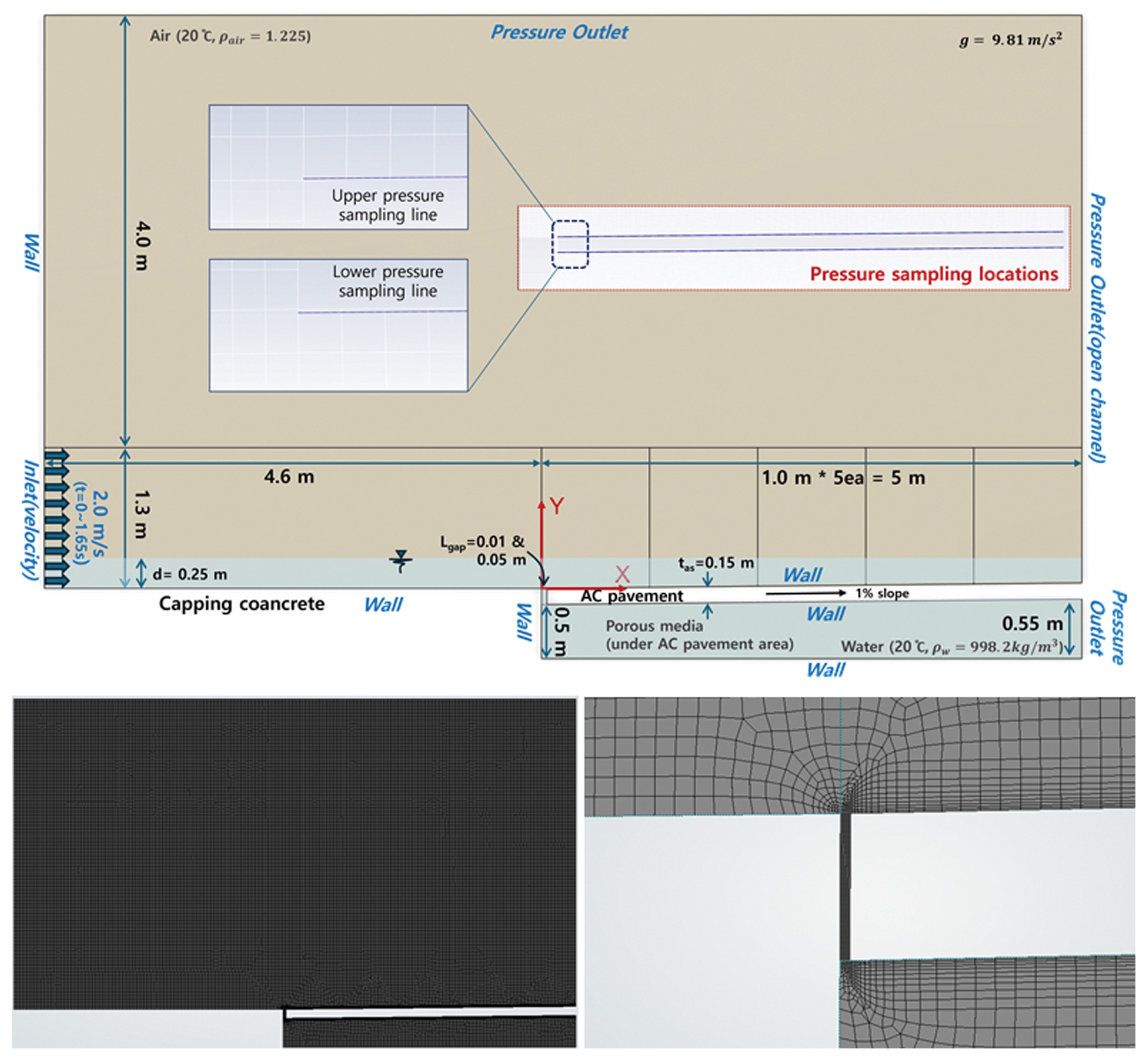
해석 도메인은 감만부두 표준 단면을 기반으로 하되, 월파수의 유입·침수·정체 및 포장 하부로의 압력 전달을 단순화하여 모사할 수 있도록 주요 구조 요소(안벽 상부, 상치 구조물, 에이프런 포장 및 하부층)를 포함하는 단면 모델로 이상화하였다(Fig. 4). 계산영역은 상치 구조물 4.6 m와 포장 5.0 m 구간(관측된 파괴 길이 범위에 근거)을 포함하도록 설정하였고, 상치 콘크리트와 포장층의 불연속을 표현하기 위해 상치 콘크리트-포장 경계부에 틈을 두고, 틈 폭을 0.01 m와 0.05 m의 두 조건으로 설정하여 이 구간을 통한 압력 전달이 가능하도록 구성하였다. 포장층 두께는 0.15 m(표층 50 mm + 바인더 100 mm)로 반영하고, 표면 배수를 모사하기 위해 1:100 경사를 부여하였다. 포장층 하부의 기층/보조기층 구간은 Darcy-Forchheimer 형태의 다공성 매체(porous media)로 모델링하여, 배수 성능이 저하된(클로깅/세립분 유입 등) 상태를 등가적으로 반영하였다.
본 해석은 실제 파랑 조파에 의한 월파를 직접 재현하기보다, 태풍 내습 시 월파수 유입을 대표하는 ‘댐 파괴(dambreaking) 유사’ 유량 유입 시나리오를 구성하였다. 즉, 좌측 유입 경계에서 높이 1.3 m 단면에 대해 유속 2.0 m/s를 부여하고, 이를 t = 0~1.65 s 동안 유입시키는 과도(transient) 조건으로 설정하였다. 이때 유입되는 총 유체량은 4.29 m3/m(2.6 m3/s/m)이며, 유입된 유체는 얕은 수심 조건에서 전진·붕괴·권파형(plunging) 쇄파 및 재도약을 동반하고, 그 과정에서 상치 구조물 상단 및 포장 인근으로 압력 변동이 전달되는 과정을 포착하도록 하였다.
초기 조건은 포장 상부가 y = 0.25 m까지 침수된 상태를 가정하였고, 포장 하부 및 갭 구간에는 유체가 포화된 조건을 부여하여 ‘침수-포화’ 조건에서의 압력 전달을 재현하였다. 모델 상부는 충분한 대기 공간(약 4.0 m)을 확보한 뒤 압력 유출구(pressure outlet)로 설정하였으며, 우측 상단 경계는 open channel 조건을 적용하여 목표 수위를 유지하도록 구성하였다. 포장 하부 다공성 구간의 하류 경계 또한 압력 유출구로 설정하였다. 노반은 배수 지연을 모사하기 위해 불투수 경계로 가정하였다.
격자는 육면체(hexahedral) 격자를 사용하였고, 자유수면 및 구조물 인근에서의 속도·압력 구배를 해상할 수 있도록 구조물 모서리, 상치-포장 경계부 및 갭 주변에서 국부 세분화하였다. 전체 계산영역은 0.02 m를 기본 격자 크기로 설정하였으며, 자유수면과 구조물 인근에서는 0.01~0.03 m 범위에서 격자 크기가 조정되도록 구성하였다. 특히 상치-포장 경계부의 틈 영역에서는 좁은 유입 경로를 통한 압력 전달을 보다 정밀하게 포착하기 위해 격자 크기를 0.002 m까지 세분화하였다. 총 격자 수는 5 cm 틈 모델에서는 약 1.38 × 10⁶개로, 1 cm 틈 모델에서는 약 1.41 × 10⁶개로 구성하였다. 틈 폭에 따른 두 모델은 동일한 해석 체계를 유지하되, 경계부 틈 폭 변화에 따른 압력 전달 특성을 비교할 수 있도록 경계부 및 틈 인근 격자를 재구성하여 적용하였다. 난류모형은 SST k-ω를 사용하였고, 압력-속도 결합(coupled), 압력(PRESTO), 모멘텀(2차 풍상), 부피분율(Compressive) 등의 이산화 설정을 적용하였다. 시간 적분은 ∆t = 0.0001 s의 초기 시간 간격을 사용하고, 각 시간 간격당 최대 50회 반복 계산을 수행하였다. 계산 안정화를 위해 Courant 수 제어(global Courant number = 0.5, flow Courant number = 10)를 적용하였고, explicit relaxation factor는 0.5로 설정하였다.
수치해석의 안정성을 확인하기 위해, 초기 시간 간격을 0.001 s에서 0.0001 s로 축소한 경우와, 격자 수를 기존 약 5.3 × 10⁵개에서 약 1.41 × 10⁶개로 증가시킨 경우를 대상으로 추가 검토를 수행하였다. 그 결과, 대표 압력 분포와 순상향압력, 그리고 구조응답의 정량 결과는 큰 차이를 보이지 않았으며, 본 연구의 해석 결론은 동일하게 유지되었다.
기층/보조기층 다공성 매체는 공극률(ε)은 0.32로 설정하고, Darcy-Forchheimer(Ergun) 관계식을 이용하여 점성저항계수 1/α 및 관성저항계수 C2를 산정하였다(Ergun, 1952). 본 연구에서는 유효입경(등가입경, dp)을 약 1.6 mm로 대응시켜, 점성저항(viscous resistance) 계수를 9.41 × 10⁸m-2, 관성저항(inertial resistance) 계수를 4.5 × 10⁴m-1으로 산정 및 적용하였다. 유체 물성은 20oC 기준으로 물(ρw = 998.2 kg/m3, μw = 1.003 × 10⁻³ kg/m/s)과 공기(ρa = 1.225 kg/m3, μa = 1.7894 × 10⁻⁵ kg/m/s)를 사용하였고, 중력 가속도는 y 방향으로 -9.81 m/s2를 적용하였다. 모델에 적용한 물리적 변수들을 Table 1에 제시하였다.
포장재 상·하부 면의 압력은 압력 산정 시 격자 구성으로 인한 수치 오차를 최소화하기 위해 포장층 상·하부 면에 경계층(inflation layer) 격자를 별도로 구성하고, 이 영역에서 라인 형태의 압력 샘플링을 수행하였다(Fig. 4). 포장 상·하면 경계면에서는 첫 격자 두께를 0.002 m로 설정하였으며, 이후 각 층의 두께가 1.2배씩 증가하도록 최대 10개 층의 경계층 격자를 구성하였다. 상부 압력 라인은 x = 0.05~5.00 m 범위에서 포장 상면 직상부(y ≈ 0.0001~0.0501 m)로, 하부 압력 라인은 동일 x 범위에서 포장 하면 직하부(y ≈ -0.1501~ -0.1001 m)로 정의하였다. 동일 위치에서의 하부압과 상부압차로부터 상향압력을 평가하였고, 이 값에 0.15 m 두께 아스팔트 포장의 자중 면압을 고려하여 순상향압력을 도출하였다. 압력 샘플링 위치에 10-4 m의 소규모 이격을 둔 것은, 벽 경계조건에 직접 종속된 값을 피하면서도 포장 상·하면에 작용하는 국부 압력을 동일한 기준으로 비교하기 위함이다. 즉, 벽에 충분히 근접한 위치에서 압력을 추출하되, 수치적 경계값 해석에 따른 오차를 줄이기 위한 설정이다. 또한 틈 폭에 따른 응답 특성을 비교하기 위해 0.01 m 및 0.05 m 조건 각각에 대해 압력 시계열과 공간 분포를 동일한 기준으로 산정하였다. VOF 스냅샷과 압력 분포/시간 이력, 그리고 구간 평균값 등 정량 결과는 다음 장에서 제시한다.
이때 상·하부 압력으로부터 등가 상향 분포하중을 산정하는 절차는 다음과 같이 정의한다. 포장 상면 직상부 압력 pt(x, t)와 하면 직하부 압력 pb(x, t)로부터 상·하부 압력차(식 (5))와, 0.15 m 두께 아스팔트 포장의 자중 면압(W)를 고려한 순상향압력(순상향 등가 분포하중, 식(6))을 아래와 같이 정리하였다.
여기서 W = γastas이며, tas는 포장층 두께, γas는 아스팔트 포장층의 단위중량으로 실제 포장층이 50 mm 표층과 100 mm 바인더 층으로 구성되어 있으나 단일층으로 이상화하여 24 kN/m3을 적용하였다. 단면 해석에서는 단위 폭(1 m) 기준으로 pnet(x, t)를 외팔보 모델에 작용하는 등가 분포하중 q(x, t)로 적용하였다. 또한 구간 평균값은 TRIANGLEx = 0.5 m에 대해 TRIANGLEp(x, t)를 구간 적분 평균하여 산정하였다.
4. 수치해석 결과
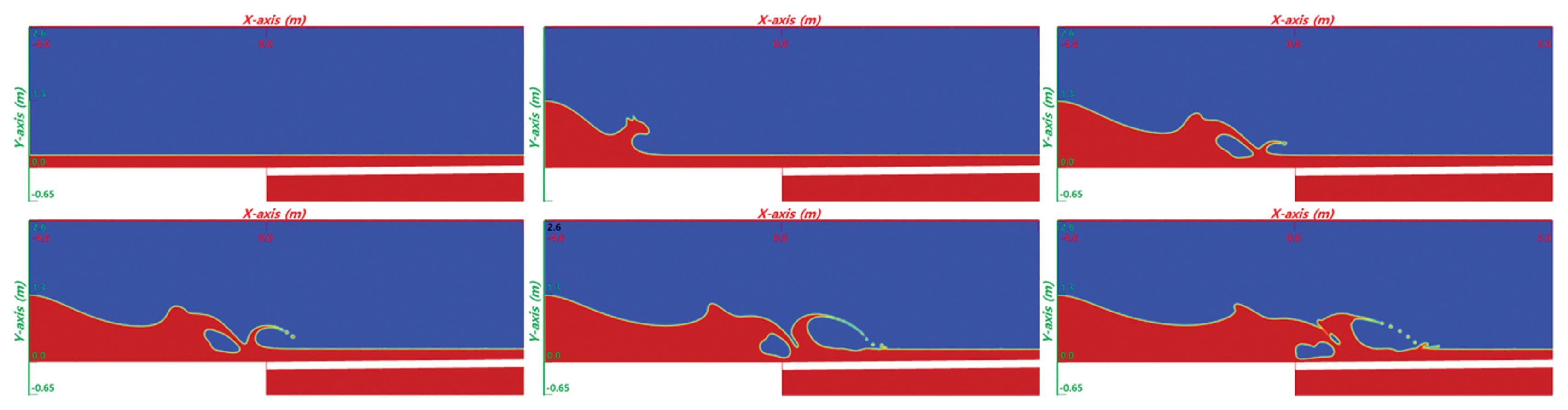
본 장에서는 댐 파괴 유사 유입 조건에서 산정된 VOF 결과를 바탕으로, 월파 유입-침수 확산-압력 형성의 연쇄 과정이 ‘포장 하부 양압(uplift pressure)-박리/들림-휨 인장’ 가설과 어떻게 정합되는지를 정량적으로 제시한다. Fig. 5는 1 cm 틈 조건에서 월파 유동의 전개를 대표하는 VOF 스냅샷(6개 시점: t = 0.000, 0.500, 0.901, 1.000, 1.200, 1.400 s)을, Fig. 6은 상·하부 압력차(∆p)와 포장 자중 면압을 고려한 순상향압력(pnet)의 공간 분포를 요약한다. 또한 본 장에서는 상치 콘크리트-포장 경계부 틈 폭 1 cm와 5 cm 조건을 비교하여, 경계부 세부 형상 변화가 포장 하부 상향력 형성에 미치는 영향을 함께 검토한다.
유입 경계에서 설정한 과도 유입(t = 0~1.65 s)은 얕은 수심에서 전진하는 보어(bore)를 형성하며 상치 구조물 전면에 도달한 뒤 상치 상단을 넘는 월파 흐름으로 전환된다(Fig. 5). 월파 선단의 월류 이후 에이프런 상부로 유체가 급격히 유입되고, 쇄파·재도약 및 난류 혼합이 반복되며 상부 침수 수심이 시간에 따라 변동한다. Fig. 5는 초기조건(t = 0.000 s)에서 보어 전진(t = 0.500 s), 월파 개시(t = 0.901 s ), 1 c m 조건의 대표 상향압력 형성 시점 인근(t = 1.000 s; 대표 상향압력 형성 시점 인근), 피크 직후(t = 1.200 s) 및 잔류 침수/재도약(t = 1.400 s)으로 이어지는 주요 단계를 선택적으로 제시한다. 이 과정에서 상치-포장 경계부 틈을 통해 상부 수체의 압력 변동이 하부 공간으로 전달될 수 있는 경로가 형성되며, 상부 침수(상부 준정수압/동수압)와 하부 포화(하부 압력 축적)가 결합된 조건이 구현된다.
본 연구에서 포장 하부 압력이 상부 압력보다 상대적으로 크게 유지될 수 있는 이유는, 상부 수체의 압력 변동이 상치-포장 경계부의 틈을 통해 하부 공간으로 전달된 뒤, 포화된 다공성 기층 내에서 유속 성분은 빠르게 감쇠하지만 압력 성분은 보다 느리게 소산되기 때문이다. 하부 다공성 매체에서는 Darcy-Forchheimer 저항에 의해 유동 에너지가 손실되므로, 순간적인 관성 유동은 제한되는 반면 공극수압은 준정수압성 성분으로 잔류할 수 있다. 반면 포장 상부에서는 자유 수면의 상승·하강, 쇄파, 재도약 및 월류 흐름에 의해 압력이 빠르게 증감하므로 시간적으로 변동성이 크다. 따라서 동일 시점에서도 상부 압력은 즉각적인 수면 형상에 민감하게 반응하는 반면, 하부 압력은 포화 및 제한된 배수 조건으로 인해 상승 후 감쇠가 지연되는 경향을 보이며, 그 결과 상·하부 압력차가 일정 시간 유지될 수 있다. 또한 틈은 단순한 틈이 아니라 상부 침수 수체와 하부 포화 구간을 연결하는 압력 전달 경로로 작용한다. 특히 틈 폭이 작을수록 유입과 동시에 압력 배출도 제한될 수 있어, 하부 압력의 축적 및 유지에 보다 불리한 조건이 형성될 가능성이 있다.
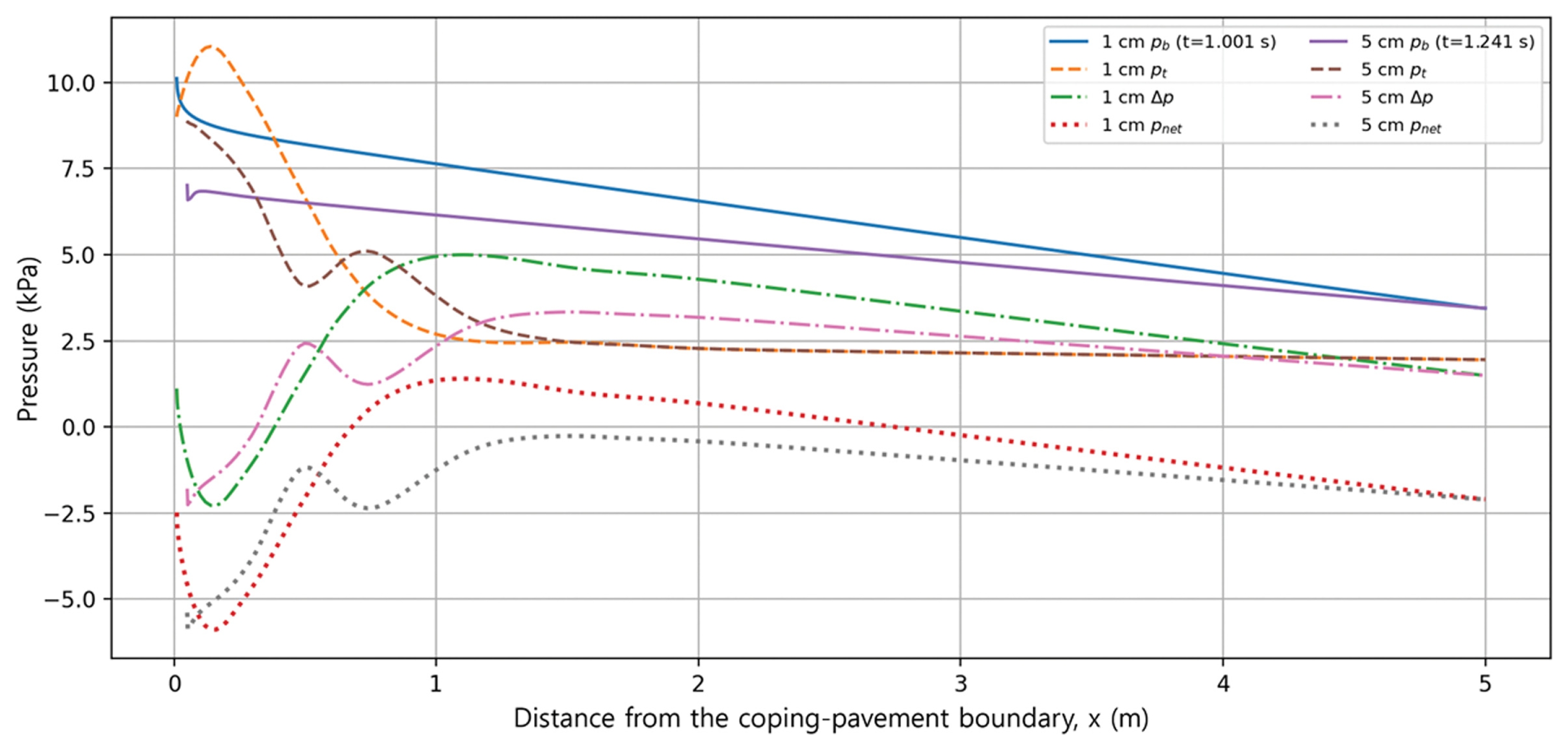
압력 해석에 앞서, 초기 침수 깊이(y = 0.25 m)에 대응하는 상부 정수압 성분(pt = ρWgh)은 약 2.45 kPa, 하부(pu)는 약 3.92 kPa이다. 포장 상·하부 압력은 모두 월파 유입 과정에서 상승과 감쇠를 반복하나, 그 시간적 응답 특성은 서로 다르게 나타난다(Fig. 6). 포장 상부 압력은 침수 수심에 의해 지배되는 저주파 성분(준정수압)과 쇄파·재도약에 따른 단주기 변동이 중첩된 형태로 나타나며, 포장 하부 압력은 포화 및 정체 조건의 영향으로 상대적으로 감쇠가 지연되는 경향을 보인다. 특히 동일 위치에서 상·하부 압력을 비교하면 하부 압력이 상부 압력보다 크게 유지되는 구간이 반복적으로 관찰되며, 이는 상·하부 압력차(∆p= pu - pt)가 시간적으로 유의미하게 발생·유지될 수 있음을 의미한다.
이러한 결과는 ‘피크 압력’만으로 설명하기보다 하부 공간의 감쇠 특성과 유입 경로의 존재로 해석할 때 더 자연스럽다. 상부 수체는 수면 변동과 쇄파로 인해 압력이 빠르게 변하는 반면, 하부는 포화·정체 조건에서 압력 감쇠가 상대적으로 지연될 수 있다. 즉, 본 시나리오에서 핵심은 쇄파 충격에 의한 단주기 동수압이 아니라, 갭을 통해 전달되는 상부 압력 성분이 하부 포화 구간에 축적되며 형성하는 상·하부 압력차의 지속 성분이라고 할 수 있다.
포장층의 들림 가능성은 하부압의 절댓값보다 상·하부 압력차에 의해 결정되므로, 본 연구에서는 상향압력(∆p)을 하부압과 상부압의 차로 정의하고, 포장층의 자중 면압 W를 고려하여 순상향압력(pnet = ∆p - W)으로 정리하였다(Fig. 6). 포장층 두께 0.15 m, 아스팔트 포장재 단위중량 24.0 kN/m3을 적용하면, 자중 면압은 W ≈ 24.0 × 0.15= 3.60 kPa이다. 틈 폭 5 cm 조건에서는 파 도달 이후 상향압력이 비교적 완만하게 증가하여 t ≈ 1.24 s 구간에서 최댓값을 나타냈고, 평가 구간 평균 상향압력은 약 2.25~3.32 kPa 범위로 산정되었다. 반면 틈 폭 1 cm 조건에서는 약 t ≈ 1.00 s 구간에서 평균 상향압력이 약 2.87~4.99 kPa로 산정되어, 5 cm 조건보다 약 1.3~1.5배 큰 값을 보였다(Table 2). 특히 1 cm 조건에서는 포장층이 단순한 국부 피크 압력뿐 아니라, 평균적으로도 들림 방향의 등가 분포하중을 받을 수 있음을 의미한다.
두 조건의 공간 분포를 비교하면, 5 cm 조건에서는 상향압력이 상대적으로 크게 나타나는 구간이 주로 포장 중앙부(x = 1.22~2.20 m)에 형성된 반면, 1 cm 조건에서는 자중면압을 초과하는 위험 구간이 포장 전면부~중앙부(x = 0.82~1.80 m)에 집중되는 경향을 보였다. 특히 5 cm 조건에서는 대표 상향압력이 15 cm 두께 아스팔트 포장의 자중 면압 3.60 kPa을 초과하지 못하였으나, 1 cm 조건에서는 국부적으로 이를 초과하는 구간이 형성되었다. 이는 틈 폭이 작아질수록 단순히 유입량이 감소하는 것이 아니라, 압력 배출이 제한되어 포장 하부에 작용하는 상향력이 오히려 증대될 수 있음을 보여준다.
본 연구가 다루는 하중 성분은 국부적인 충격 성분뿐 아니라 침수 수심에 의해 지배되는 준정수압(quasi-hydrostatic) 성분을 포함한다. 배수 지연 시에는 하부 수압의 지속시간이 증가하여 구조적 관점에서 불리한 하중 조합(상향력의 발생 및 유지)이 형성될 수 있으며, 이는 단발성 피크 하중만으로는 설명하기 어려운 ‘박리·들림’ 중심의 손상 양상과 연결된다. 다음 장에서는 이와 같이 산정된 순상향압력을 포장층의 등가 분포하중으로 적용하여 1차원 외팔보 준해석 모델과 연계하고, 휨 인장응력 수준과 파괴 가능성을 정량적으로 논의한다.
5. 준해석적 구조 평가 및 파괴 가능성 논의
본 장에서는 4장에서 산정한 순상향압력(pnet(x, t) = ∆p(x, t) - W)을 포장층에 작용하는 등가 분포하중으로 해석하고, 포장층을 1차원 외팔보(cantilever beam)로 단순화한 준해석적 구조 평가를 통해 휨 인장응력 수준과 파괴 가능성을 정량적으로 논의한다. 구조 평가는 ‘월파-침수-포화’ 조건에서 상·하부압력 차가 일정 시간 유지되며 포장층이 들림 방향의 등가 하중을 받을 수 있다는 가설을 검증하는 데 목적이 있다. 실제 단면의 3차원 거동이나 접합부의 비선형 박리 과정을 직접 재현하기보다는 관측된 손상 양상과 정합되는 하중-응력 수준을 제시하는 가능성 검토로 해석한다.
외팔보 모델의 길이 L은 포장층이 시작되는 위치(상치-포장 경계부 갭 이후)부터 분석 구간 끝단까지로 정의하였다(x = 0.05 m에서 x = 5.00 m). 포장층은 단위폭(1 m) 기준의 직사각 단면으로 이상화하였고, 두께는 t = 0.15 m로 설정하였다(표층 50 mm + 바인더 100 mm). 등가 분포하중 q(x)는 4장에서 산정한 순상향압력 pnet(x, t)를 단위 폭 기준으로 적용하여 q(x, t) = pnet(x, t)로 두었다. 또한 4장에서 확인한 바와 같이 1 cm 틈 조건에서는 대표 상향압력이 자중 면압을 초과하는 구간이 형성된 반면, 5 cm 틈 조건에서는 자중 면압을 초과하지 못하였다. 따라서 본 장의 구조 평가는 1 cm 및 5 cm 조건을 비교하되, 자중을 초과하는 순상향압력의 형성과 그 구조적 의미를 중심으로 수행하였다.
특정 시점에 외팔보에 작용하는 분포하중 q(x)로부터 전단력 V(x)와 휨모멘트 M(x)는 다음의 평형 관계로 계산된다.
자유단(x = L)에서 V(L) = 0 m, M(L) = 0 m의 경계조건을 적용하면, 임의 위치 x에서의 전단력과 모멘트는 다음과 같이 적분 형태로 구할 수 있다.
직사각 단면(단위폭 b = 1 m, 두께 t)의 단면2차모멘트 I와 단면계수 Z는
이며, 선형 탄성 범위에서 외팔보 상면/하면의 휨응력은 σ(x) = M(x)/Z로 산정된다. 본 연구에서는 들림 방향의 하중이 작용하는 경우 포장층에는 휨 인장응력이 발생하며, 특히 계면 구속이 약화된 경계부 인근에서 들림과 인장 균열 개시가 촉진될 수 있다는 점에 주목하였다.
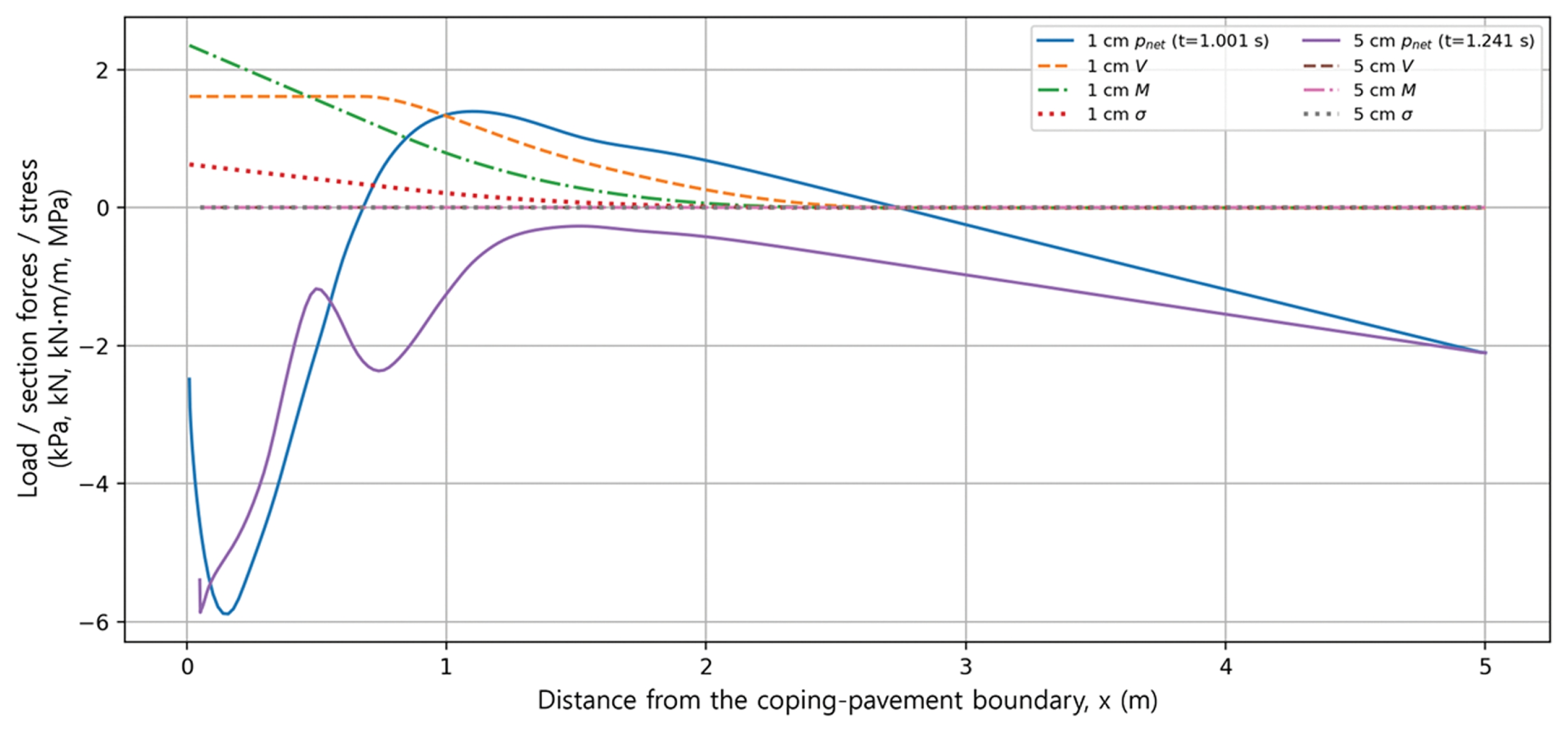
Fig. 7은 대표적인 순상향압력 분포를 등가 분포하중으로 적용했을 때 계산된 전단력 V, 휨모멘트 M, 그리고 인장응력 σ의 공간 분포를 나타낸다. 1 cm 틈 조건에서는 자중 면압을 초과하는 순상향압력이 약 2.06 m 길이에 걸쳐 형성되었으며, 이에 따른 합력, 휨모멘트 및 휨 인장응력의 정량 결과를 Table 3에 정리하였다. 그 결과 합력은 약 1.61 kN/m, 경계부 기준 최대 휨모멘트는 약 2.35 kN·m/m, 최대 휨 인장응력은 약 0.63 MPa로 산정되었다. 반면 5 cm 틈 조건에서는 대표 상향압력이 자중 면압을 초과하지 못하여 양(+)의 순상향압력 구간이 형성되지 않았고, 자중 초과 상향력에 의한 휨 인장응력도 발생하지 않는 것으로 평가되었다. 즉, 침수-포화 조건에서 계면 구속이 충분하지 않고 경계부 틈이 좁아 압력 배출이 제한되는 경우, 반복적인 월파 유입에 의해 포장층에 들림과 인장 균열 개시가 발생할 수 있는 응력 수준이 물리적으로 성립 가능함을 시사한다.
본 결과는 단일 피크 압력 자체가 곧바로 파괴를 의미한다기보다, 상·하부 압력차에 의해 발생하는 순상향 하중이 포장층에 등가 분포하중으로 작용하여 휨모멘트를 생성하고, 그 결과 인장응력이 누적될 수 있다는 관점에서 해석되어야 한다. 특히 4장에서 확인한 바와 같이 본 연구에서 중요한 점은 쇄파 충격에 의한 순간 동수압보다, 침수-포화 조건에서 형성되는 준정수압성 압력차와 그 지속성이다. 배수 지연 시 하중 지속시간이 증가할수록 구조적으로 불리한 상태, 즉 상향하중의 발생 및 유지가 형성될 수 있으며, 이는 현장에서 관찰된 박리 및 들림 중심의 손상 양상과 정성적으로 부합한다.
한편, 구간 평균 상향압력을 기준으로 한 국부 구조응답을 추가 검토한 결과, 1 cm 조건의 국부 휨 인장응력은 평가길이 0.25, 0.50, 1.00, 및 2.00 m에 대해 각각 0.012, 0.044, 0.153 및 0.430 MPa로 산정되었다. 이는 짧은 구간에서 평균 상향압력은 증가할 수 있으나, 휨모멘트는 작용 길이의 제곱에 비례하는 영향을 받기 때문에 국부 휨응력이 반드시 최대가 되는 것은 아님을 보여준다. 따라서 본 연구에서는 자중 면압을 초과하는 실제 순상향압력 분포 전체를 반영하여 산정한 0.63 MPa을 대표 구조응력으로 해석하였다. 본 결과는 포장체의 최종 파괴를 직접 판정하는 것이 아니라, 월파-침수-포화 조건에서 순상향하중이 작용할 때 포장층에 균열 개시 가능성이 형성될 수 있는지를 평가한 결과로 해석되어야 한다. 실제 현장에서는 단발성 하중보다 반복적인 월파 하중이 누적적으로 작용할 가능성이 크며, 이 경우 단일 사건에 대한 즉시 파괴 여부와는 별개로 피로적 손상 축적에 의해 균열 개시 및 진전 가능성이 증가할 수 있다. 또한 상치 콘크리트-포장 계면에서 국부 박리 또는 비부착이 진행될 경우, 포장층의 경계조건은 초기의 부분 구속 상태에서 보다 자유단에 가까운 불리한 조건으로 변화할 수 있으며, 이에 따라 동일한 순상향하중에도 더 큰 국부 휨응력이 발생할 가능성이 있다.
다만 본 구조 평가는 포장층과 상치 콘크리트 계면의 실제 결합 상태(부착/비부착), 하부 지지층의 국부 침하 및 세굴에 따른 지지조건 변화, 포장층의 온도·재료 비선형(점탄성), 그리고 반복 하중에 의한 피로 거동을 직접 고려하지 못한다. 또한 본 연구의 CFD 시나리오는 월파 유입을 댐 파괴 유사과도 유입으로 단순화한 것이므로, 실제 태풍 조건에서의 월파 빈도·주기·공간 비균일성을 반영한 결과로 일반화하기에는 한계가 있다. 향후에는 (i) 비포화 조건과의 비교를 통한 하중 민감도 평가, (ii) 실제 단면 및 배수 체계를 반영한 3차원 유동-구조 연성 또는 접합부 박리 모델링, (iii) 계면 결합력 및 포장 재료 물성(ITS, 피로특성)에 대한 현장/실험 기반 보정 등을 통해 정량성을 강화할 필요가 있다.
6. 결 론
본 연구는 부산항 감만부두 에이프런에서 관측된 포장 파괴 양상을 설명하기 위해, 월파-침수-양압의 연계 작용이 물리적으로 성립 가능한지를 이상화 단면 기반 VOF-CFD와 외팔보 준해석을 결합해 검토하였다. 댐 파괴 유사 유입 시나리오를 적용한 결과, 상치 콘크리트-포장 경계부 틈 폭에 따라 포장 상·하부 압력차와 순상향압력의 형성 특성이 민감하게 달라지는 것으로 나타났다. 5 cm 틈 조건에서는 평가 구간 평균 상향압력이 약 2.25~3.32 kPa로 산정되어 15 cm 두께 아스팔트 포장의 자중 면압 3.60 kPa을 초과하지 못하였으며, 양(+)의 순상향압력 구간도 형성되지 않았다. 반면 1 cm 틈 조건에서는 평가 구간 평균 상향압력이 약 2.87~4.99 kPa로 나타나 5 cm 조건보다 약 1.3~1.5배 큰 값을 보였고, 자중 면압을 초과하는 순상향압력이 약 2.06 m 길이에 걸쳐 형성되었다. 이를 등가 분포하중으로 적용한 외팔보 준해석 결과, 합력은 약 1.61 kN/m, 최대 휨모멘트는 약 2.35 kN·m/m, 최대 휨 인장응력은 약 0.63 MPa로 평가되었다. 이는 침수 지속과 하부 포화, 그리고 계면 취약이 결합된 조건에서 ‘양압-들림-휨 인장’ 메커니즘이 포장층의 박리 및 균열 개시를 유발할 수 있는 수준임을 시사한다.
설계 및 유지관리 측면에서는 상치 콘크리트-포장 경계부 틈 발생 억제와 접합 상세 개선, 배수 경로의 단축 및 배수 성능 향상(우수 배수로 배치, 덮개 구조의 개구율 및 막힘 관리), 그리고 태풍 시 침수 지속에 대응한 지하수위·공극수압 계측 및 배수 성능 모니터링이 중요하다.
다만 본 연구는 월파 유입을 과도 유입으로 단순화한 시나리오 기반의 가능성 검토이며, 실제 태풍 조건의 파군·주기·공간 비균일성, 3차원 유동 및 세굴·침하에 따른 지지조건 변화, 계면 결합력 저하와 포장 재료의 점탄성/피로 거동을 직접 반영하지 못하였다. 향후에는 비포화 조건과의 비교를 포함한 민감도 분석, 실제 단면 및 배수 체계를 반영한 고해상도 유동-구조 연계(또는 접합부 박리 모델) 검토, 그리고 현장·실험 기반 물성(ITS 및 피로특성) 보정을 통해 정량성을 강화하고, 항만 에이프런의 내파·내침수 설계 및 유지관리 지침으로 확장할 필요가 있다.


 PDF Links
 PubReader
 ePub Link
 Full text via DOI
 Download Citation
  Print
Print